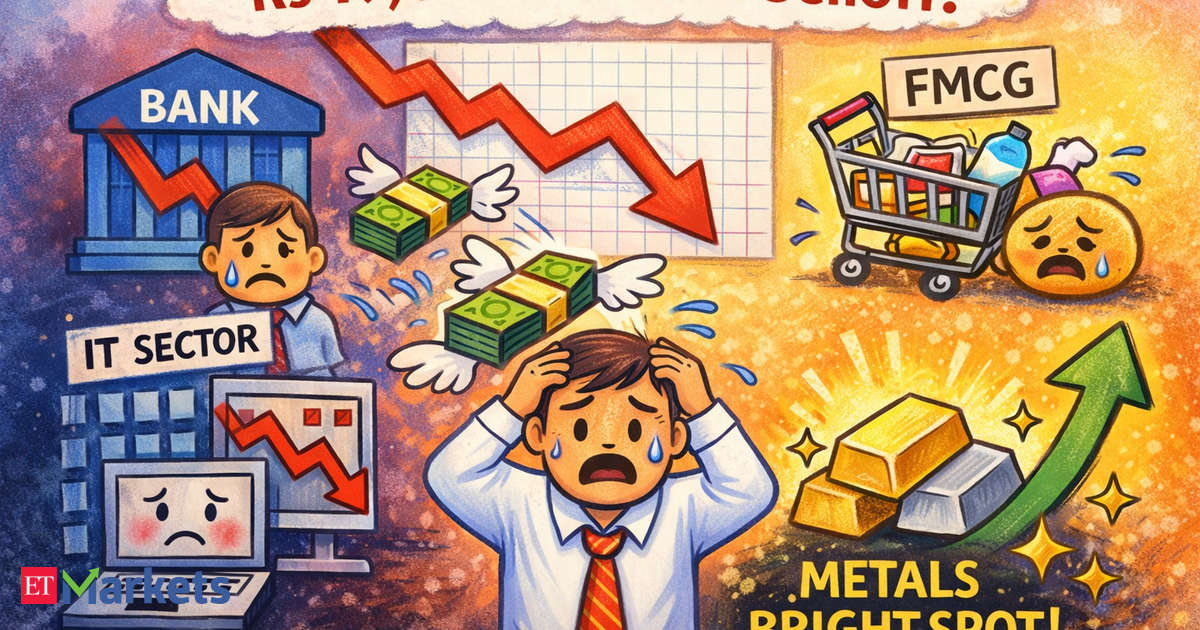
Rs 19,000 crore FII selloff: Banks, IT, FMCG worst hit. Metals only bright spot
NSDL data reveals the carnage: a staggering Rs 15,000 crore has been pulled out from FMCG, financial services, IT, consumer services and services sectors alone during the fortnight, with telecom and healthcare also witnessing significant outflows.
In a rare bright spot amid the bloodbath, metals emerged as the only sector catching foreign investor attention, attracting Rs 2,689 crore in buying during the same period.
Pinakin Parekh of HSBC sees a “super cycle in select metals,” identifying copper, aluminium, battery raw materials and PGMs as key beneficiaries, while bulk commodities could continue to underperform.
HSBC has sharply revised its metal price forecasts upward to account for resilient demand, constrained supply and a weaker US dollar, raising copper and aluminium forecasts by 14% and zinc by 7%. “Hindalco remains our preferred name; we like NALCO as a pure aluminium play,” Parekh said, adding that the firm has upgraded Hindustan Zinc to Buy given higher zinc and silver price assumptions.

The brokerage has increased earnings estimates by 6-24% across Hindalco, NALCO and Hindustan Zinc, with HSBC estimates now 5-45% above consensus levels. “We continue to see broad investor positioning as underweight on the sector, with sharply higher interest from EM investors in the sector vs still lukewarm interest from domestic investors,” Parekh noted.
Despite the FII exodus, domestic brokerages see opportunity in select sectors. Prabhudas Lilladher is increasing weights on diversified financials, banks and healthcare while cutting exposure to consumer stocks, removing ITC and Interglobe Aviation from its model portfolio.The brokerage pointed to mixed demand signals in Q3 2026: “Auto demand has been robust as GST rationalization has boosted demand across segments of 2W, PV, CV and tractors. Jewellery demand has been robust with 30-40% industry sales growth despite 65% higher gold prices year-on-year.”
However, consumer durables have seen tepid response after GST rationalization, while apparel and footwear demand remains mixed. “Rural demand remains steady and is growing ahead of urban demand, urban sentiment has shown steady improvement in the past few months with hopes of further pick up in coming months,” the brokerage added.
Prabhudas Lilladher believes “domestic oriented sectors like banks, NBFC, auto, select staples, jewellery, defense, select durables and metals can outperform in near to medium term.”
UBS remains cautious on India despite stark underperformance compared to emerging markets in 2025, staying underweight on current weak nominal GDP growth trends, MSCI India’s fundamentals tracking weaker than the rest of EM, lack of clear AI beneficiaries in the listed space, and valuation premiums still higher than usual.
The Swiss brokerage noted that external headwinds from higher US tariffs, which came into effect from August 2025, were somewhat offset by resilient domestic demand, adjustment in direct and indirect taxes, front-loading of government capital expenditure and supportive monetary policy. UBS prefers private banks and consumption staples in the current environment.
(Data: Ritesh Presswala)
(Disclaimer: Recommendations, suggestions, views and opinions given by the experts are their own. These do not represent the views of Economic Times)