Trump is targeting China, Cuba and Russia via the shadow oil market – Fat Tail Daily
|
The repercussions go beyond Venezuela
There is not a dictator in the world who can sleep soundly tonight. They are all thinking, ‘If Trump can do this to Maduro, he can do it to me.’
That does not mean Trump is about to go around the world snatching up dictators. It does mean Trump has greater leverage from now on in any negotiations or confrontations with their ilk.
Will Cuba be next on the list of countries that the US takes over?
Will Colombia get the same treatment as Maduro and Venezuela?
Will Trump take overt steps to claim Greenland as US territory?
None of these moves is imminent, but the fact that they are even being considered shows just how much Trump has rearranged the geopolitical chessboard by his move in Venezuela.
Among those who are reevaluating their relations with Trump and the US are President Claudia Sheinbaum of Mexico, President Lula of Brazil and the Ayatollah Khamenei in Iran.
Sheinbaum is a vassal of the drug cartels. Trump may be expected to bomb Mexican drug labs and transshipment points.
Lula has been wrongfully persecuting Trump’s friend Jair Bolsonaro the former president of Brazil.
Ayatollah Khamenei has felt the brunt of B-2 bombers in Iran and is now facing a popular uprising.
All of them will keep the Maduro precedent in mind in future dealings with the US.
Trump’s oil strategy
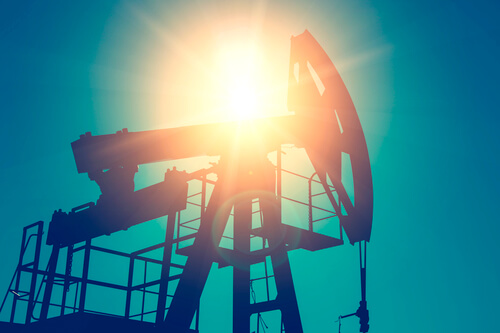
While oil was not the only objective in effecting regime change in Venezuela, it is certainly an important one.
The US is the largest oil producer in the world, surpassing both Russia and Saudi Arabia. Venezuela has the largest proven oil reserves of any country in the world.
The oil industry in Venezuela is decrepit due to corruption and neglect. Venezuela’s oil output is tiny relative to its reserves and its potential.
The US will rely on ExxonMobil, ConocoPhillips and Chevron to invest in Venezuela (after receiving back all of their expropriated properties and oil concessions) and gradually move Venezuela back into the ranks of major producers.
The combination of US and Venezuela oil output in this scenario puts the US in the position of a mini-OPEC with the capacity to set the world price of oil by increasing or decreasing output.
That’s powerful enough by itself, but the ripple effects extend around the world.
China depends on Venezuelan oil along with imports from Saudi Arabia. The US now controls the Panama Canal, which is a chokepoint for Venezuelan oil exports to China. To some extent, the US could dictate the price and supply of oil to China. In turn, China would be more amendable to rare earth exports to the US in exchange for more favourable oil pricing.
The Communist regime in Cuba is utterly dependent on cheap Venezuelan oil. Trump will embargo the export of Venezuelan oil to Cuba, which could increase social unrest there. Using this channel, Trump may be able to achieve regime change in Cuba without invading and without firing a shot.
Likewise, the US could threaten to lower the world price of oil to $25.00 per barrel. This would severely damage Russia’s energy-based economy and bring President Putin to make concessions to end the war in Ukraine, which he has so far been unwilling to do.
Cheaper oil due to increased US and Venezuelan output could also solve the affordability crisis affecting everyday Americans. Slower inflation is not enough because it comes on top of the Biden regime price increases. But $25.00 oil would produce deflation and actually lower prices across the board.
Oil prices affect not just the price of gas at the pump, but the price of everything because of transportation costs. That would be enough to blunt the Democrats’ main talking point in the 2026 mid-term elections and save a Republican majority in the House of Representatives.
The countries directly affected by the US strike on Venezuela include Cuba, Mexico, Russia, China, Ukraine, Iran, Brazil, Saudi Arabia, Taiwan and many others. It’s difficult to conceive of a single action that could have had more widespread impact. This is the Trump National Security Strategy in action.