Lecture 5: Order Blocks 101 – What They Are, How To Identify Them, Role In Institutional Trading | Trading Strategy Guides
Introduction
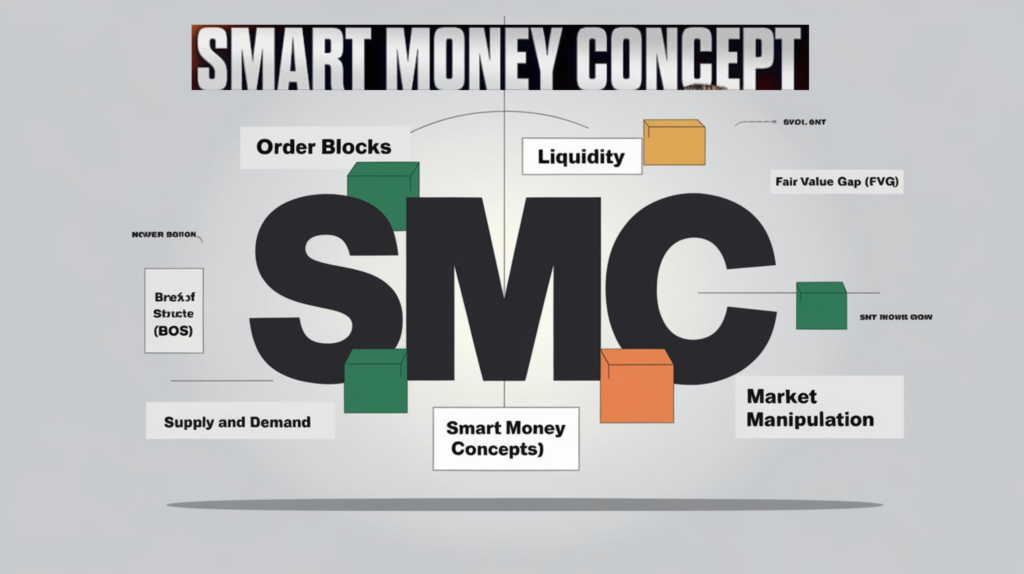
Order Blocks are a core concept in Smart Money Concepts (SMC), used by institutional traders to execute large orders without causing extreme price movement. Unlike retail traders who buy or sell in small amounts, institutions place massive trades that require strategic execution. Order Blocks reveal where Smart Money has placed its trades, helping retail traders anticipate price movements with precision.
In this lesson, we will break down what Order Blocks are, how to identify them, and their role in institutional trading. By the end, you’ll understand how to use them to predict high-probability trade setups.
What Are Order Blocks?
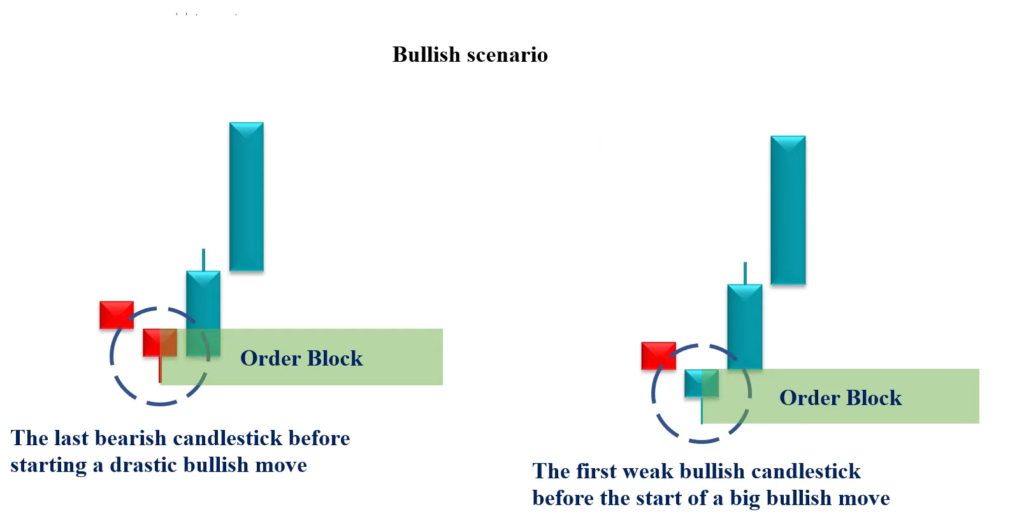
An Order Block (OB) is a specific candle or group of candles where Smart Money has placed a significant trade before a major market move. These areas act as liquidity pools, meaning price tends to revisit them before continuing in the same direction.
Think of it as a footprint of institutional traders. Before a strong bullish move, Smart Money will likely have placed large buy orders at a lower price. Before a strong bearish move, they will have placed large sell orders at a higher price. These orders are not filled all at once, so the price often returns to the Order Block to complete the execution before moving away again.
How to Identify Order Blocks
To find an Order Block, follow these steps:
- Look for a strong move: Find an area where the price moves aggressively up or down, leaving an imbalance in the market.
- Identify the last opposite candle before the move: If the price moves up, the last bearish candle before the move is your Order Block. If the price moves down, the last bullish candle before the drop is your Order Block.
- Mark the OB zone: Draw a box around the Order Block candle, including its body and wicks.
- Wait for the price to return: Price will often revisit the OB before continuing in the original direction.
- For example, if the price surges up after a red candle, that red candle is the bullish Order Block. If the price drops down after a green candle, that green candle is the bearish Order Block.
The Role of Order Blocks in Institutional Trading
1. Liquidity Collection
Institutions can’t place a $100 million trade at once without causing a price spike. Instead, they break orders into smaller chunks, filling them over time. Order Blocks are the zones where these orders are placed, and price returns to them to complete the process.
2. Smart Money’s Hidden Strategy
Retail traders look at support and resistance levels, but institutions manipulate these areas to trap weak traders. Order Blocks help you avoid these traps by showing where the real market movers are trading.
3. Market Reversals & Continuations
Order Blocks often act as entry zones for major moves. If price respects an Order Block, it signals that Smart Money is still holding their position. If the rice breaks an Order Block, it means institutions have changed their bias.
Strong vs. Weak Order Blocks
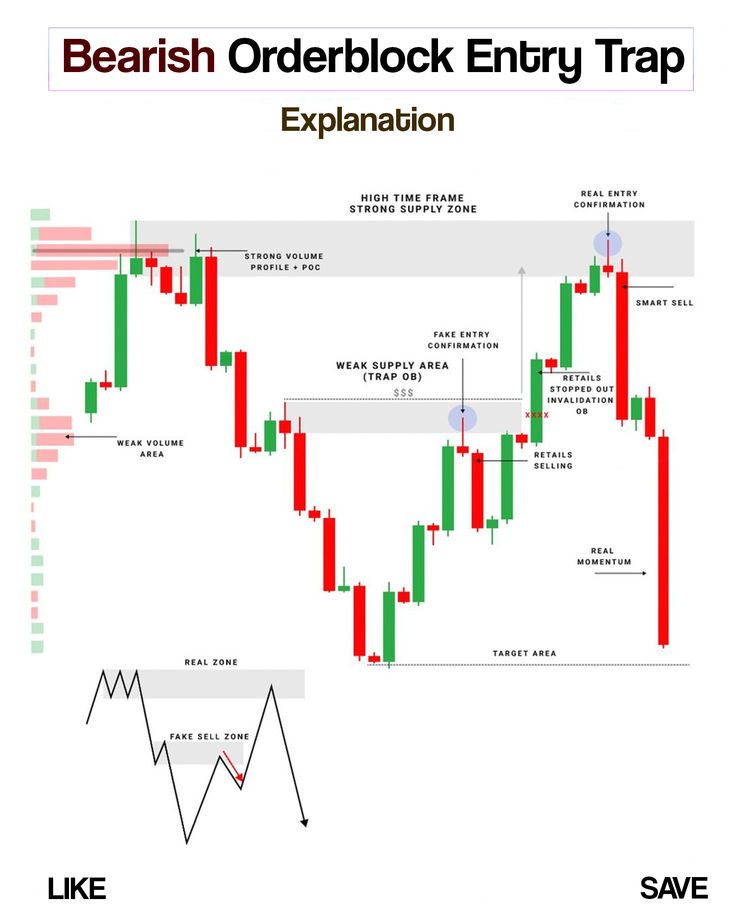
Not all OBs are equally powerful. A strong Order Block will cause a Break of Structure (BOS), meaning the price breaks a significant high (bullish) or low (bearish). A weak Order Block won’t have this impact and is more likely to fail.
Characteristics of a Strong Order Block:
- Causes a Break of Structure (BOS)
- Leaves an imbalance in the market (a fast move away from the zone)
- Has not been tested multiple times (the more times price revisits, the weaker it becomes)
Weak Order Blocks:
- No Break of Structure (BOS)
- Slow or choppy price movement away from the zone
- Tested multiple times already, meaning orders are used up
How to Trade Using Order Blocks
- Mark Order Blocks on Higher Timeframes (H1, H4, or Daily)
- Higher timeframes provide more reliable OBs since Smart Money operates on larger scales.
- Wait for Price to Return to the OB
- Price will often retest an OB before continuing in the original direction.
- Look for Confirmation
- Check for change of character (CHoCH) or break of structure (BOS) before entering a trade.
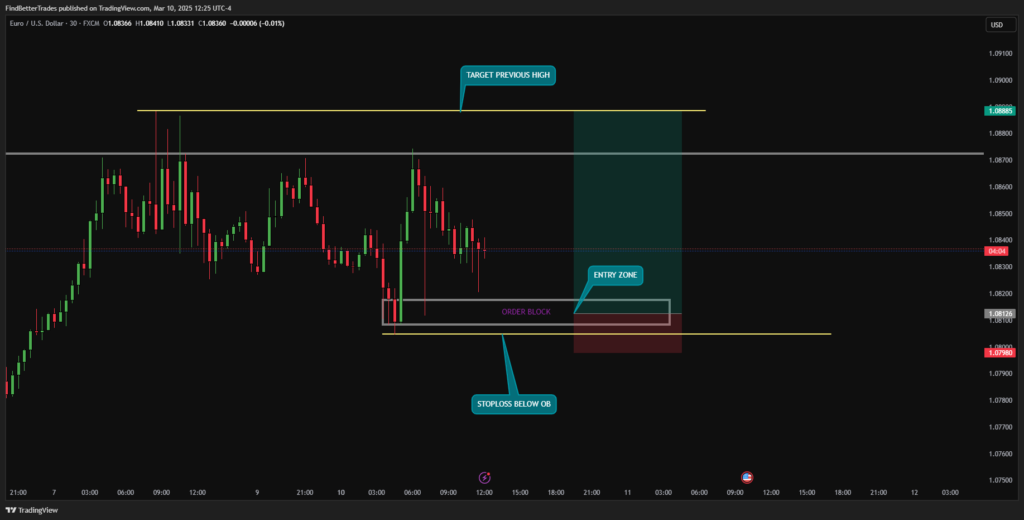
- Enter with a Stop Loss Below (or Above) the OB
- Place your stop loss outside the OB zone to minimize risk while maximizing reward.
Example: Using Order Blocks in a Trade
The price is trending up and then suddenly drops sharply.
You find the last bullish candle before the drop – this is your bearish Order Block.
Price returns to this zone, rejects the OB, and forms a bearish engulfing candle.
You enter a short trade, placing your stop loss just above the OB.
Price drops, confirming Smart Money was selling from this level.
EURUSD- Live Example
Common Mistakes Beginners Make
1. Confusing Order Blocks with Regular Support & Resistance
A true OB comes before a major price move, not just any bounce in price.
2. Trading Every OB Without Confirmation
Wait for BOS or CHoCH before entering a trade.
3. Ignoring Market Context
OBs work best when aligned with the overall market structure (bullish/bearish trend).
Final Thoughts
Order Blocks are one of the most powerful tools in Smart Money Concepts, showing exactly where institutions place their trades. By mastering them, you gain insight into where price is likely to react, allowing you to trade with precision.
Instead of relying on traditional support & resistance or lagging indicators, focus on Order Blocks, Break of Structure (BOS), and Liquidity Grabs to trade in sync with Smart Money.
Source link