Tariff D-Day, U.S. Labor Market Shocker and A Lot of Other Data to Digest – Currency Thoughts
Perfect Storm: Tariff D-Day, U.S. Labor Market Shocker and A Lot of Other Data to Digest
August 1, 2025
It’s been a bad day for the dollar and equities. The weighted DXY dollar index has sunk 1.2%, led by 1.3% drops against the euro and Japanese yen and a 1.0% drop against the Swiss franc so far. The greenback has also fallen 0.7% relative to the Australian dollar and 0.5% versus sterling and the Canadian dollar.
Declines so far in the SPX, DOW, Nasdaq and Russell 2000 range from 1.3% to 2.1%. Pacific Rim stock markets closed down 3.9% in South Korea, 1.1% in Hong Kong, 0.9% in Australia, 0.7% in Japan, New Zealand and India and 0.4% in China. Although the European Union was one of the few examples where a trade deal was achieved before today’s tariff deadline, its three largest economies suffered stock market losses today so far totaling 2.8% in France, 2.4% in Germany and 2.5% in Italy.
A 13-basis point dive in the ten-year U.S. Treasury yield on fears of much weaker economic activity led other comparable sovereign debt yield drops of five basis points in Great Britain, three bps in Germany and Spain, and two bps in France and Italy. The 10-year Japanese JGB yield rose a basis point, by contrast.
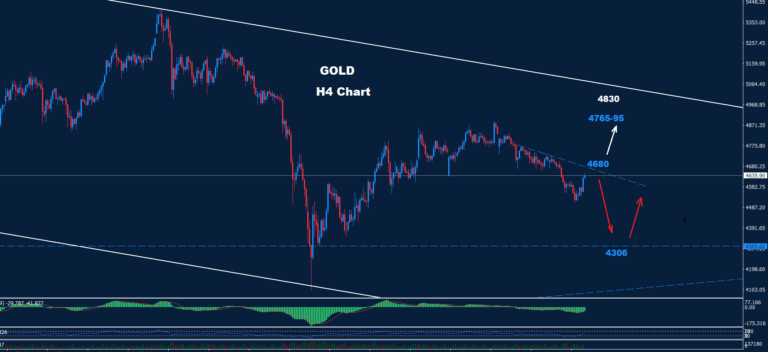
Gold’s price has climbed 1.8% and been counterbalanced by a 1.8% drop in the cost of oil. Bitcoin has split the difference, edging 0.1% lower.
Much confusion has accompanied the roll-out of country specific U.S. tariffs, with special goods-specific stipulations superimposed on the basic levies. Neighboring trade partners Canada and Mexico will be paying 35% and 25%. Trade deals have held down the basic tariffs against Japan and the EU to 15% and Great Britain to 10%.
The July U.S. Labor Department jobs data depict a much weaker picture than presumed but only partly so because the 73k increase in non-farm payroll jobs last month was just two-thirds as many as forecast. The shock was greatly magnified by huge downward revisions to previous months. The monthly average rise in jobs during May-July of 35k was down from 127k in the previous three months ending April and the 232k monthly increase in the final three months of the Biden Presidency ending in January. Otherwise, labor market participation slipped to 62.2% in July, their lowest ratio in 32 months. The U-6 rate of un- and under-employment increased 0.2 percentage points to 7.9% last month, and factory jobs, which the framers of Trumpinomics seek to rebuild, suffered a third straight decline after edging up just 1k combined in March-April. On-year growth of 3.9% in average hourly earnings was at 4-month high, matching its highest level so far in 2025. It is mystifying that the change in reported jobs for May and June each got revised downward by at least 125,000 workers. Perhaps it is a sign of the massive firings of federal workers and a harbinger of a new era in which the accuracy of compiled U.S. economic data will simply not be trusted.
Other U.S. data reported today were also distressing. Construction spending in June matched May’s 0.4% decline and constituted the ninth decrease in the last ten months. For the first time in 2025, the S&P Globlal-compiled U.S. manufacturing purchasing managers index (49.8)fell below the 50 level separating positive growth in economic activity from contraction. The ISM-compiled PMI for manufacturers printed at a 9-month low of 48.0 and embodied sub-50 readings of 43.4 for employment and 47.1 for orders. The July U. Michigan index of U.S. consumer sentiment got revised marginally lower and at 61.7 remains historically depressed.
Consumer price inflation in Euroland held steady in July at June’s 2-month high of 2.0% and above the 41-month low of 1.7% touched last September. Core inflation, excluding food and energy, printed at 2.3% for a third straight month according to this preliminary estimate. The sub-indices for non-energy industrial goods and food each edged higher, while service sector inflation declined 0.2 percentage points to 3.1%.
Italian retail sales posted a 1.0% year-on-year rise in June, lowest since March.
Brazilian industrial production (-1.5% year-on-year in June)experienced its largest drop in 15 months.
Japanese unemployment was 2.5% for a fourth straight time in June and has been either 2.4% or 2.5% for 11 straight months.
Indonesian CPI inflation of 2.87% in July was at a 13-month high.
Euroland’s manufacturing purchasing managers index in July was left unrevised at a 36-month high of 49.8, suggesting an extension of the recent repairing of that sector’s momentum, but the latest survey also implied supply chain disruptions may continue to crop up. The PMIs of Ireland, the Netherlands, Spain and Greece exceeded 50, while those of Germany, France, Italy and Austria stayed under that threshold.
Japan’s manufacturing PMI was revised upward to 49.9, a 3-month low. China’s index below 50 to a 9-month low of 49.5.
Among other Asian economies, manufacturing PMI readings in July included South Korea’s 2-month low of 48.6, Vietnam’s 11-month high of 52.4, a 3-month Filipino high of 50.9, an 11-month high of 51.9 in Thailand, and 4-month Indonesian high of 49.1. At 59.1, the revised Indian manufacturing PMI was at a 16-month high.
In Eastern Europe, the Czech PMI fell 0.5 points to a 2-month low of 49.7. Poland had a 2-month high of 45.9, and Hungary’s index of 50.7 was at a 4-month high. Russian’s PMI fell to a 40-month low of 47.0, however.
Sweden’s PMI jumped to a 38-month high of 54.2. Norway’s 50.4 reading was at a 2-month high.
The Absa-compiled South African PMI improved to a 9-month high of 50.8. Yesterday, the South African Reserve Bank cut its key interest rate by 25 basis points to 7.0%, the lowest level in 33 months.
Mexico’s PMI was at a 2-month high of 49.4, while Brazil’s dropped to a 24-month low of 48.2. Turkey’s reading of 45.9 was its lowest in 9 months.
Copyright 2025, Larry Greenberg. All rights reserved. No secondary distribution without express permission.
Tags: Euroland CPI, Manufacturing PMIs, U.S. employment situation report for July 2025


 ShareThis
You can leave a response, or trackback from your own site.