How the Lightning Network Transforms Bitcoin Payments | BitcoinChaser
Ever wish Bitcoin payments were quicker and cheaper? You’re not alone.
While Bitcoin is unmatched in security and decentralization, it was never built for speed.
Transactions can take around ten minutes to confirm, and sometimes hours to be processed.
The Lightning Network changes all that by shifting transactions off-chain but still settling securely on Bitcoin.
Lightning allows instant, low-cost payments that feel as fast as sending a message.
It’s turning Bitcoin from a slow, store-of-value system into a payment network built for everyday use.
Table of Contents
How the Lightning Network Works
The Lightning Network is a second-layer protocol built on top of Bitcoin.
It lets users open payment channels that act as private tunnels for transactions.
When two users open a channel, they lock some Bitcoin in a shared address on the main blockchain.
From there, they can exchange unlimited payments instantly without broadcasting each one to the network.
Only the channel’s opening and closing transactions appear on the blockchain.
Inside the channel, balances are updated privately through signed messages, creating a fast, trustless environment for repeated payments.
When the channel closes, the final balance is settled on Bitcoin’s main chain.
Payments can also travel across multiple connected users using hashed time-locked contracts, allowing people to send Bitcoin even without a direct channel between them.
The result is instant payments that remain backed by Bitcoin’s core security.
Key Benefits of the Lightning Network
The Lightning Network solves several major limitations of Bitcoin’s main layer:
- Instant settlement: Transactions confirm in seconds instead of minutes.
- Low fees: Microtransactions become possible, often costing less than a cent.
- Scalability: Millions of payments per second are theoretically achievable.
- Privacy: Off-chain transfers are not permanently recorded on the blockchain.
These advantages make Bitcoin usable for everything from daily purchases to digital microtransactions, something the base layer alone couldn’t efficiently support.
Real-World Uses
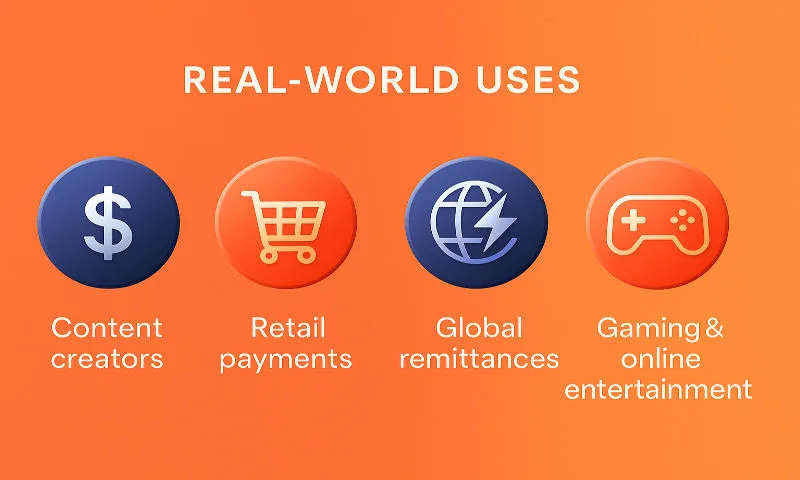
Lightning’s design opens the door to a broad range of applications. Content creators can receive instant tips or streaming payments from supporters.
Merchants can accept Bitcoin for coffee or retail goods with no waiting times or high processing costs.
Global remittances are faster and cheaper, with some payment apps already using Lightning for international transfers.
In gaming and online entertainment, Lightning allows instant micro-bets and rapid payouts, blending perfectly with fast-paced digital experiences.
This mix of low latency and security makes it especially appealing for Bitcoin casinos and similar interactive platforms.
Challenges and Limitations
The Lightning Network still faces technical and usability challenges. Liquidity remains a core issue—channels can only process payments up to their funded capacity.
Routing larger or complex transactions can fail if intermediate nodes lack sufficient balance.
Privacy, while improved over on-chain transactions, isn’t perfect.
Timing and routing analysis could still reveal some information.
Users must also remain online or use watchtower services to prevent fraud if a counterparty tries to broadcast an outdated channel state.
Despite these hurdles, continuous upgrades such as channel splicing, dual-funded channels, and dynamic routing have improved flexibility.
Wallets are becoming easier to use, and liquidity tools are evolving quickly.
How Lightning Fits into Bitcoin’s Ecosystem
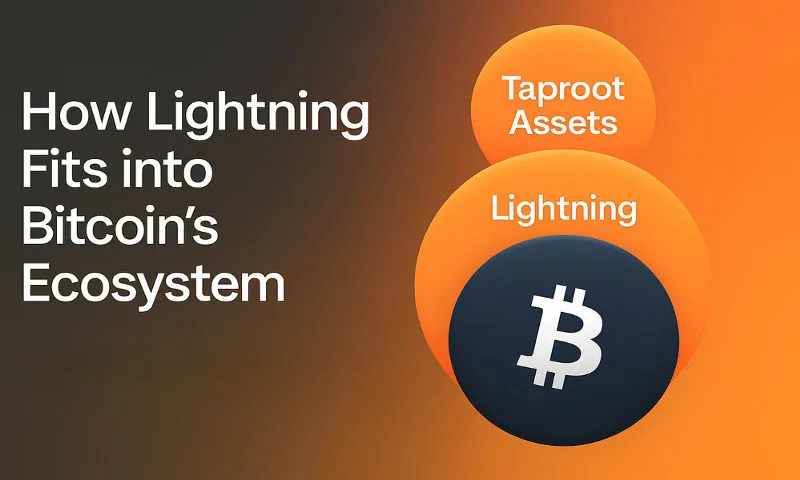
Lightning complements Bitcoin’s broader layered approach.
While the main chain provides final settlement and unbreakable security, Lightning delivers speed and scalability.
It can also interact with newer Bitcoin technologies like Taproot Assets, potentially enabling stablecoins and tokenized assets to move over Lightning with the same efficiency as BTC.
This balance between a secure foundation and fast off-chain execution makes Bitcoin more adaptable than ever.
Together, these layers form a complete ecosystem—stable at the core, flexible on the surface.
Final Thoughts
The Lightning Network has matured from an experimental concept into a functioning payment layer that enhances Bitcoin’s real-world usability.
It enables instant, private, and affordable transactions while maintaining the security and trust that define Bitcoin.
For developers, merchants, and users, Lightning represents a critical step forward.
It doesn’t replace Bitcoin—it extends it, allowing the network to scale and evolve without compromising its core principles.
As the ecosystem continues to grow, Lightning may well define the next chapter in Bitcoin’s story: fast, global, and accessible digital money.
Source link