
How Taproot Assets Bring Stablecoins to Bitcoin | BitcoinChaser
Bitcoin was built for security and decentralization, not for issuing tokens or stablecoins.
That began to change with the Taproot upgrade, which made it easier to encode complex spending conditions efficiently and privately.
Building on those capabilities, Taproot Assets (originally introduced as Taro) is a protocol that lets developers create and move assets on Bitcoin while keeping the base chain lean.
The practical result is straightforward: dollar-pegged stablecoins and other tokenized assets can be issued and transacted using Bitcoin’s security model, with the option to move at Lightning Network speeds.
Table of Contents
What Taproot Assets Are
Taproot Assets is a layer that defines how to issue, prove, and transfer assets using standard Bitcoin transactions enhanced by Taproot.
Asset metadata (such as the asset ID and supply rules) is committed to Bitcoin outputs in a compact way so that any observer can verify the asset’s integrity without turning the base chain into a general-purpose data store.
The protocol is designed so that most complexity stays off-chain with users and wallets, while Bitcoin provides the anchoring and finality.
How Taproot Enables It
Taproot introduced Schnorr signatures and Tapscript, allowing complex policies to be represented as simple spends.
For Taproot Assets, those properties matter in two ways. First, commitments to asset state can be tucked inside Taproot outputs without revealing unnecessary detail.
Second, multi-party and multi-path spending policies become cheaper and more private, which is important when assets are reissued, split, or merged across many users and channels.
How Taproot Assets Work
Issuance Model
An issuer defines an asset (for example, a USD-pegged token) and mints an initial supply.
That issuance is anchored to a Taproot output so that any future transfer can be linked back to a verifiable origin.
Supply changes, if allowed, are governed by the issuer’s policy and recorded through subsequent anchor transactions.
Transfers and Proofs
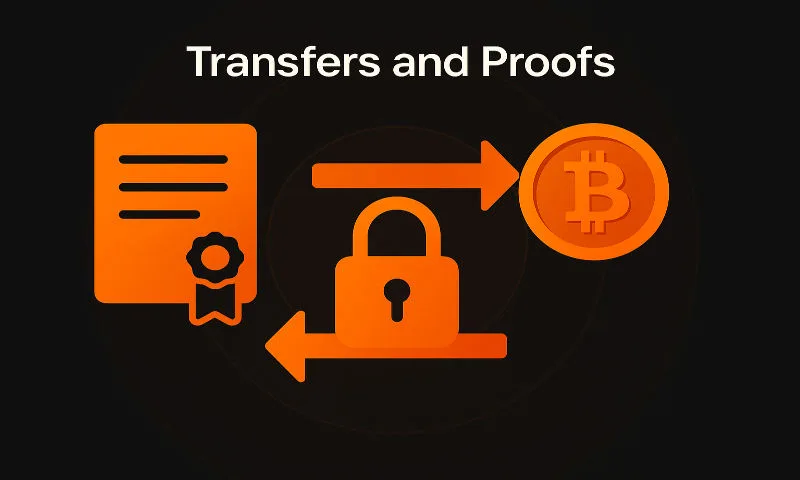
Ownership changes are tracked with cryptographic proofs that reference those anchors.
Wallets exchange proofs off-chain and only touch Bitcoin when they need to create or update anchors.
This keeps costs low while preserving full traceability to the on-chain root of truth.
Commitment Structure
Instead of writing the full asset state to the blockchain, Taproot Assets use commitment trees.
Multiple assets or many outputs of the same asset can be represented efficiently inside a single Taproot output.
Verifiers can check inclusion using Merkle-style proofs without downloading unrelated data.
Lightning Integration
A key design goal is to route these assets over the Lightning Network.
In practice, that means using Lightning channels as the transport layer for asset transfers, while Bitcoin anchors provide settlement assurances. For end users, a dollar-pegged payment can move with Lightning’s speed and fee profile, even though the asset’s integrity ultimately ties back to Bitcoin.
Why Stablecoins on Bitcoin Matter
Stablecoins already serve as crypto’s day-to-day money. Bringing them to Bitcoin combines familiar UX with the network most known for security and neutrality. The advantages can be summarized succinctly:
- Security and finality anchored to Bitcoin
- Efficient on-chain commitments with most activity off-chain
- Potential for Lightning-speed transfers and micro-payments
- Open verifiability of issuance and supply rules
- Interoperability with Bitcoin wallets and infrastructure
Real-World Potential and Use Cases
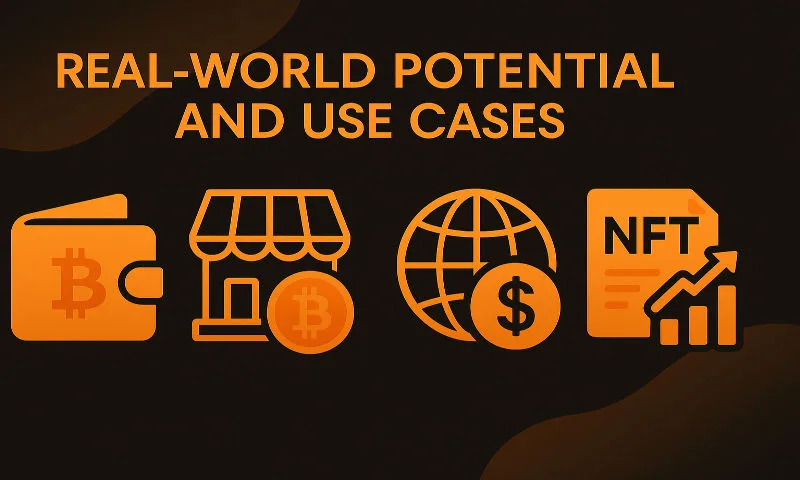
For users, Taproot-anchored stablecoins can make Bitcoin wallets feel like multi-asset payment apps—send BTC when you want exposure, or send a dollar-pegged asset when you want stability, all under the same security umbrella.
Merchants could accept USD-denominated Lightning payments with near-instant settlement and minimal fees.
Remittance providers gain a path to fast, low-cost transfers that settle to Bitcoin.
Developers can build lending, invoicing, and marketplace flows without leaving the Bitcoin ecosystem, while custody providers and exchanges can reconcile asset movements using compact, on-chain commitments.
Challenges and Open Questions
Adoption requires broad wallet and node support.
Liquidity for asset-denominated Lightning channels must develop before large flows feel seamless.
Issuer transparency and attestation frameworks matter for trust in stablecoin reserves.
Fee markets can affect anchor timing during congested periods, so smart batching and splicing techniques are important.
Finally, different jurisdictions may treat Bitcoin-anchored stablecoins variably, so compliance tooling and clear disclosures will be part of any production rollout.
Developer Considerations
Implementers will want clear paths for issuance keys, revocation policies, and audit trails.
Wallet UX should make proofs portable and verifiable while hiding protocol details.
Channel management—splicing, dual-funding, and multi-path payments—helps keep transfers smooth during volatility.
For services, monitoring anchors, and maintaining proof databases are operational musts. Interop with existing Lightning tooling and invoice standards will reduce friction for merchants and consumers.
Final Thoughts
Taproot Assets extend Bitcoin beyond a single-asset network without compromising its core design.
By anchoring asset integrity to Bitcoin and using off-chain proofs and Lightning for speed, the protocol offers a credible route for stablecoins and other tokens to live within Bitcoin’s security model.
If wallet support, liquidity, and issuer transparency keep advancing, Taproot-based stablecoins could make Bitcoin not only the settlement layer of choice but also a practical, everyday payments platform for the broader economy.
Source link