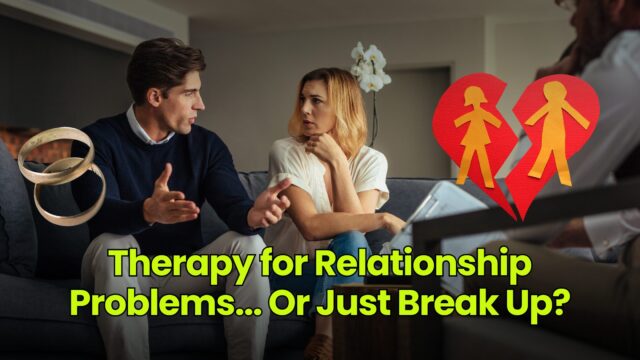
Therapy for Relationship Problems… Or Just Break Up?







So, you’re here wondering if therapy for relationship problems is worth it or if you should just throw in the towel and break up. First of all, welcome. You’re not alone in this confusion. Relationships are complicated, beautiful, stressful, and sometimes downright exhausting. And when things start to feel heavy, you’re faced with the big question: should we try couples therapy, or is it time to walk away? Well, lucky for you, I’m here to spill all the real talk, no sugar-coating.
We’re going to dive into everything you need to know about relationship therapy. What it is, how it works, what to expect, and yes – how to know when it’s time to bounce. Whether you’re married, dating, engaged, or just deeply confused, this guide will help you get clarity. Let’s do this together, and hey, even if the tea gets a little hot, we’re sipping it with love.
Therapy or Breakup? How Do You Even Know?!
Alright, let’s talk about it. When you’re knee-deep in arguments, awkward silences, or straight-up resentment, you’re probably wondering if therapy for relationship problems is even worth it. Or should you just pack up your emotional baggage and bounce? Before you do either, let’s pause. Making decisions while emotionally drained is like grocery shopping when you’re hungry – you’re going to pick the worst option.
If you’re thinking about breaking up every other day, it might be time to explore couples therapy. But here’s the tea: not every rough patch means it’s over. Relationships go through seasons, and sometimes a little professional help can bring clarity. Are you fighting the same fight every week? Are your communication skills so busted that even texting feels like a landmine? These are signs you need support.
Ask yourself:
- Do we want to fix this, or are we just coasting?
- Do we still respect each other, even when mad?
- Are we both willing to grow, not just “win” fights?
If you answered yes to at least two of these, don’t rush to end things. Couples counselling might just help you both untangle the mess.
And listen, even if your partner won’t go, you can still start with individual therapy. Addressing relationship issues on your own is a power move. Therapy for relationship problems doesn’t always require a plus one. Your emotional health deserves attention whether you stay or go. Let’s not let stubbornness be the villain in your love story.
The Truth About Couples Therapy
Here’s a hot take: couples therapy isn’t just for couples who are falling apart. It’s also for people who want to build a stronger, healthier relationship. Shocking, I know! But think about it: you don’t wait for your car to explode before you take it to the mechanic, right? Same goes for your relationship.
Couples therapy is about digging deep into your relationship dynamics, not just putting a band-aid on fights. It helps with everything from communication problems to emotional disconnection. A good couples therapist will help you uncover your toxic relationship patterns and teach you how to shift them. Therapy sessions aren’t just you complaining while someone nods; it’s work, but it’s so worth it.
Some couples even start therapy when things are good, just to keep things that way. That’s smart and sexy, if you ask me. This is where emotionally focused therapy comes in – it helps couples reconnect and actually feel heard. Whether you’re newly dating or ten years in, relationship counseling helps you understand each other better.
Let’s stop treating couples therapy like a last resort. Instead, think of it as your secret weapon to create a healthy relationship. Don’t wait until you’re both exhausted and bitter. Be proactive, not reactive. That’s how you level up in love.
READ RELATED: Therapy for Relationship Problems Isn’t Just for “Broken” Couples
What to Expect in the First Few Sessions
Okay, so you’ve booked your first couples therapy session. First of all, kudos to you! That’s a brave step towards improving communication and getting unstuck. But let’s talk about what actually happens, because no, you’re not going to be forced to cry in front of a stranger. Unless you want to. Then cry it out, babe.
Here’s what to expect:
- Intake and background – Your therapist will ask questions about your relationship history, current challenges, and what brought you to therapy.
- Goal setting – You’ll work together to set goals. What do you both want to change or understand better?
- Communication deep dive – You’ll look at how you both talk to each other, especially during conflict.
- Identifying patterns – You’ll start noticing those repeating issues that never seem to go away.
- Homework and exercises – Yes, there may be assignments between sessions to help you practice what you learn.
The goal in those first few sessions is to build trust with your couples therapist. You need that safe and supportive environment to start opening up. The process might feel weird at first, but you’ll soon realize how much clarity it can bring. Remember, no one has it all figured out. Therapy gives you a guide.
Are You Stuck in a Toxic Loop?
Here’s how you know you’re stuck in a toxic relationship pattern: you keep having the same fight, just with different outfits. If your arguments go in circles and never get resolved, that’s not passion, honey, that’s chaos. It’s one of the biggest relationship issues couples face today. And guess what? Couples therapy can help you break that loop.
One way therapists tackle this is through cognitive behavioral therapy (CBT). CBT helps you recognize the negative thought patterns that drive your actions. Are you assuming the worst every time your partner doesn’t text back? Are you reacting from old wounds instead of what’s actually happening? Yep, CBT digs into all that.
Therapy sessions focus on helping you practice active listening and emotional regulation. This means listening to understand, not just to reply. It also means learning to express your needs without starting World War III. Conflict resolution is a skill, and couples counseling is where you build it.
Sometimes, the loop is tied to personal trauma or stress. That’s where individual therapy becomes a game-changer. Fixing relationship issues isn’t just about the relationship itself. Sometimes it’s about healing your own stuff first.
Relationship Counseling vs. Marriage Counseling vs. Couples Therapy
Okay, let’s clear the confusion. Relationship counseling, marriage counseling, and couples therapy are not three different universes. They all fall under the big umbrella of therapy for relationship issues. But yes, there are a few tiny differences in focus.
Here’s a table to break it down:
| Type | Focus | Best For |
|---|---|---|
| Relationship Counseling | Communication, dating struggles, emotional connection | Dating or long-term couples, not necessarily married |
| Marriage Counseling | Deep issues in committed marriages, conflict resolution, family dynamics | Married couples navigating stress or change |
| Couples Therapy | General term for all romantic relationship work | Any couple facing relationship challenges |
Premarital counseling is another gem. It’s perfect for couples who are thinking about marriage and want to prepare for the real stuff. Not just flowers and guest lists, but conflict resolution, finances, family dynamics – the big stuff. Emotionally focused therapy and the Gottman method are often used here to create stronger bonds from the start.
Whether you’re seeking therapy as a dating couple or ten years into marriage, the goal is the same. Therapy for relationship problems and improvement is about building healthier relationship dynamics and realistic expectations. It doesn’t matter what label you slap on it – what matters is showing up and doing the work.
READ ALSO: 10 Ways to Ruin a Perfectly Good Relationship Without Even Trying!
Tools You’ll Learn in Therapy (That You Wish You Knew Sooner)
Listen, therapy is not just about talking. It’s about learning and doing. In couples therapy, you learn tools that honestly should be taught in school. I’m talking conflict resolution strategies, emotional regulation, and how to communicate effectively without making things worse.
Here are some tools you’ll pick up:
- Active listening – Hear your partner without interrupting or zoning out.
- Conflict resolution – Handle arguments like adults, not toddlers in a toy fight.
- Emotional regulation – Stay calm even when your partner is pushing all your buttons.
- Communication frameworks – Learn ways to express what you need without guilt or blame.
- Practice empathy – Understand your partner’s emotions, even if you don’t agree.
Therapists often help you both improve communication by identifying what’s working and what’s not. You might even be given exercises to do between sessions – yes, there’s homework. But it’s worth it when you stop having the same fight over dishes. Relationship counseling focuses on practical tools you can use in real life.
Also, you’ll both get better at conflict resolution. Instead of avoiding fights or blowing up, you’ll learn how to resolve conflicts in a respectful, productive way. These tools create a healthier relationship dynamic and a deeper understanding of each other. Honestly, it feels like having a user manual for your relationship. And who doesn’t want that?
When Your Partner Refuses to Go to Therapy… Now What?
So, you’ve brought up couples therapy and your partner’s like, “Nah, I’m good.” Yikes. That rejection stings, especially when you know deep down the relationship issues aren’t fixing themselves. But guess what? You don’t need two people to get the ball rolling on healing. Therapy for relationship issues can start with just you.
Enter the power of individual therapy. When your partner refuses help, that doesn’t mean you’re stuck. Individual therapy can help you make sense of the chaos, work on your emotional regulation, and gain tools for improving communication—even if your partner’s still out here avoiding feelings like the plague. It also helps you reflect on your relationship patterns and triggers, giving you power over your reactions.
Addressing relationship issues solo is not just “better than nothing.” It’s actually one of the smartest moves you can make. While your partner might stay stuck, you’ll be growing, healing, and learning how to handle the relationship challenges with grace (and a little sass). Sometimes, when one partner starts showing up differently, it inspires the other to follow.
And if they still don’t? Well, you’ve already taken care of your mental health and started your personal growth journey. That’s a win. You can’t force someone into a therapist’s chair, but you can choose to take care of you. Individual therapy is your secret weapon, even when it feels like you’re fighting alone.
Therapy Saved Us—But It Wasn’t Magic
Let’s get something straight: couples therapy for relationship problems isn’t some instant love potion. There’s no fairy dust, no waving wand, no, “Boom! Your problems are gone.” If you want therapy to actually work, you need to put in the effort. Expect real talk, uncomfortable moments, and a whole lot of reflection.
One of the biggest mistakes people make is having unrealistic expectations. Your therapist isn’t a referee or a magician. They’re a trained professional helping you build a healthy relationship through conversation, practice, and yes—some awkward assignments. The therapy process takes time, especially if there’s deep-rooted relationship distress. The goal is progress, not perfection.
What really matters is the therapeutic alliance you form with your couples therapist. You need to feel safe, heard, and respected. That connection creates a safe and supportive environment where healing and change can happen. Without that trust, even the best couples therapy techniques fall flat.
So no, therapy didn’t save us overnight. But over weeks and months, it gave us tools, insights, and clarity. It helped us develop strategies for better communication and emotional regulation. It was hard, honest work—but it was worth it. Remember, a strong relationship isn’t built in one session. It’s built brick by brick, with love, effort, and lots of therapy sessions.
READ ALSO: Examples of Boundaries in a Relationship That Keep Things Fun
When Breaking Up is the Healthiest Option
Let’s be honest—some relationships just aren’t meant to last, and that’s okay. If your mental health is constantly being tested, your boundaries are ignored, and every conversation turns into a battle, it might be time to walk away. That kind of relationship stress can affect everything from sleep to physical health concerns. A healthy relationship shouldn’t make you feel like you’re walking on eggshells every day.
Here are some signs breaking up might be the healthiest option:
- Your mental health is suffering more than it’s thriving.
- You’re stuck in the same toxic cycles with no real progress.
- You no longer feel emotionally safe, respected, or heard.
- Only one person is willing to work on the relationship.
- The idea of leaving brings relief—not fear.
Therapy can help you see things clearly when you’re lost in the emotional fog. A licensed therapist can walk you through the decision-making process with compassion, not judgment. They can help you practice active listening, improve communication, and even explore conflict resolution strategies—but only if both people want to make it work. If one of you has already checked out, no amount of therapy is going to glue things back together.
Breaking up doesn’t mean you failed. Sometimes it means you finally chose yourself. If therapy teaches us anything, it’s that fulfilling relationships start with you being fulfilled first. And if that means saying goodbye? You’ll walk away wiser, stronger, and ready to build a healthier relationship next time.
Online Relationship Counseling Works Too
You know what’s better than sitting in traffic before therapy? Logging into your session from your couch, in pajamas, no bra required. Yep, online relationship counseling is the real deal. And no, it’s not just some COVID-era trend. It’s actually a super effective way to get support on your schedule—without the hassle.
For busy couples juggling kids, jobs, and chaotic schedules, virtual couples counseling is a lifesaver. You can squeeze in a session during your lunch break or after the kids go to bed. Online therapy creates a supportive environment where you can still cover couples therapy essentials like communication, emotional regulation, and conflict resolution.
Most couples therapy services offered online use the same methods you’d get in person: Gottman method, emotionally focused therapy, cognitive behavioral therapy—you name it. A good licensed therapist will tailor your sessions to your unique relationship challenges, even through a screen. It’s just as effective as in-person therapy, and sometimes even more convenient.
The best part? You don’t have to be in the same room to work on your relationship. Long-distance love, roommates with tension, married couples trying to reconnect—online sessions work for all of them. So yes, you can totally cover couples therapy without stepping outside your front door. Just make sure your WiFi’s strong and your heart’s open.
Relationships are Work—But They Shouldn’t Be War
Let’s wrap it up, lovebirds. Whether you’re diving into therapy for relationship problems or deciding it’s time to part ways, the goal is always the same: to create a healthy relationship with yourself and others. Love isn’t supposed to feel like a constant battle. And therapy gives you the clarity and skills to figure out what’s next.
You don’t need to be on the brink of disaster to seek help. Couples therapy, individual therapy, even online relationship counseling—these are tools to help you thrive, not just survive. Therapy helps you develop strategies, regulate your emotions, and foster healthier relationship dynamics that actually feel good to be in.
Relationships take effort, but they shouldn’t cost you your peace. So whether you stay, grow, or go, let therapy guide you toward better communication, more emotional safety, and a deeper understanding of what love means to you. That’s the kind of work that leads to real love—not just romance, but respect, growth, and joy.
No, therapy won’t do the work for you. But it will show you where to start—and sometimes, that’s all you really need.
UP NEXT: 7 Green Flags to Look for in a New Relationship (That Are Even Better Than Red Flags)
Frequently Asked Questions
Can couples therapy really fix a broken relationship?
Absolutely—but only if both partners are willing to do the work. Couples therapy helps address relationship issues by improving communication skills, building emotional regulation, and identifying toxic relationship patterns. It’s not a quick fix, but with consistency, the therapy process can lead to a healthier relationship. A skilled couples therapist creates a safe and supportive environment where each person can express themselves honestly. Whether you’re dealing with conflict, disconnection, or trust issues, couples therapy offers real tools to repair and rebuild.
What if my partner refuses therapy—can I go alone?
Yes, and you totally should. Individual therapy is incredibly powerful, especially when you’re facing relationship challenges solo. Therapy for relationship issues doesn’t always require two people to start. You can begin healing, learning coping strategies, and working through your emotions on your own. Many people find that individual therapy helps them gain clarity, manage stress, and even inspire changes in the relationship without dragging their partner to a therapy session.
How do I know if it’s time to break up or try therapy first?
Ask yourself these 3 things: Do we still respect each other? Are we both willing to grow and change? Do I feel emotionally safe in this relationship?
If the answer is yes, couples counseling or relationship therapy could absolutely help you navigate these issues. But if your mental health is suffering, boundaries are repeatedly ignored, and only one person is putting in effort, it might be time to consider moving on. Therapy can guide you toward the right decision, whether that’s staying and healing—or separating with clarity and grace.
Source link


![CAC 40 (France) Elliott Wave technical analysis [Video]](https://dcgreferral.com/wp-content/uploads/2024/08/CAC-40-France-Elliott-Wave-technical-analysis-Video.jpg)