NextGen technology: Helping retail investors build more sustainable FX trading strategies – e-Forex
Financial markets have changed dramatically over the past decade, driven by the rise of accessible online brokerage platforms, the proliferation of real-time data, and the widespread use of mobile trading apps. The democratization of market access has empowered a new generation of retail investors, allowing individuals to participate in asset classes that were once dominated by institutional players. From equities and ETFs to forex and cryptocurrencies, today’s retail trader can manage diverse portfolios from the palm of their hand, often in real time.
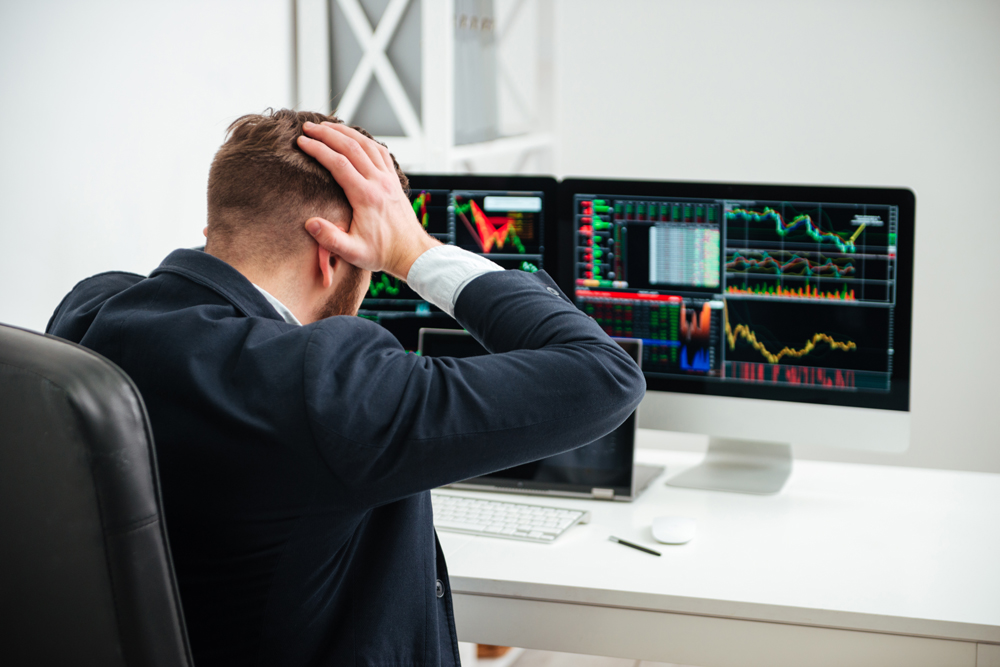
While access has expanded, many long-standing challenges remain. Retail investors frequently face inconsistent performance, emotional decision-making, and strategies that fail under volatile conditions. The speed and complexity of modern markets can be overwhelming, and traditional tools or intuition alone often prove insufficient. Retail traders may find themselves reacting to market swings rather than executing well-planned strategies, and the psychological pressures of trading as well as fear, greed, and impatience, can undermine even the best-laid plans.
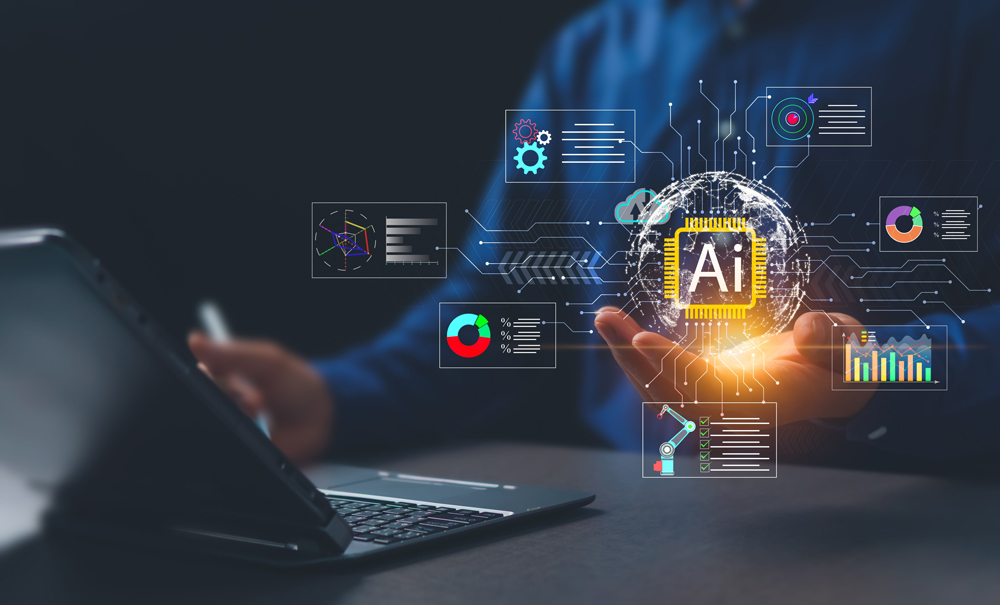
Addressing these challenges, new-age technologies particularly artificial intelligence (AI) and advanced algorithmic indicators are reshaping the landscape of retail trading. AI-powered tools can sift through massive datasets, identify patterns invisible to the human eye, and provide insights that support structured, disciplined decision-making. Algorithmic indicators enhance this by enabling systematic, rules-based analysis, reducing the reliance on guesswork or anecdotal information. Together, these technologies offer retail investors the ability to approach markets with a level of sophistication previously reserved for institutional professionals.
Reshaping retail trading using AI and algorithmic indicators
AI and algorithmic indicators transforming decision-making
At the core of next-generation trading tools is AI: systems capable of analyzing market data at scale, identifying patterns beyond human perceptual limits, and generating actionable insights. When combined with sophisticated algorithmic indicators, AI transforms how retail investors understand and respond to financial markets.
Beyond traditional indicators: Algorithmic confluence and AI signals
Traditional technical analysis relies on static indicators such as moving averages, the Relative Strength Index (RSI), or MACD (Moving Average Convergence Divergence) to identify trade setups. While these tools provide guidance, they are limited: they depend on fixed formulas and are prone to noise in fast-moving markets.
Next-generation tools move beyond these constraints. They leverage AI to analyze tens of thousands of potential market feature combinations in real time, evaluating price trends, momentum, correlations, and multi-factor confirmation layers. For instance, xBrat AI’s platform scans over 100,000 data combinations to identify high-probability setups using a “confluence” strategy, which seeks the alignment of multiple non-correlated signals simultaneously.
This approach fundamentally changes what a “signal” represents. Instead of a single alert triggered by one condition, AI-powered signals integrate multiple layers of confirmation across timeframes, momentum models, and structural patterns. This filtering reduces noise and increases the likelihood that trades meet their logical criteria.
Algorithmic indicators refined by AI reflect a shift from simple chart patterns to probabilistic, multi-factor decision engines. The result is a higher-quality signal set that helps disciplined traders navigate markets with statistical grounding and actionable context.
Real-time alerts and dynamic risk calculations
Real-time processing is another critical advancement. Modern AI trading tools operate 24/7 across multiple asset classes including forex, futures, and cryptocurrencies delivering timely alerts that adapt to shifting market dynamics. Traders can act on opportunities immediately rather than react after a move has unfolded.
Some tools now embed risk management directly into their output. Beyond signalling “buy” or “sell,” they auto-calculate recommended risk parameters, stop-loss levels, and appropriate leverage based on volatility and market structure. This represents a profound shift: technology now guides not just where to trade, but how much capital to risk, helping traders manage positions more systematically.
Democratization of professional-grade analytics
Perhaps the most transformative aspect of these technologies is accessibility. Analytical capabilities that were once exclusive to institutional quant desks—running complex back tests on vast datasets—are now available to individual traders. What previously required expensive data feeds and proprietary software can now be accessed through intuitive platforms that combine data science with real-world trading frameworks.
For retail traders, this democratization accelerates learning, improves risk awareness, and allows for more objective decision-making grounded in data rather than intuition alone.
Why most traders fail and how better tools and education can help
Despite technological advances, most retail traders underperform over the long term. Studies and brokerage data consistently show that a large percentage of retail accounts experience losses or generate weak returns year after year. Understanding why this happens is critical to developing systems that can help overcome these structural barriers.
Emotional biases override strategy
Human emotion is one of the largest hidden costs in retail trading. Fear, greed, and regret frequently cause traders to deviate from well-laid plans. AI and algorithmic tools offer objective reference points. By generating unbiased, systematic signals, these systems help traders resist emotionally driven decisions.
For example, disciplined alerts based on multi-factor confirmation anchor traders to routines rather than impulsive trades. Platforms also encourage structured daily plans, reinforcing consistent execution over time. This systematic approach reduces the influence of emotions on outcomes.
Lack of strategy and risk management education
Many novice traders enter markets without structured strategies. They often lack formal training in risk management, probability, and portfolio theory, leading them to misinterpret random outcomes as skill or neglect fundamental concepts like position sizing and risk of ruin.
Next-generation platforms embed educational resources directly into their interfaces—tutorials, signal explanations, and systematic guides allow traders to learn while trading. By linking AI-generated signals to educational content, traders understand why a setup qualifies and how to manage associated risks effectively.
Over-reliance on anecdotes and noise
In an era of social media and financial chatter, many traders mistake random success stories for replicable strategies. Data-driven AI signals cut through the noise, highlighting setups validated historically rather than chasing hype or blind tips.
Even with advanced tools, profits are not guaranteed. Responsible use requires interpretation, discipline, and alignment with a defined strategy, rather than blind execution.
Augmented trading: Technology as co-pilot, not replacement
A promising trend in retail investing is augmented trading, where technology enhances human decision-making rather than replacing it.
What augmented trading means
Augmented trading involves collaboration between AI and humans. AI handles data processing, probability assessment, and signal generation, while humans apply context, risk preferences, and strategic judgment.
AI does not replace the trader; it enhances their ability to perceive patterns, quantify uncertainty, and make timely decisions. Humans bring context, intuition, and long-term reasoning especially critical in unpredictable markets while machines process vast datasets at speeds impossible for an individual.
Mechanics of an augmented workflow
In practice, augmented trading begins with AI scanning markets for potential setups using multi-factor analysis. Traders then review these signals within the broader context of macro trends, news events, and portfolio objectives. Risk parameters are adjusted based on both AI output and individual tolerance. Execution follows a structured plan, with automation supporting discipline in repetitive tasks rather than replacing human judgment. Finally, outcomes are reviewed, feeding back into both human learning and AI refinements, strengthening future decision-making.
This symbiosis allows AI’s computational power and human judgment to jointly navigate market complexity.
Reinforcing discipline and routine
AI-driven alerts reinforce positive trading habits. Regular prompts, visualized risk metrics, and data-driven signals help traders maintain routines, reduce impulsive decisions, and develop a professional, disciplined approach over time.
Responsible, data-driven trading in volatile markets
Today’s markets are highly interconnected and volatile. Inflation reports, geopolitical developments, macro surprises, and sentiment-driven swings create rapid price movements, challenging even seasoned traders. Responsible trading in such an environment relies on four principles:
Structured strategy and discipline
Trading starts with a written plan defining entries, exits, risk limits, and position sizing. AI and algorithmic indicators enhance these plans by providing data-backed insights, not replacing them.
Robust risk management
Effective risk management is essential. Traders use tools that quantify downside risk, suggest stop-losses, and highlight shifts in volatility. AI enables dynamic adjustments to strategies when market conditions make certain trades riskier.
Continuous education and adaptation
Markets evolve, and traders must adapt. Platforms integrating structured educational content with live signals support ongoing learning, enabling traders to recalibrate frameworks and refine assumptions continuously.
Ethical and transparent use of technology
Responsible trading also requires ethical and transparent technology use. Traders must avoid systems that oversell certainty, obscure methodologies, or guarantee profits. The most effective systems clarify uncertainty and provide disciplined potential entry points, not certainties.
The future of retail trading
The rapid evolution of technology is reshaping retail trading, but its impact lies not in speed or automation alone, it lies in how effectively these tools help investors plan, think, and act with discipline. AI and advanced algorithmic indicators can analyze complex conditions, identify patterns at scale, and deliver insights impossible for manual analysis. Yet their real value emerges only within a structured, responsible decision-making framework.
For retail investors, the biggest challenge has never been market access, but the ability to navigate uncertainty consistently. Volatility, emotional bias, and poor risk management have long undermined performance. Next-generation tools address these weaknesses by emphasizing probability, risk awareness, and repeatable processes rather than prediction. By highlighting statistically relevant conditions, AI can reduce impulsive decisions and enhance understanding of market behavior.
Augmented trading as a paradigm shift
The concept of augmented trading represents a critical turning point. AI is not a substitute for human judgment; it complements it. Machines excel at pattern recognition, while humans contribute context, adaptability, and accountability. Together, they create frameworks better suited to unpredictable markets.
Technology alone is not enough
Responsible trading requires education, transparency, and clear risk parameters. Traders must understand tool limitations and resist treating algorithmic outputs as guarantees. The most effective strategies integrate technology with disciplined learning, review, and continuous improvement.
As retail participation grows, long-term sustainability depends on investors’ adaptation to this paradigm. Thoughtful use of next-generation technology can shift retail trading from speculation to informed strategy-building supporting better decisions not by removing uncertainty, but by making it measurable, understandable, and manageable.
Source link