Stock indices surged sharply amid the 14‑day ceasefire in the Middle East
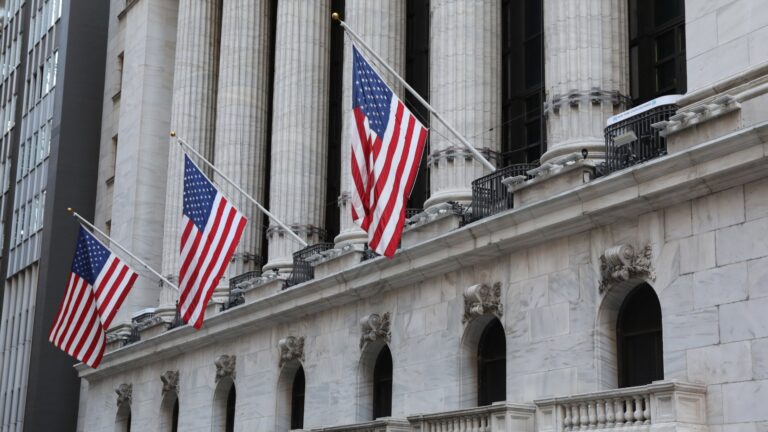
On Wednesday, the US stock indices staged a historic rally: the Dow Jones jumped more than 1,300 points, marking its best performance in a year. Investors ignored the Federal Reserve’s warnings about stagflation risks and focused instead on what many called a “diplomatic miracle” – the White House’s readiness for direct negotiations with Iran. By the end of the day, the Dow Jones (US30) rose by 2.58%. The S&P 500 (US500) gained 2.51%. The tech‑heavy Nasdaq (US100) closed up 2.80%. Despite ongoing pockets of conflict in Lebanon and the Persian Gulf, the market appears confident in the stability of the 14‑day ceasefire. The artificial‑intelligence and airline sectors were the biggest winners of the day. Shares of giants such as Nvidia, Tesla, and Meta surged between 4% and 10%, as falling oil prices and stabilizing bond yields restored investor appetite for risk assets.
The minutes of the March FOMC meeting confirm that the Federal Reserve has shifted into a mode of “heightened readiness.” The introduction of a two‑sided formulation in the rate discussion is a clear signal to markets: the Fed no longer guarantees that the next move will be a cut. Previously, investors debated only the timing of policy easing; now the hawkish wing openly acknowledges the possibility of additional hikes if inflationary pressures, fueled by geopolitics, fail to ease. The fact that most participants see risks to both prices and employment underscores the real threat of stagflation.
The Canadian dollar (CAD) strengthened confidently, reaching 1.38 per US dollar amid a broad retreat of the greenback. Paradoxically, the loonie managed to rise even as WTI crude prices collapsed due to news of the temporary ceasefire and the reopening of the Strait of Hormuz. Normally, falling oil prices drag the Canadian currency lower, but this time the sharp drop in the US dollar index to a four‑week low proved to be the dominant factor, giving the loonie a net gain for the session. However, the Canadian dollar still looks weaker than currencies such as the Australian dollar and the British pound, which are less dependent on the energy sector and recover more quickly when risk appetite returns. For the Bank of Canada, the current situation creates a complex backdrop: a stronger currency helps contain imported inflation, but a sharp decline in oil revenues could negatively affect the country’s trade balance in the long run.
On Wednesday, European markets experienced a true triumph: indices soared to monthly highs. By the end of the day, Germany’s DAX (DE40) rose by 5.06%, France’s CAC 40 (FR40) gained 4.49%, Spain’s IBEX 35 (ES35) climbed 3.94%, and the UK’s FTSE 100 (UK100) closed up 2.51%. The decisive factor was the 14‑day ceasefire between the US and Iran, which allowed the partial reopening of the Strait of Hormuz. The sharp drop in oil and natural‑gas prices in Europe became a powerful catalyst for the industrial and banking sectors. Lower energy costs immediately improved margin outlooks for giants such as Siemens, Safran, and Schneider, whose shares surged more than 10%. The banking sector, represented by Santander, UniCredit, and BNP Paribas, gained around 8% amid bond‑market stabilization and falling yields.
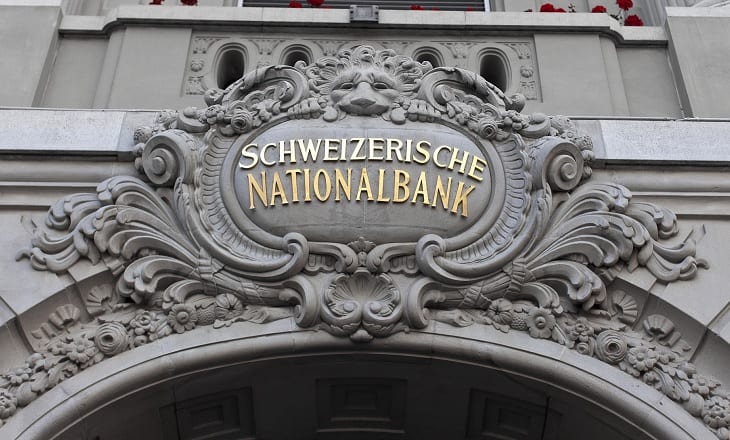
The Swiss franc (CHF) strengthened to 0.789 per US dollar, reaching a two‑week high. This movement resulted from a paradoxical combination of factors: declining global demand for the dollar as a safe‑haven asset and Switzerland’s own inflation dynamics. Under normal conditions, a strong franc effectively restrains inflation by making imports cheaper. However, the current scale of the energy crisis is so severe that the currency buffer is no longer sufficient. This creates a unique situation in which rising energy prices fully offset the deflationary impact of a strong national currency. For the Swiss National Bank (SNB), the current environment suggests a pause in active policy measures.
On Thursday, WTI crude prices staged a sharp rebound, rising more than 2% to 97 dollars per barrel. The market quickly realized that the triumphant ceasefire headlines had collided with harsh reality: the “silence window” was already at risk of collapsing within the first 24 hours. Renewed Israeli strikes on Lebanon triggered a heated dispute over the boundaries of the agreement. Tehran insists that Lebanon is part of the deal, while Benjamin Netanyahu and Donald Trump confirmed that the campaign against Hezbollah is not included in the US-Iran arrangement. Nevertheless, hope for diplomacy remains. US Vice President J.D. Vance, who is leading the American delegation, is heading to Islamabad for direct talks with Iranian representatives this weekend.
In Asia, Japan’s Nikkei 225 (JP225) rose by 5.39%, China’s FTSE China A50 (CHA50) jumped by 2.84%, Hong Kong’s Hang Seng (HK50) gained 3.09%, and Australia’s ASX 200 (AU200) climbed by 2.55%.
The offshore yuan (CNH) is holding at 6.83 per US dollar, hovering near a three‑year high. The resilience of the Chinese currency amid global volatility is explained by Beijing’s unique position: the yuan has strengthened by 1% over the past month and by 2.4% since the beginning of the year. Investors view China as a relative “safe harbor” thanks to its massive oil reserves and stable energy‑supply chains, which have proven less vulnerable to the Middle East crisis than those of other Asian economies. Market attention is now shifting to China’s macroeconomic data, which will be released on Friday. Consumer inflation (CPI) is expected to show moderate growth around 1.3%, while the Producer Price Index (PPI) may return to annual growth for the first time since 2022. If these projections are confirmed, it would signal a recovery in domestic demand and industrial activity, giving the People’s Bank of China more room for maneuver.
This article reflects a personal opinion and should not be interpreted as an investment advice, and/or offer, and/or a persistent request for carrying out financial transactions, and/or a guarantee, and/or a forecast of future events.