Breaking News: Tim Cook Steps Down As Apple CEO (What It Means For Traders) | Trading Strategy Guides
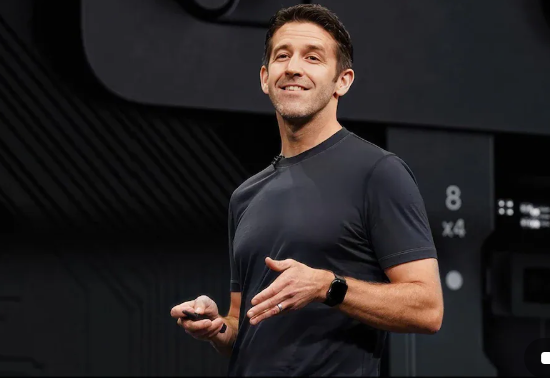

In a monumental shift that marks the end of an era for the world’s most valuable company, Apple announced on April 20, 2026, that Tim Cook is officially stepping down as Chief Executive Officer. After 15 years of transforming Apple from a wildly successful hardware company into an inescapable $4 trillion global juggernaut, Cook is passing the torch.
Effective September 1, 2026, John Ternus, Apple’s current Senior Vice President of Hardware Engineering, will assume the role of CEO. Cook will not be leaving the company entirely; he will transition to the role of Executive Chairman of the Board of Directors, ensuring a smooth transition and continuing to engage with global policymakers.
For traders and investors, leadership changes at mega-cap companies are massive catalysts. AAPL is the bedrock of the S&P 500 and the Nasdaq. When Apple moves, the entire market feels the ripple effect.
In this breakdown, we are going to dive into Tim Cook’s legacy, introduce you to the new man at the helm, analyze the current chart, and explore exactly how traders should be positioning their portfolios for this historic transition.
The End of an Era: Tim Cook’s Legacy by the Numbers
When Tim Cook took over as CEO in August 2011, replacing the legendary and visionary Steve Jobs, the skepticism on Wall Street was deafening. Analysts questioned whether a supply chain and operations expert could possibly maintain the innovative spirit of Apple.
Fifteen years later, the numbers speak for themselves. Cook didn’t just fill Jobs’ shoes; he built an entirely new stadium.
- Market Cap Explosion: When Cook took over, Apple’s market capitalization was roughly $350 billion. Today, it stands as a $4 trillion powerhouse.
- The Wearables Empire: Cook oversaw the launch and total market dominance of the Apple Watch and AirPods, creating a wearables division that generates more revenue than many Fortune 500 companies entirely on its own.
- The Services Super-Cycle: Recognizing that hardware sales would eventually plateau, Cook masterminded the Apple Services sector (Apple Music, Apple TV+, iCloud, App Store fees). This division now boasts astronomical profit margins and brings in over $100 billion annually.
- The Silicon Transition: Cook led the ruthless and brilliant transition away from Intel processors to Apple’s in-house M-series Silicon, completely revolutionizing the Mac and iPad lineups and leaving competitors scrambling.
Cook’s genius was not necessarily in inventing the next shiny object, but in operational mastery, global supply chain optimization, and extracting maximum value from the Apple ecosystem. He proved to be a master diplomat, navigating complex geopolitical tensions and trade wars to keep Apple’s massive global manufacturing engine running smoothly.
Live AAPL Price Action
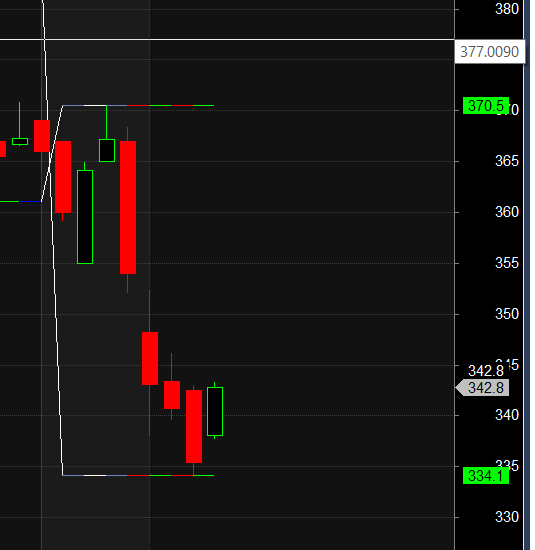
Before we look at the new CEO and the road ahead, let’s look at how the market is reacting. Below is the live TradingView chart for Apple Inc. (AAPL)
As you can see, initial reactions to major leadership changes are often volatile. Wall Street hates uncertainty, but it also respects a well-telegraphed succession plan.
Who is John Ternus? The New Face of Apple
So, who is the person entrusted with a $4 trillion company? If you aren’t familiar with John Ternus, it is because he has historically let his hardware do the talking.
Ternus is 50 years old and has been with Apple since 2001. A mechanical engineer by trade (University of Pennsylvania), he rose through the ranks to become Vice President of Hardware Engineering in 2013, and ultimately took the Senior Vice President role in 2021.
Here is why Wall Street should be optimistic about Ternus:
- He is a Product Guy: While Cook was an operations guru, Ternus is deeply embedded in the physical products. He was a driving force behind the creation of the iPad, the AirPods, and the physical design of multiple generations of the iPhone, Mac, and Apple Watch.
- The Apple Silicon Era: Ternus was instrumental in the execution of the Apple Silicon transition. His team was responsible for integrating those highly efficient chips into the chassis of the modern Mac lineup.
- He Speaks the Language of Innovation: In his endorsement, Tim Cook stated that Ternus has “the mind of an engineer, the soul of an innovator, and the heart to lead with integrity.” Ternus worked under Steve Jobs and views Cook as a mentor, blending the two distinct leadership styles of Apple’s modern history.
Ternus inherits an incredibly well-oiled machine, but he also inherits a unique set of modern challenges.
Why Now? The Challenges Ternus Inherits
A succession plan has been quietly in the works for years, but the timing of this announcement is critical. Ternus is taking the helm during a pivotal transitional phase for the broader tech industry.
The Artificial Intelligence Imperative
Apple has faced immense scrutiny over the last two years regarding its position in the Artificial Intelligence arms race. While competitors like Microsoft, Google, and Meta have sprinted aggressively into generative AI, Apple has taken a more cautious, measured approach, often relying on third-party integrations (like OpenAI) rather than leading the bleeding edge.
Ternus’ primary mandate as the new CEO will be to seamlessly weave proprietary, on-device AI into Apple’s hardware without compromising the company’s strict privacy standards. As an engineer, his technical background may be exactly what Apple needs to close the perceived AI gap.
Geopolitics and the Supply Chain
Tim Cook was the absolute master of navigating China. Between manufacturing reliance and massive consumer demand in the region, Cook walked a geopolitical tightrope flawlessly. Ternus will now have to manage these global relationships in an increasingly fractured global economy. Cook’s role as Executive Chairman will likely be highly focused on assisting Ternus in this specific area.
How to Trade the Apple Leadership Transition
News of this magnitude provides incredible opportunities for traders, particularly those who utilize options and spread strategies. Here is how you should be looking at AAPL in the coming weeks and months leading up to the September 1st handover.
1. Expect an Implied Volatility (IV) Bump
Major structural news creates uncertainty, and uncertainty creates Volatility. While the transition is months away, expect to see the Implied Volatility (IV) on AAPL options begin to slowly creep up, particularly as we get closer to the September date and the accompanying earnings reports.
If you are a premium seller, an increase in IV means you can collect more money for selling credit spreads. However, if you are trading Debit Spreads, you need to be careful. Buying debit spreads in a high IV environment can be tricky, as a “volatility crush” after the dust settles can eat into your profits.
2. The Bullish Case: Long-Term Leap Call Diagonals
If you believe that Ternus is exactly what Apple needs to supercharge its hardware division and finally dominate the AI space, you might want to look at long-term bullish positioning.
Instead of buying expensive outright shares, consider a Poor Man’s Covered Call (PMCC) or a Long Call Diagonal Spread.
- Buy a deep in-the-money (ITM) Call option expiring in 2027 or 2028.
- Sell shorter-term, out-of-the-money (OTM) weekly or monthly calls against it.
- This allows you to capitalize on the long-term growth of the Ternus era while generating weekly income to lower your cost basis.
3. The Short-Term Neutral Case: Iron Condors
Wall Street hates surprises, but they love predictability. This transition was unanimous, clearly telegraphed, and Cook is staying on as Chairman. It is highly likely that after the initial shockwaves wear off, AAPL will return to trading on its fundamentals.
If you believe AAPL will chop sideways as the market digests the news over the summer, an Iron Condor is a fantastic play. By selling an OTM Call Credit Spread and an OTM Put Credit Spread simultaneously, you can collect premium as long as AAPL stays within a defined trading range.
4. Watch the Institutional Volume
Retail traders react to the news; institutional traders react to the reality. Watch the volume profiles on AAPL closely over the next two weeks. If the big funds are using this news as a liquidity event to offload shares, you will see heavy selling pressure that breaks major support levels. If they view Ternus as a catalyst for growth, you will see aggressive accumulation on any dips. Trade the price action, not the headline.
If you want to see what our team thinks of this move, watch our video here on YouTube
The Bottom Line
Tim Cook took a legendary company and made it an undisputed global superpower. He leaves big shoes to fill, but John Ternus—with his deep hardware expertise and extensive tenure—is uniquely positioned to guide Apple into the AI-driven future.
For traders, the playbook remains the same: manage your risk, wait for the volatility to present clear setups, and use strategic options spreads to define your risk. The name on the CEO’s door is changing, but the massive liquidity and opportunity in trading AAPL options is here to stay.
Source link