A $58 Trillion ‘Big Loss’ – Fat Tail Daily

Source: Getty Images
[Click to open in a new window]
CNBC on Wednesday:
Dow rises 400 points as oil retreats on Iran deal progress
All POTUS has to do is to mention a ‘peace deal.’ It might be total fantasy. But it revives animal spirits…and the insiders profit. Megatron:
BBC confirms a consistent pattern of massive financial spikes occurring just minutes before Donald Trump makes market moving announcements.
The Kobeissi Letter digs in:
At 3:40 AM ET today, nearly 10,000 contracts worth of crude oil shorts were taken without any major news.
This is equivalent to ~$920 million in notional value, an unusually large trade for 3:40 AM ET.
At 4:50 AM ET, just 70 minutes later, Axios reported that the US is “close” to a “memorandum of understanding” to end the Iran War.
By 7:00 AM ET, oil prices had fallen over -12% with these crude oil shorts gaining approximately +$125 million.
WTF?
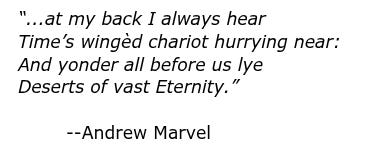
No worries. Real fortunes are rarely determined by hot tips, insider trading, robbing convenience stores or stock selection. Instead, it’s the long, deep currents — the Primary Trend and time’s winged chariot — that matter.
You put your money in the Dow stocks in 1982. Today, you have about 49 times as much money. Leave your money in cash, and today you would have about 85% less purchasing power. In other words, you are a lot richer as a result of being on the right side of that Primary Trend over the last 44 years. No need to wear a mask or flatter POTUS.
But in 1982, the prestigious magazine — Business Week — had proclaimed stocks dead. And for good reason. They’d been going down, in real terms, for 16 years…and had lost 60% to 90% of their value to inflation.
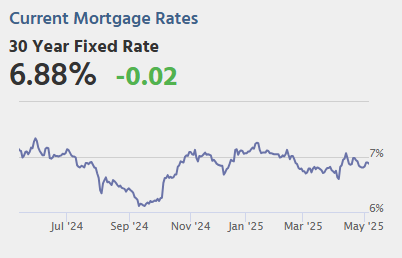
Paul Volcker pushed down stocks even further, by raising interest rates so high that a mortgage in 1982 would cost you 16% interest. And you could earn 14% simply by putting your money into Treasuries; why take the risk of stocks? And so it was that stocks hit some of their lowest prices ever; in the early ‘80s, the P/E ratio on the S&P 500 was only 7 (today, it is 31).
In retrospect, wasn’t it obvious that the Primary Trend of higher and higher interest rates, with lower and lower stock prices, had run its course?
Much could be said about why the Primary Trend reversed. Most people attribute it to a single man, Paul Volcker. But why was Volcker there? Why did president Reagan and other Fed governors allow him to raise rates so much as to send the whole economy into its worst slowdown since the Great Depression? How long would such a man last at the Fed today?
Tolstoy’s War and Peace described the French military disaster that ended Napoleon’s career. He makes it clear that it was not only Bonaparte’s decisions that counted. Russian peasants — thousands of them — had a hand in it too…burning their fields and crops to deny food to the invading French army. The brilliant Russian commander, Pyotr Bagration, played his part magnificently as well — refusing to give battle while drawing Napoleon into a trap. And, of course, there was the indomitable General Winter.
Paul Volcker was the man for the job in 1980. But today, the job description — like the weather — has changed. Trump is not Reagan. Kevin Warsh is no Paul Volcker. 2026 is not 1982. And the Primary Trend, most likely, is going the other way.
Stocks were so cheap in 1982 you could hardly expect a major, long-term bear market. And bonds, at over 10% yields, were not exactly in bubble territory.
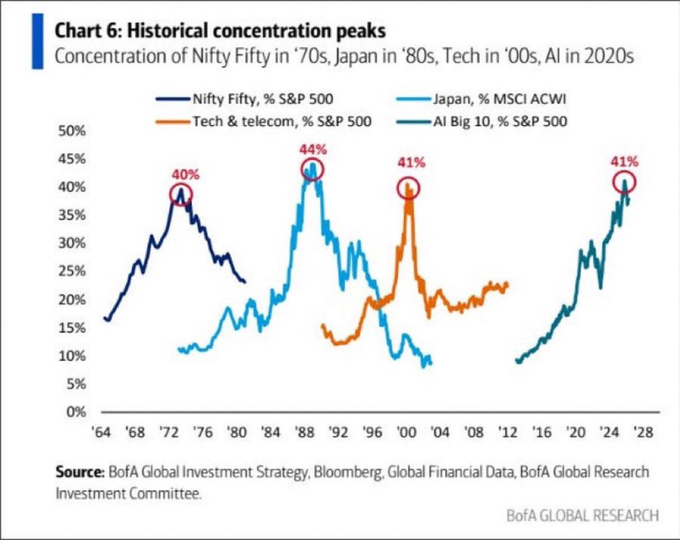
But today, the bubble is right in front of our eyes. Stocks are worth 2.3 times GDP. In 1982, the ratio was at 0.4. There is the Big Loss waiting for you — a total loss (were a correction to take us back to 1982 territory) of 1.9 x GDP = $58 trillion.
Time’s chariot flaps its wings and Primary Trends happen. The president’s tweets notwithstanding.
Source link