Algorithmic Trading – The Future of Trading
The Future of Trading
Algorithmic Trading
Technology has transformed financial markets for decades, from electronic trading platforms to high-frequency algorithms. Today, the rise of artificial intelligence has sparked a familiar debate: Will AI and algo trading bots eventually replace human traders?
It is a question rooted in both excitement and fear. Every major technological breakthrough throughout history has created concerns about humans becoming obsolete. From the invention of elewctricity to computers and automation, people have always wondered if machines would eventually take over human roles.
Trading is no exception.
While AI and algorithmic trading systems continue to evolve, the reality is more nuanced than the headlines suggest. Technology can enhance trading efficiency, but replacing human judgment entirely is another matter.
Algorithmic Trading
What Is Artificial Intelligence in Trading?
Artificial intelligence refers to computer systems designed to process information, learn patterns, and make decisions with minimal human intervention. In financial markets, AI is often promoted as a revolutionary tool capable of analyzing massive amounts of data in real time.
AI systems can scan news headlines, evaluate price action, identify correlations, and even execute trades automatically. Supporters argue that this removes emotional bias and allows traders to react faster than any human possibly could.
However, there are limitations that are often overlooked.
AI systems learn from data created and interpreted by humans. Markets themselves are driven by human emotion, psychology, geopolitical uncertainty, and unexpected events that cannot always be quantified by historical patterns.
Even the most advanced AI models depend on:
- The quality of their programming
- Historical data inputs
- Assumptions built into their models
- Human oversight and adjustments
Financial markets are not static systems. They constantly evolve based on changing sentiment, politics, economic policy, and crowd behavior. This makes trading far more complex than simply identifying mathematical patterns.
Why Human Traders Still Matter
Human traders bring something that machines still struggle to replicate: intuition and adaptability.
Experienced traders often recognize subtle shifts in market sentiment that may not appear in raw data. They understand how fear, greed, panic, and speculation influence price action.
For example, markets sometimes react irrationally to economic news or geopolitical developments. In these moments, human judgment can become far more valuable than algorithmic precision.
A trader may recognize:
- When market sentiment is becoming overly emotional
- When volatility is driven by panic rather than fundamentals
- When technical signals are being distorted by unexpected events
- When standing aside is the best decision
AI systems typically rely on historical relationships and statistical probabilities. But markets frequently behave in ways that history alone cannot predict.
What Are Algo Trading Bots?
Algorithmic trading bots, commonly called algo trading bots, are automated programs designed to execute trades based on predefined rules and strategies.
These systems can analyze market data and place trades far faster than a human trader. Today, algorithmic trading accounts for a significant percentage of global market volume, particularly in equities, forex, and futures markets.
Common functions of algo trading bots include:
- High-frequency trading
- Trend-following strategies
- Arbitrage opportunities
- Automated risk management
- Scalping strategies
- News-based trading systems
Unlike true artificial intelligence, most trading bots do not “think” independently. They simply follow coded instructions created by developers and traders.
News Algos in Trading: Why Markets Suddenly Spike During Geopolitical Crises
Advantages of Algo Trading Systems
Algorithmic trading systems offer several advantages in modern financial markets.
Speed and Efficiency
Bots can execute trades in milliseconds, far faster than any human trader. This speed can be critical in highly liquid markets where price changes occur rapidly.
Emotion-Free Trading
One of the biggest challenges traders face is emotional decision-making. Fear and greed often lead to poor risk management and impulsive trades.
Trading bots eliminate emotional reactions because they follow rules consistently.
Ability to Monitor Multiple Markets
Bots can track numerous instruments simultaneously, scanning for opportunities around the clock without fatigue.
Consistent Strategy Execution
Unlike humans, bots do not become distracted, tired, or impatient. They apply the same trading rules repeatedly.
The Limitations of Trading Bots
Despite their advantages, algo trading bots are far from perfect.
Bots Cannot Predict Black Swan Events
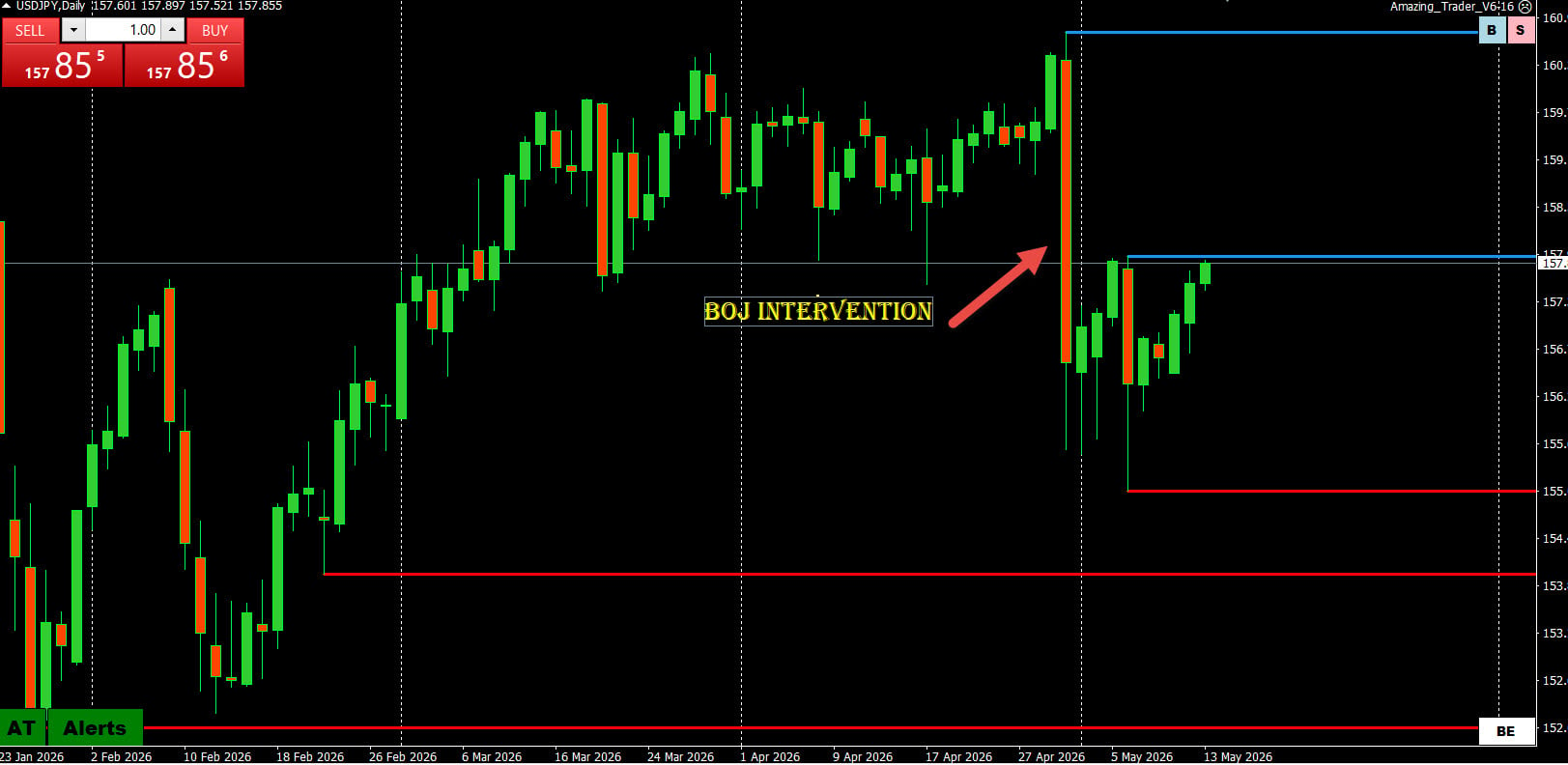
Unexpected geopolitical crises, central bank surprises, or sudden market shocks can cause algorithms to fail dramatically.
During periods of extreme volatility, automated systems may react unpredictably or amplify market instability.
Could a BOT predict BoJ intervention (April 30, 2026)?
Market Conditions Change
A strategy that performs well in trending markets may collapse in sideways or highly volatile conditions.
Bots are only as effective as the market environments they were designed for.
Over-Optimization Risks
Many automated systems appear profitable during backtesting but fail in live markets because they were overfitted to historical data.
Lack of Human Context
Algorithms struggle to interpret nuance, changing narratives, and evolving macroeconomic themes the way experienced traders can.
Can AI Completely Replace Human Traders?
The most realistic answer is that AI and algorithmic trading will continue to assist traders rather than completely replace them.
Institutional firms already use advanced algorithms extensively. However, even the largest hedge funds and investment banks still rely heavily on human analysts, portfolio managers, and risk managers.
Human oversight remains essential because markets are ultimately driven by people, not machines.
Technology can process data faster, but speed alone does not guarantee wisdom, discipline, or adaptability.
The Future of Trading: Humans and AI Working Together
Rather than viewing AI as a replacement, many traders see it as a tool that can improve efficiency and decision-making.
The future of trading will likely involve a combination of:
- Human experience and intuition
- AI-driven analytics
- Automated execution systems
- Advanced risk management technology
Successful traders will probably be those who learn how to combine technology with strong market understanding instead of relying entirely on automation.
The Human Trader is Far From Obsolete
AI and algo trading bots are reshaping financial markets, but the idea that they will fully replace human traders remains highly questionable.
Markets are influenced by psychology, uncertainty, political events, and constantly changing economic conditions. These factors are difficult to reduce to pure code and mathematical models.
Trading technology will continue to evolve, and automation will remain a major force in the industry. However, human judgment, adaptability, and emotional intelligence still play a critical role in navigating financial markets successfully.
For now, the human trader is far from obsolete.
Algorithmic Trading