Pattern Day Trading Without The $25K: Smart Ways To Start Small | Trading Strategy Guides
Are you dreaming of quitting your 9 to 5 job to become a successful day trader?
If so, it’s crucial to understand why the ‘$25,000 minimum requirement’ (pattern day trading rule – PDT) seems like a roadblock for many aspiring stock traders.
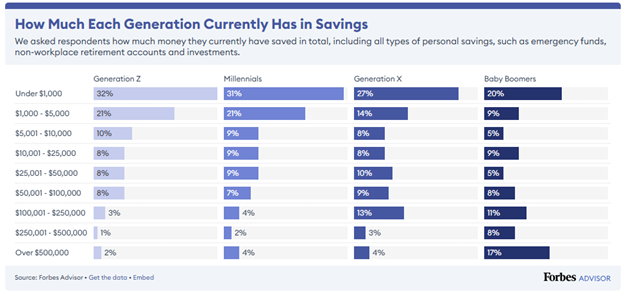
With surveys showing that the majority of Americans across all generations have significantly less than $25k in savings, this rule effectively blocks many potential traders from entering the stock market. According to the 2024 Forbes Advisor survey, over half of Gen Z (54%) and Millennials (52%) have less than $5,000 in total savings, while even among Gen X – often in their peak earning years – 42% fall below this mark.
These statistics highlight an important reality: waiting to accumulate $25,000 before starting your stock market trading journey isn’t just challenging – it’s unrealistic for many Americans.
The good news?
Once you discover the alternative strategies available, you unlock the potential to start day trading actively without needing such a large initial investment.
In this pattern day trading guide, we’ll explore proven methods to begin day trading with a smaller account while staying compliant with FINRA regulations.
First, let’s start with the pattern day trading definition.
See below…
Understanding Pattern Day Trading Rules and the $25K Rule
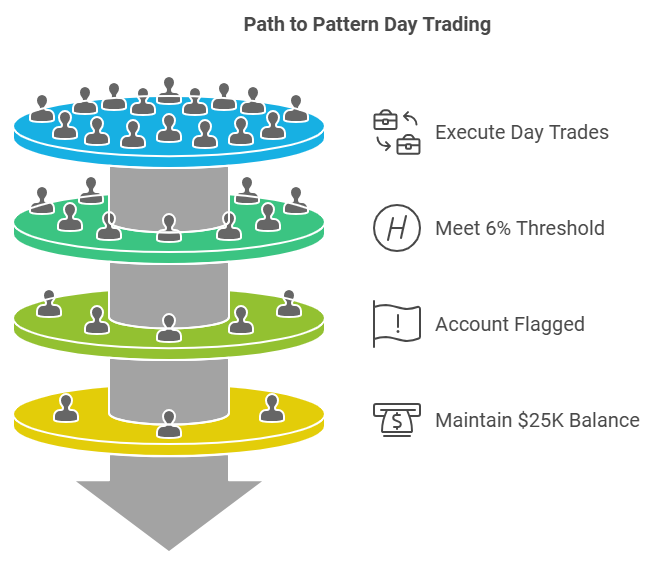
A pattern day trader (PDT) is someone who executes four or more day trades over five business days using a margin account. This PDT rule means the trader’s account must show these trades make up over 6% of the total trade activity.
If so, the trading account will be flagged for pattern day trading by financial regulator Financial Industry Regulatory Authority (FINRA) to identify retail investors who frequently execute multiple trades within short timeframes.
The $25K Rule: What It Is and Why It Matters
These stock traders must maintain a minimum balance of $25,000 in their margin account to continue executing day trades according to SEC regulations. If this balance falls below the threshold, the trader’s account will be restricted from day trading by their stock brokerage trading firm. The $25K rule requirement exists primarily to protect inexperienced investors from the high risks associated with frequent trading.
What is Day Trading as Defined by SEC?
Day trading, as defined by the Securities and Exchange Commission’s regulations, describes a trading pattern where an investor opens and closes positions in the same security within a single market day to capitalize on short-term price fluctuations.
So why does this rule exist?
See below…
Why is Pattern Day Trading Illegal
It’s there to safeguard traders from the high risks of day trading, ensuring they have a buffer against potential losses. This also means it acts as a barrier to entry for those with smaller accounts, pushing them to trade more cautiously or seek other trading strategies.
Day Trading Rules under 25k – How to Avoid Pattern Day Trading
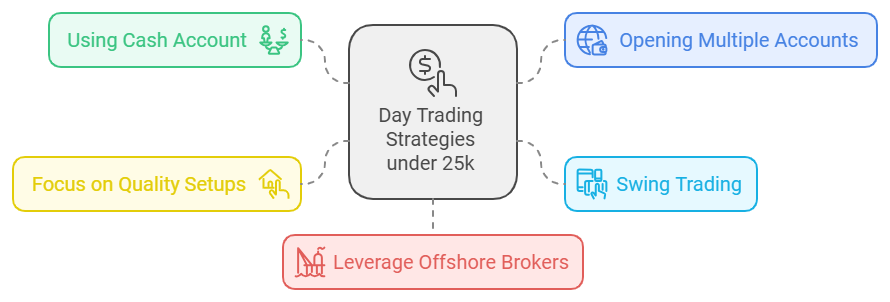
Smart trading strategies under $25K are essential approaches and techniques that new traders can use to navigate around the PDT restrictions successfully. Let’s explore practical solutions, alternative methods, and expert recommendations.
Using Cash Account Strategy
The most straightforward strategy recommended by experienced traders is switching to a cash account trading. Each cash account lets you make unlimited day trades while avoiding PDT rules completely. When you’re starting with a smaller account, three to five well-planned trades per week can be sufficient to build consistent profits.
Pros
- Unlimited day trades without worrying about PDT restrictions
- Perfect for learning proper risk management
Cons
- Must wait for trades to settle
- Limited leverage options
Opening Multiple Brokerage Accounts
One strategy is to open multiple stock brokerage accounts. Each account provides three day trades per rolling five-day period. If you open two accounts, you get six trades per week, which can be enough if used wisely. It’s a smart way to navigate the day trading margin requirements without exceeding the limit.
Using Swing Trading Strategy
Many traders don’t realize that swing trading strategy provides an excellent alternative to day trading restrictions. That’s important because you can hold positions overnight or for several days.
The main reason why swing trading has become increasingly popular among traders with smaller trading accounts is the flexibility it offers regarding trade timing and management.
Consider this: if you have a $10,000 account balance and want to take a position, you can enter and exit over multiple days without PDT restrictions. This gives you more freedom to let your trades develop naturally.
Pros
- No PDT rule concerns
- Better work-life balance
- Different trading strategies for swing traders (trend following, position trading, breakout trading etc.)
Cons
- Overnight market risk
- Requires different strategy approach
Focus on Quality Setups
This principle applies universally, but it’s especially crucial for traders working with smaller accounts. The limited capital forces you to be more selective and disciplined. As a trader building your account, you should constantly ask yourself, “Does this setup provide enough potential reward to justify the risk?”
The discipline you develop while trading a smaller account will serve as invaluable experience when you eventually scale up your trading size.
Leverage Offshore Brokers
Some stock traders opt for offshore brokers to bypass the PDT rule. These brokers aren’t bound by U.S. regulations, offering more freedom for day trading without $25k. However, be mindful of the day trading risks and ensure you’re comfortable with the legal and financial implications involved.
Day Trading on Different Markets
A strategy some traders use is to explore different markets and asset classes. By diversifying across options trading, futures, forex, and cryptocurrencies, you can find additional day trading opportunities that might not be available in one market alone. Each market and tradable instrument have its own characteristics and can provide various trading chances throughout the day.
By following these steps, stock day traders with accounts under $25,000 can effectively navigate the pattern day trading rule and enhance their trading strategies.
Source link