
Advantages & Disadvantages of Tariffs – Forex Mentor Pro
There has been a lot of talk lately about Trump introducing tariffs on foreign countries. What does this mean to those countries and more importantly what does it mean to us and how will it affect us? In this post, we will focus on that, and I will educate you about Tariffs.
What are Tariffs?
Investopedia says, “A tariff is a type of tax levied by a country on an imported good at the border. Tariffs have historically been a tool for governments to collect revenues, but they are also a way for governments to try to protect domestic producers.”
Most of the products that we use in the Western world are imported and come from countries like China, India, Vietnam, etc. This is because the cost of labour and to produce the goods is cheaper, hence why we are able to afford them for a cheaper price. Let’s take a basic example: Primark mostly manufactures its clothes in Asia. According to Statista, below is a list of factories that Primark has in different countries.
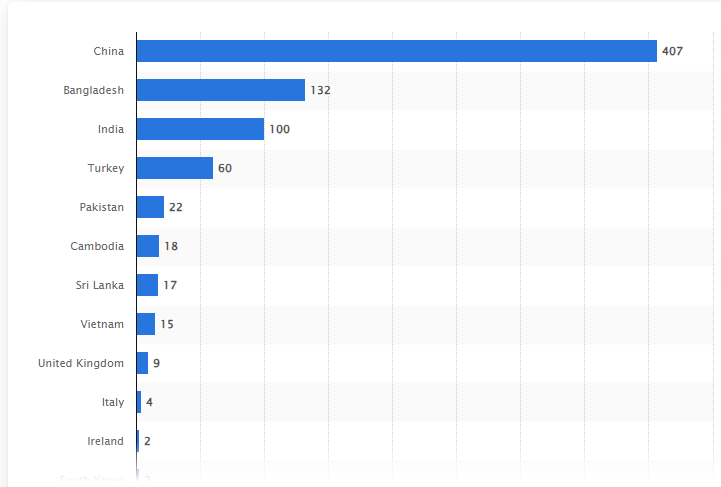
China, Bangladesh and India have the most of factories. The United Kingdom only has 9 (probably small ones), and hardly any in Europe. This is because the wages are a lot cheaper in Asia, which is why they are able to keep their costs down in the stores.
Now Imagine if most of these factories were in Europe, UK or USA. What would it do to the final retail price? It would be a lot higher because the labour costs more so they would have to pass down the costs to the consumers. Primark wouldn’t really be Primark anymore.
The cost of tariffs is paid by consumers in the country that imposes the tariffs, not by the exporting country.
So with Trump coming in he is preparing to impose tariffs on many countries who have major trade agreements with the USA. He recently mentioned he would impose tariffs on Mexico and Canada.
Understanding Tariffs and Their Impact
Many economists argue that tariffs often distort markets, potentially harming domestic consumers in the long run. Tariffs can provoke retaliatory measures from trading partners, leading to tit-for-tat tariffs that risk escalating into damaging trade wars.
Determining Tariff Rates
Setting tariff rates involves a mix of economic, political, and strategic considerations. Governments may impose tariffs to protect domestic industries, address trade imbalances, or counteract unfair trade practices. Additionally, tariffs can serve as political tools for managing international relationships. Establishing tariff rates often requires complex negotiations and reciprocal agreements with trading partners.
How Tariffs Work
Tariffs restrict imports by increasing the cost of goods and services purchased from other countries, making them less appealing to domestic consumers. There are two primary types of tariffs:
- Specific Tariffs: These are fixed fees applied to a particular type of item, such as a $1,000 tariff on a car.
- Ad Valorem Tariffs: These are based on a percentage of the item’s value, such as 10% of a vehicle’s price.
Governments use tariffs to generate revenue or protect domestic industries, particularly emerging ones, from foreign competition. By making imported goods more expensive, tariffs can make domestic alternatives more attractive to consumers.
The Unintended Consequences of Tariffs
While tariffs may achieve short-term goals, they often have unintended side effects:
- Reduced Efficiency and Innovation: By limiting competition, tariffs can make domestic industries less motivated to innovate or improve efficiency.
- Higher Costs for Consumers: Tariffs often lead to increased prices for goods, which can negatively impact consumers.
- Regional and Sectoral Tensions: Tariffs may favor specific industries or regions, creating disparities and tensions within an economy.
Who Is Affected by Tariffs
- Lower-Income Consumers: Tariffs tend to disproportionately affect lower-income individuals, as they spend a larger share of their income on necessities. Higher prices for imported goods can strain their budgets.
- Small Businesses: Small businesses relying on imported materials often face significant challenges, as they lack the financial resources and policy influence of larger corporations. Tariffs can increase production costs and limit their competitiveness.
- Developing Countries: Higher tariffs can restrict access to international markets for developing nations, impeding their economic growth and integration into the global economy. Limited resources further constrain their ability to import essential goods.
Case in Point: The U.S. Trade Deficit
The effects of tariffs on broader economic metrics can be complex. For example, despite the imposition of tariffs under the Trump administration, the U.S. trade deficit grew from $481 billion in 2016 to $679 billion in 2020, highlighting that tariffs do not always achieve their intended goals.
In summary, while tariffs can serve as a tool for protecting domestic industries or addressing trade issues, their broader implications often lead to unintended economic challenges, impacting consumers, businesses, and global trade dynamics.

References:
https://www.statista.com/statistics/1102388/number-of-suppliers-of-primark-by-region/
https://www.wsj.com/economy/trade/trump-fires-salvo-on-north-american-trade-pact-eded4fca
https://dornsife.usc.edu/news/stories/tariffs-explained-by-economics-professor-trade-expert/
https://www.investopedia.com/news/what-are-tariffs-and-how-do-they-affect-you/
None of the Forex Mentor Pro team nor its owners (expressly including but not limited to Marc Walton), officers, directors, employees, subsidiaries, affiliates, licensors, service providers, content providers and agents (all collectively hereinafter referred to as “Forex Mentor Pro ”) are financial advisers and nothing contained herein is intended to be or to be construed as financial advice
Forex Mentor Pro is not an investment advisory service, is not an investment adviser, and does not provide personalized financial advice or act as a financial advisor.
Forex Mentor Pro exists for educational purposes only, and the materials and information contained herein are for general informational purposes only. None of the information provided in the website is intended as investment, tax, accounting or legal advice, as an offer or solicitation of an offer to buy or sell, or as an endorsement, recommendation or sponsorship of any company, security, or fund. The information on the website should not be relied upon for purposes of transacting securities or other investments.
You hereby understand and agree that Forex Mentor Pro, does not offer or provide tax, legal or investment advice and that you are responsible for consulting tax, legal, or financial professionals before acting on any information provided herein. “This report is not intended as a promotion of any particular products or investments and neither Forex Mentor Pro group nor any of its officers, directors, employees or representatives, in any way recommends or endorses any company, product, investment or opportunity which may be discussed herein.
The education and information presented herein is intended for a general audience and does not purport to be, nor should it be construed as, specific advice tailored to any individual. You are encouraged to discuss any opportunities with your attorney, accountant, financial professional or other advisor.
Your use of the information contained herein is at your own risk. The content is provided ‘as is’ and without warranties of any kind, either expressed or implied. Forex Mentor Pro disclaims all warranties, including, but not limited to, any implied warranties of merchantability, fitness for a particular purpose, title, or non-infringement. Forex Mentor Pro does not promise or guarantee any income or particular result from your use of the information contained herein. Forex Mentor Pro.com assumes no liability or responsibility for errors or omissions in the information contained herein.
Under no circumstances will Forex Mentor Pro be liable for any loss or damage caused by your reliance on the information contained herein. It is your responsibility to evaluate the accuracy, completeness or usefulness of any information, opinion, advice or other content contained herein. Please seek the advice of professionals, as appropriate, regarding the evaluation of any specific information, opinion, advice or other content.
Marc Walton, owner of Forex Mentor Pro, communicates content and editorials on this site. Statements regarding his, or other contributors’ “commitment” to share their personal investing strategies should not be construed or interpreted to require the disclosure of investments and strategies that are personal in nature, part of their estate or tax planning or immaterial to the scope and nature of the Forex Mentor Pro philosophy.
All reasonable care has been taken that information published on Forex Mentor Pro website is correct at the time of publishing. However, Forex Mentor Pro does not guarantee the accuracy of the information published on its website nor can it be held responsible for any errors or omissions.