
The 12 Biggest Successes and Fails in the History of Bitcoin | BitcoinChaser



Bitcoin’s history reads like a collection of legends, some inspiring, some painful, all unforgettable.
For every early adopter who accidentally became a millionaire, there’s someone else who lost a fortune to a forgotten password, a hacked exchange, or one impulsive decision made at the worst possible moment.
These wild swings haven’t just shaped individual lives; they’ve shaped how the world understands Bitcoin itself.
What began as an obscure cypherpunk experiment has grown into a global asset held by corporations, pension funds, and everyday savers.
Along the way, Bitcoin has created unbelievable wealth, erased just as much, and produced stories that sound almost too dramatic to be real.
So, in the spirit of learning from the brilliance and the chaos, let’s explore twelve of the biggest successes — and twelve of the most memorable fails — that helped define Bitcoin’s journey from niche curiosity to financial powerhouse.
Table of Contents
The Biggest Bitcoin Successes
1. Mr Smith – The engineer who turned $3,000 into a global lifestyle
Around 2010, an anonymous software engineer known as “Mr Smith” bought roughly $3,000 worth of bitcoin when it traded around 15 cents.
That gave him close to 20,000 BTC. At the time, it was a fringe experiment with almost no real-world value, so he stored the coins and got on with his job in Silicon Valley.
By 2013, the media had finally noticed Bitcoin. When Mr Smith checked his wallet, he realised he was suddenly sitting on a small fortune.
As the price surged, he sold 2,000 BTC at around $350, then another 2,000 BTC at about $800, netting roughly $2.3 million.
That was enough for him to quit his job, travel the world, and adopt a permanent luxury lifestyle.
2. Kristoffer Koch – The forgotten thesis experiment
In 2009, Norwegian engineering student Kristoffer Koch discovered Bitcoin while researching encryption.
Out of curiosity, he spent about $26.60 on 5,000 BTC. It wasn’t a serious investment, just a small experiment linked to his academic work.
Then he forgot about it.
Four years later, in 2013, the news cycle exploded with stories about Bitcoin’s wild price surge.
Koch remembered his old wallet, dug out his login details, and discovered he was nearly a millionaire.
He sold 1,000 BTC and used the proceeds to buy a flat in Oslo outright.
After selling 1,000 BTC to buy an apartment, he kept the remaining 4,000 coins.
Their later value isn’t publicly known, but depending on how long he held them, those coins could have grown into a fortune worth hundreds of millions.
His story is a perfect illustration of how a small, almost throwaway decision in Bitcoin’s early days turned into a life-changing outcome.
3. Kingsley Advani – Selling everything for one big bet
In 2017, software engineer Kingsley Advani decided that “small exposure” to Bitcoin wasn’t enough.
Convinced that cryptocurrencies were a once-in-a-generation opportunity, he sold his possessions, emptied his savings, and invested about $34,000 into bitcoin and select crypto projects right before the epic 2017 bull run.
Within months, his holdings were worth seven figures. Instead of cashing out completely, he used his new wealth to pivot his career: travelling between San Francisco, New York, and London, advising startups and angel-investing in early-stage crypto ventures.
His story is extreme, and it can easily be romanticised, but it also underscores a key point: when conviction, timing, and risk appetite align, crypto can move the needle faster than almost any other asset class.
It also quietly hints at the survivorship bias; we hear more about the all-in winners than the all-in losers.
4. Tesla’s $1.5 billion Bitcoin purchase
In early 2021, Tesla announced it had purchased $1.5 billion worth of Bitcoin and briefly planned to accept BTC as payment for its cars.
This single disclosure changed how mainstream investors looked at Bitcoin overnight.
Up to that point, Bitcoin was still seen by many institutions as speculative and peripheral.
Tesla’s move signalled that a major S&P 500 company was willing to hold BTC in its treasury, not just as a hedge, but as a strategic store of value.
Other firms followed with smaller allocations, and the narrative of “Bitcoin as corporate reserve asset” took hold.
Tesla later reversed some of its enthusiasm, suspended BTC payments, and sold a chunk of its holdings, but the psychological barrier had been broken.
Once a company of Tesla’s scale had done it, it was much easier for boards and CFOs to justify looking at Bitcoin seriously.
5. MicroStrategy – The corporate Bitcoin vault
If Tesla dipped a toe in the water, MicroStrategy jumped headfirst.
Starting in 2020, under CEO Michael Saylor, MicroStrategy began converting its cash reserves into Bitcoin.
Then it started raising money specifically to buy more: issuing notes, selling equity, and repeatedly disclosing new BTC purchases.
Over several years, the company accumulated hundreds of thousands of Bitcoin, turning MicroStrategy into a publicly traded Bitcoin proxy.
This was controversial from a traditional corporate finance perspective.
Critics saw it as reckless; supporters saw it as a bold, visionary hedge against inflation and fiat currency debasement.
Whatever the verdict, MicroStrategy’s strategy pushed the idea of Bitcoin-based treasury management from “crazy” to “possible” and influenced countless smaller firms and high-net-worth individuals.
6. Spot Bitcoin ETFs – When Wall Street joined the party
For years, investors speculated about the impact of a spot Bitcoin ETF. Futures-based products existed, but they were indirect and often awkward.
In 2024, things changed when regulators finally approved spot Bitcoin ETFs across major markets.
This gave institutions and everyday investors a new way to access Bitcoin through existing brokerage accounts, without handling private keys, exchanges, or wallets.
Pension funds, wealth managers and conservative portfolios could now add Bitcoin exposure with a familiar product structure.
The result was a surge of capital into the asset, a series of new all-time highs, and, more importantly, a shift in perception.
Bitcoin was now not just a niche or speculative asset, but a recognised component of mainstream financial architecture.
7. The Winklevoss twins – From Facebook lawsuit to Bitcoin billionaires
Tyler and Cameron Winklevoss are remembered for their legal battle with Mark Zuckerberg over the origins of Facebook, but their larger legacy may be Bitcoin.
After their settlement, they reportedly invested about $11 million into BTC in 2013 at around $120 per coin, acquiring roughly 91,000+ BTC.
They didn’t just buy and hold. They became vocal advocates, funded research, and later built Gemini, a regulated crypto exchange focusing on compliance and security.
As Bitcoin climbed into five and six figures, its holdings were repeatedly valued in the billions.
Their story demonstrates how early, high-conviction capital combined with long-term holding can transform a windfall from one tech wave (social media) into generational wealth in another (crypto).
8. Erik Finman – The school-hating teenager who bet on Bitcoin
Erik Finman was gifted $1,000 by his grandmother in 2011. Instead of saving it traditionally, he bought Bitcoin at around $10 per coin. He was 12 years old.
Over the next few years, he continued to accumulate and trade.
He famously joked with his parents that if he became a millionaire by the age of 18, he wouldn’t have to go to college.
In 2017, as Bitcoin hit new highs, his holdings and related ventures pushed his net worth into seven figures.
Finman’s story gets shared so often because it flips the usual narrative: instead of parents teaching kids about money, a teenager used a new form of money to escape a path he didn’t believe in.
It’s not a playbook to copy blindly, but it is one of the more visible examples of crypto enabling a radically unconventional life path.
9. Dogecoin – The joke coin that refused to die
Dogecoin was launched in 2013 as a joke: a light-hearted, fun cryptocurrency based on the “Doge” Shiba Inu meme.
It had no hard cap and no grand monetary policy, but it had charm and a very enthusiastic community.
Over time, that community did surprisingly serious things. Dogecoin holders raised funds for charity causes, paid for sponsorships, and helped send the Jamaican bobsleigh team to the Winter Olympics.
Later, as meme culture, social media, and speculative manias collided, Dogecoin’s price skyrocketed into multi-billion-dollar territory.
On paper, many early Dogecoin holders became millionaires in a project that was never meant to be serious.
10. Michael Monten – One trade, 27 Bitcoin
During the COVID-19 crash in March 2020, crypto markets were in chaos.
Most traders were trying not to blow up as Bitcoin plunged.
London-based trader Michael Monten took the opposite side. After thousands of hours spent studying charts and market structure, he built a plan to short BTC during the crash.
Executing that plan during one of the most volatile periods in modern market history, he turned $7,000 into $3 million profit in a single trade.
Unlike the long-term holders who benefited from time and patience, Monten’s story shows the other side of Bitcoin success: exploiting volatility with skill and discipline.
It’s rare, risky, and not easily replicable, but it is part of Bitcoin’s history.
11. Future_PeterSchiff – Quiet, disciplined accumulation
In contrast to spectacular trades and giant bets, Reddit user Future_PeterSchiff built his position the boring way.
After initially dismissing Bitcoin as a fad in 2013, he revisited it in 2016 while working as a tech analyst. This time, he looked at the data, learned how the monetary system worked, and decided Bitcoin was worth a structured bet.
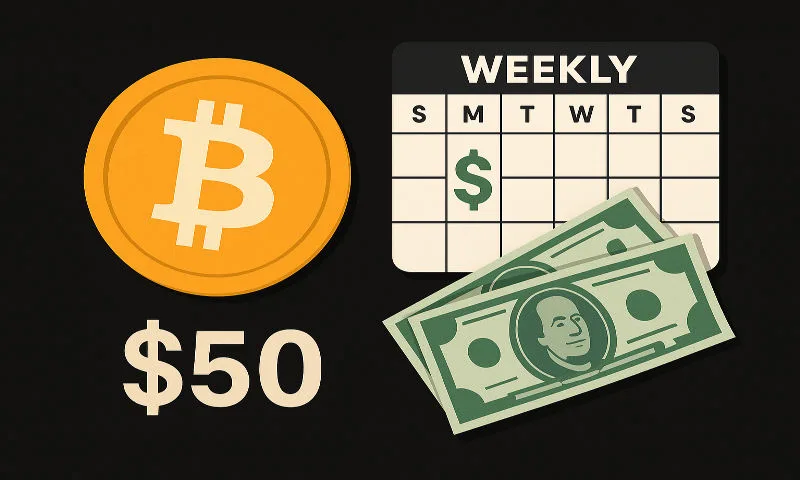
Rather than going all-in, he set up a $50-per-week dollar-cost averaging plan, funded by cutting back on beer, cigarettes and fast food. The rule was simple: buy every week, regardless of the price.
Over several years, those small purchases compounded into a multi-six-figure BTC stack.
When inflation began to erode fiat savings, his Bitcoin holdings acted as a buffer.
His story is powerful because it doesn’t rely on luck, timing, or insider access. It shows how a modest, consistent investment turned into a small fortune.
12. Life on Bitcoin – Turning a payment experiment into a documentary
In 2013, newlyweds Austin and Beccy Craig decided to live for 90 days using only Bitcoin.
No cash, no cards. Everything from rent and food to travel had to be arranged using BTC.
This was long before slick crypto debit cards and large merchant networks.
They had to persuade landlords, shop owners, and service providers one by one, bartering enthusiasm and media interest in exchange for flexibility.
They expanded the journey into a documentary, travelling from the U.S. to Europe and Asia while still trying to live entirely on-chain.
Financially, they didn’t get rich from the experiment, but from a success-of-history perspective, it mattered.
It demonstrated early on that Bitcoin could function as money in the real world, not just as a speculative asset.
It also captured an important cultural moment: when using Bitcoin was still weird, awkward, and exciting.
Bitcoin Success timeline table
| Year | Event | Why it mattered |
|---|---|---|
| 2009 | Kristoffer Koch buys 5,000 BTC | Tiny thesis experiment becomes multi-million fortune |
| 2010 | Mr Smith invests ~$3,000 in BTC | Early conviction sets up a future nine-figure lifestyle |
| 2011 | Erik Finman buys BTC at age 12 | Teenager eventually becomes a crypto millionaire |
| 2013 | Winklevoss twins invest $11m in BTC | Large early institutional-style allocation |
| 2013 | Life on Bitcoin experiment | Demonstrated early real-world usability |
| 2017 | Kingsley Advani goes all-in | All-or-nothing bet turns into rapid millionaire status |
| 2020 | MicroStrategy starts accumulating | First major public company to adopt BTC as primary reserve |
| 2020 | Michael Monten’s COVID crash short | One of the most iconic trading wins in crypto history |
| 2016– | Future_PeterSchiff DCA strategy | Shows the power of long-term, small, consistent buys |
| 2021 | Tesla buys $1.5b in BTC | Big brand validation and corporate treasury signal |
| 2023–24 | Spot Bitcoin ETFs launched | Gave institutions and retail easy Bitcoin exposure |
| 2013–2025 | Dogecoin’s rise | Culture-driven meme coin success and mainstream awareness |
The Biggest Bitcoin Fails
1. Bitcoin Pizza Day – 10,000 BTC for two pizzas
On 22 May 2010, developer Laszlo Hanyecz posted on a forum offering 10,000 BTC for two pizzas.
A fellow user accepted, and the deal was done: 10,000 BTC for two Papa John’s pizzas.
At the time, it was an insignificant amount of money and a major symbolic milestone — the first documented real-world purchase using Bitcoin.
At 2025 prices, those 10,000 coins are worth more than a billion dollars :O
Laszlo’s transaction is simultaneously a triumph and a failure. It proved that Bitcoin could function as money, kick-starting real-world usage.
But it also stands forever as the most famous example of “if only I’d held just a little longer.”
2. Kane Ellis – A very expensive McDonald’s meal
Australian entrepreneur Kane Ellis mined bitcoin in 2010 when it was trading for just a couple of dollars. In 2011, he used 2–4 BTC to buy a McDonald’s meal. At the time, it was a fun anecdote about using digital money to buy real-world food.
Years later, that meal turned into a six-figure regret. Those coins alone, if held, could have bought a luxury car on their own.
Fortunately, Ellis kept most of his BTC and later sold a portion to buy a bright yellow Maserati.
His McDonald’s story is now a running joke in crypto circles — a light-hearted warning about spending too much too early.
3. James Howells – The fortune buried in a landfill
In 2009, Welsh IT worker James Howells mined thousands of bitcoins on his personal computer when the coins were virtually worthless.
In 2013, during a house clear-out, he accidentally threw away the hard drive containing the private keys to 7,500 BTC.
By the time he realised, the drive was buried somewhere in a landfill. As Bitcoin’s price climbed, the value of those lost coins ballooned into the hundreds of millions.
Howells spent years trying to convince the local council to let him fund a professional excavation, offering them a large share of any recovered value, but environmental and legal concerns repeatedly blocked the attempt.
Today, his story functions as the archetype of accidental Bitcoin tragedy: a life-changing fortune, technically still “there”, but practically unreachable.
4. Stefan Thomas – Two password attempts from oblivion
Programmer Stefan Thomas received 7,002 BTC in 2011 for making an animated video about Bitcoin.
He stored his private keys on an encrypted IronKey device and wrote the password on a piece of paper. At some point, that piece of paper disappeared.
IronKey devices allow only ten password attempts before permanently locking. Thomas used eight. With only two attempts left, he stopped trying, knowing that a couple more wrong guesses could effectively destroy hundreds of millions of dollars’ worth of BTC.
Later, hardware hacking firms claimed they might be able to bypass the attempt limit, but Thomas has to weigh the risk of total loss against the possibility of recovery.
His situation is one of the most excruciating in Bitcoin’s history: the coins are safe, untouched, and his — and he still cannot use them.
5. Twenty percent of Bitcoin is lost forever
Stories like Howells and Thomas are not isolated. Analysis of on-chain data suggests that a significant chunk of all Bitcoin ever mined — often estimated at around 20% — is likely permanently lost.
These include coins sent to wrong addresses, wallets that have not moved in over a decade, and early mining rewards where owners threw away hardware.
This silent catastrophe has two sides. On one hand, it is heartbreaking: fortunes lost to small mistakes or lack of foresight.
On the other hand, it makes the remaining supply scarcer, increasing the value of coins that are still in circulation.
It also reinforces the core trade-off of Bitcoin self-custody: you are your own bank, but you are also your own last line of defence.
6. Mt. Gox – The original mega-collapse
For several years, Mt. Gox was Bitcoin. At its peak, the Tokyo-based exchange processed around 70% of global BTC trades. For many users, “having bitcoin” meant “having a balance on Mt. Gox”.
In 2014, that illusion shattered. Withdrawals stalled, rumours swirled, and the exchange abruptly shut down.
It turned out that hundreds of thousands of BTC, slowly drained over several years by attackers and internal failures, were gone. Users lost access to their funds overnight.
The collapse sent Bitcoin into a lengthy bear market and permanently changed how people view custodial exchanges.
It popularised the mantra “not your keys, not your coins” and drove many early adopters towards hardware wallets and cold storage.

7. The Bitfinex hack – 120,000 BTC gone
In 2016, Hong Kong-based exchange Bitfinex suffered a major security breach where hackers stole around 120,000 BTC.
To manage the fallout, Bitfinex spread the losses across all users’ balances and issued BFX tokens representing their claims, eventually buying them back or converting them into equity.
While most customers were ultimately compensated in some way, the incident had a lasting impression on the market.
This led to the price of Bitcoin plunging, critics questioned exchange security practices, and confidence took another hit.
The Bitfinex hack joined Mt. Gox as a reminder that even technically sophisticated exchanges can be single points of catastrophic failure.
8. The Coincheck hack – A blow in the middle of a bear market
In early 2018, during the aftermath of the 2017 bull run, Japanese exchange Coincheck was hacked for hundreds of millions of dollars’ worth of cryptocurrency.
Although the stolen asset was mainly NEM rather than BTC, the shock hit the wider crypto market hard.
Investors who were already nursing losses from the post-2017 crash saw the hack as further proof that the industry was unregulated, immature, and fragile.
Japanese regulators responded with stricter rules, and investors became more cautious about leaving large balances on exchanges.
Coincheck’s loss became one of the key cautionary tales of the 2018 crypto winter.
9. QuadrigaCX – The CEO, the death, and the missing funds
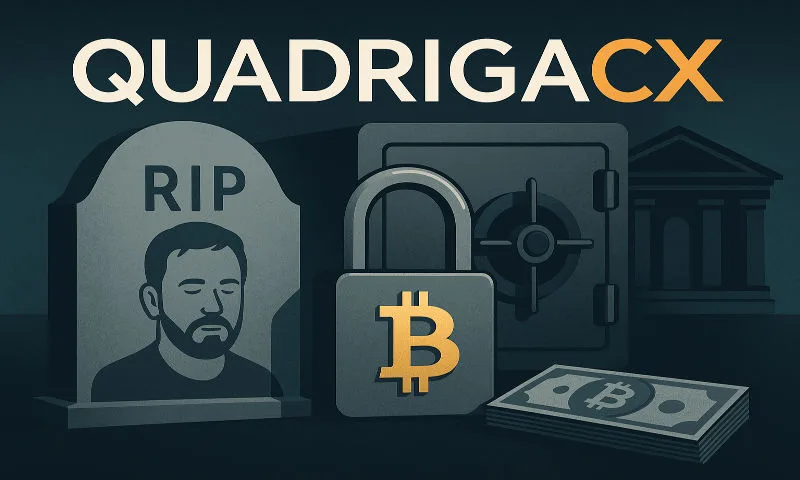
QuadrigaCX was once Canada’s largest crypto exchange. In late 2018, its founder and CEO, Gerald Cotten, reportedly died suddenly while travelling in India.
The company claimed he was the only person with access to the exchange’s cold wallets.
Users were locked out of their funds. Initial reports suggested that hundreds of millions in crypto were trapped in wallets only Cotten could unlock.
Later investigations found that those “cold wallets” were largely empty, and that customer deposits had been mismanaged and misused long before his death.
Quadriga became a mix of tragedy, scandal, and mystery. For many users, it was their Mt. Gox moment — a brutal reminder that trusting a single, opaque centralised operator can be fatal.
10. FTX – The empire that imploded overnight
In 2022, FTX was one of the most respected names in crypto. It had high-profile sponsorships, big-name backers, and a carefully crafted image of being the “grown-up” exchange.
That image collapsed in a matter of days.
Reports emerged that FTX’s sister trading firm, Alameda, was deeply entangled with FTX’s own token and customer funds.
A crisis of confidence sparked a run on the exchange. Within days, FTX halted withdrawals and filed for bankruptcy. Billions of dollars in customer assets effectively vanished from their control.
Bitcoin plunged, confidence in centralised exchanges hit a new low, and regulators worldwide tightened scrutiny of the entire sector.
FTX became shorthand for one of the largest failures of trust in crypto history.
11. BlockFi’s accidental giveaway
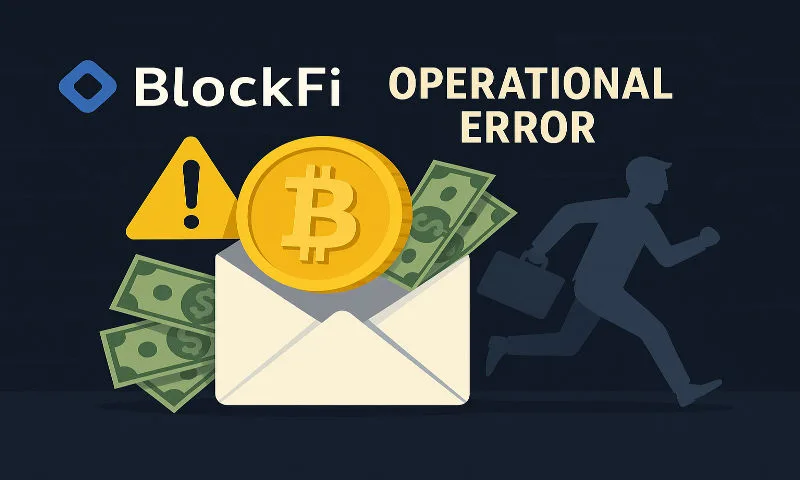
During a promotional event, crypto lender BlockFi intended to reward users with small amounts of stablecoins.
A back-end error resulted in some users being credited with large sums of bitcoin instead, including one account that received hundreds of BTC.
Dozens of users attempted to withdraw the mistaken funds before the error was reversed.
BlockFi demanded the funds be returned and threatened legal action against those who refused. The incident raised questions about the firm’s internal controls and risk management.
While not a hack or direct theft, it was still a serious operational failure and a public embarrassment.
12. Retail regret stories – Overtrading, skins, and missed millions
Not all Bitcoin fails are headline-grabbing hacks. Some of the most relatable are personal:
One early investor who started buying BTC at around $5 built a life-changing position, only to see most of it evaporate through emotional trading, panic selling, exposure to Mt. Gox, margin losses, and lifestyle creep.
He ended up with only a fraction of his peak net worth, looking back on what could have been generational wealth.
Another user sold 0.7 BTC in early 2017 to buy CSGO skins, thinking Bitcoin had finally “recovered”. Weeks later, BTC began its run to $20,000.
He had sat through years of stagnation, only to sell just before the biggest breakout.
A UK investor accumulated a few BTC early but kept delaying larger buys because of exchange fees and verification waits.
Later, he switched from holding BTC directly to owning mining stocks inside a tax wrapper, convinced they would outperform.
They collapsed while Bitcoin soared. Years on, he calculated that simply holding BTC would have made him a millionaire several times over.
These stories are not about hacks or fraud. They’re about human behaviour: second-guessing, greed, fear, overcomplication, and the difficulty of doing the simple thing – buying and holding – when markets are noisy.
Bitcoin Fails timeline table
| Year | Event | What went wrong |
|---|---|---|
| 2010 | Bitcoin Pizza Day | 10,000 BTC spent on pizza, later worth over $1 billion |
| 2011 | Kane Ellis’ McDonald’s meal | 7,500 BTC thrown away in a landfill |
| 2013 | James Howells’ hard drive | Around 120,000 BTC were stolen in a security breach |
| 2011– | Stefan Thomas loses password | 7,002 BTC locked behind IronKey with 2 tries left |
| 2014 | Mt. Gox collapse | Around 120,000 BTC stolen in a security breach |
| 2016 | Bitfinex hack | CEO death, missing keys, and uncovered mismanagement |
| 2018 | Coincheck hack | Huge theft fuels further bear market decline |
| 2018–19 | QuadrigaCX scandal | Hundreds of thousands of BTC were lost from a major exchange |
| 2021 | BlockFi promo error | Mistaken BTC payouts expose poor internal controls |
| 2022 | FTX collapse | Exchange implodes, billions in customer assets gone |
| 2010s– | 20% of BTC lost | Lost keys, discarded drives, inactive wallets |
| Various | Retail regret stories | Emotional trading, early selling, overcomplicated bets |
Final thoughts
Bitcoin’s history is full of people who changed their lives with a few hundred dollars and people who lost fortunes with a single careless moment.
On the success side, the pattern is usually the same: early understanding, long timeframes, strong conviction, and either simple accumulation or well-planned, disciplined risk-taking.
On the failure side, the themes are just as consistent: overreliance on centralised platforms, weak security, forgotten passwords, greed, over-trading, and trying to “improve” already winning positions until they fall apart.
In 2025, with spot ETFs live, corporate treasuries stacking BTC, and governments paying attention, Bitcoin looks more entrenched than ever.
But these stories remain vital. They remind us that underneath the charts and headlines, this is still a system where responsibility sits squarely with the individual.
If there is one lesson that connects the biggest successes and the worst fails, it is this: Bitcoin magnifies behaviour.
Patience, discipline, and careful planning can be rewarded on an almost absurd scale. Negligence, panic, and overconfidence often end just as dramatically in the opposite direction.
Source link