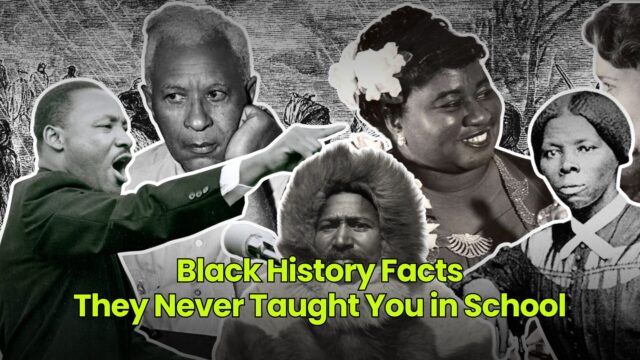
Black History Facts They Never Taught You in School


Let’s be real – if you went to public school in the U.S., you probably learned the same five black history facts every single February. You know the ones: Martin Luther King Jr. had a dream, Rosa Parks sat on a bus, and slavery was bad. And while those are important, they barely scratch the surface of what the entire African American population has contributed to the world. As your friendly and slightly sassy history-loving guide, I’m here to spill the historical tea your textbooks conveniently skipped. Buckle up, because we’re diving deep into the rich, complex, and straight-up mind-blowing black history that they never taught you in school.
Black history isn’t a side note or an elective – it’s the backbone of American history. Yet somehow, schools treat it like a seasonal topic, like pumpkin spice or sweet potatoes. It deserves more than a poster of Martin Luther King and a ten-minute lesson on slavery. We’re talking about inventors, revolutionaries, artists, scientists, and civil rights activists who shaped the country before, during, and after the civil war. These are the real black history month facts that matter, and honey, you’re about to get schooled in the best way.
So if you’re ready to unlearn the watered-down version and hear what really went down, you’re in the right place. This isn’t your grandma’s history book (though she probably knows more than your teacher did). We’re about to shine a spotlight on black Americans who broke boundaries, flipped the script, and made the impossible possible. And no, this isn’t just for black history month. This is year-round, every day, always important kind of knowledge. Let’s do this.
Why Are These Black History Facts Still Missing From Schools?
Now let’s talk about the big, awkward question: why the heck are so many black history facts missing from what we learned in school? The short answer? Racial segregation didn’t just affect buses and water fountains – it affected our textbooks too. For decades, the stories of African American leaders, artists, and heroes were either erased or barely mentioned. And when black history is ignored, the entire African American population loses part of its voice and identity.
Most public schools stick to the basics because they think it’s “safe.” They’ll give you Martin Luther King Jr., maybe a quick Rosa Parks moment, and if you’re lucky, a glance at the civil rights act. But they leave out the people who shook tables and scared the status quo. Fannie Lou Hamer? Philip Randolph? Don’t even think about it. The system isn’t broken – it was built this way.
Even the way they present black people is often sanitized. You’ll hear about enslaved people, but not about the rebellions they led or the underground railroad they built. You’ll hear about the civil war, but not how African Americans fought in it to help end slavery. They leave out the messy, powerful, courageous parts and turn black Americans into side characters. That’s not just lazy. It’s dangerous.
This is why we have to do better. This is why we write articles like this. Because we owe it to every black woman, black man, and black child to know the full story. Not just the ones that make whitewashed textbooks comfortable. We’re here to flip the narrative, one truth at a time.
1) The REAL Firsts: Way Before You Think
Forget what your school told you about the “firsts.” The real history facts are way more interesting – and earlier – than you think.
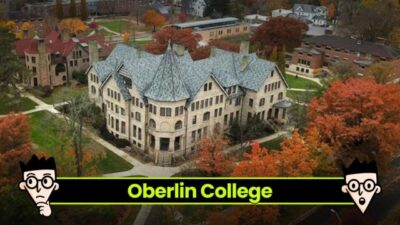
For starters, William Tucker was the first black person born in what is now the United States, way back in 1624. His parents weren’t slaves, but indentured servants, and that’s a whole layer of black history we rarely hear about. And Oberlin College? It started admitting African American students in the 1830s, long before the civil rights movement made it trendy to be inclusive.
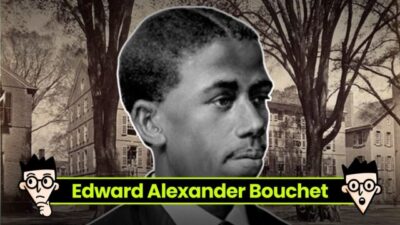
You also probably didn’t hear about the first black American to earn a doctorate degree. That was Edward Alexander Bouchet in 1876, and yes, it was from Yale. This man had a medical degree-level brain when most black people were still fighting to be seen as human. But do public schools teach this? Of course not. They’d rather stick to one or two familiar names and keep it moving.
Let’s not forget the first African American woman to receive a four year college degree: Mary Jane Patterson. Sis was out here breaking barriers in 1862, while the rest of the country was still trying to decide if black people were even people. This kind of legacy matters. Because knowing these pioneers existed gives black kids today permission to dream bigger. It also gives credit where credit has always been due. These were black Americans who made power moves without a roadmap. They were the first group of fighters, thinkers, and doers. And it’s time we say their names loud and proud.
2) The Underground Railroad Wasn’t Just Harriet Tubman
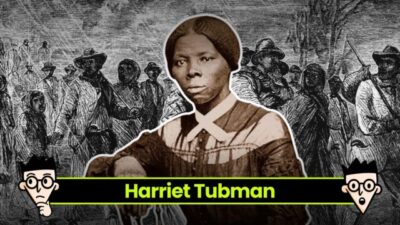
Listen, I love Harriet Tubman as much as the next person. She was a legend, a freedom fighter, and a straight-up badass. But here’s a black history fact your teacher skipped: she didn’t work alone. The underground railroad was a massive, secret network that involved hundreds of black Americans, from former slaves to free black people, all risking their lives for freedom. And guess what? Many of them were never even mentioned.
This wasn’t just some magical train to freedom. These were people creating safe houses, forging documents, sneaking through swamps and forests, and outsmarting slave owners. It was a movement, not a moment. Harriet Tubman made 13 trips back and forth and never lost a single passenger, which is wild enough. But she had help – real, courageous help from others who believed black lives were worth fighting for.
We have to talk about the black women who opened their homes and passed secret messages through quilts. Or the black man who posed as a delivery driver just to smuggle folks across state lines. These were everyday heroes with extraordinary bravery. And their stories deserve center stage.
The underground railroad is one of the most powerful examples of black resistance. It was intelligence, strategy, and heart. It’s also a reminder that black Americans weren’t just victims of the system – they were actively tearing it down. And that’s the kind of energy we should be celebrating every black history month.
READ ALSO: Black Dating Guide: Things to Know and Tips in 2025
3) The Civil Rights Movement Had Way More Than Just MLK
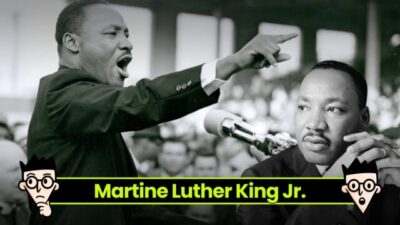
Okay, let’s talk about the civil rights movement. Yes, Martin Luther King Jr. was a major figure. Yes, his speeches were iconic. But baby, there were so many other civil rights activists out here grinding for justice. The movement was way bigger than one man with a dream.
You ever heard of Philip Randolph? He organized the first march on Washington… in 1941. That’s over 20 years before the one MLK is known for. And don’t even get me started on Fannie Lou Hamer, a black woman who was beaten, jailed, and still showed up to fight for voting rights. She had fire in her soul and didn’t take mess from anybody.
President Lyndon signed the Civil Rights Act and Voting Rights Act, but he didn’t do that out of kindness. He was pushed by these grassroots warriors who made noise and got in the faces of the powerful. Real talk: Black Americans forced the change, and it was messy, painful, and dangerous. But they never backed down.
We need to talk about the black women who held the movement down. The ones organizing in churches, making flyers, cooking meals, and raising funds. The civil rights movement wasn’t just marches and speeches. It was strategy, sacrifice, and straight-up hustle. And that story deserves to be told in full color.
4) Black Excellence in Arts, Music & Entertainment
Let’s take a minute to give flowers to the African American artists who lit up the world way before it was considered “acceptable.” During the Harlem Renaissance, black excellence was bursting out of every jazz club, poetry reading, and gallery wall. These weren’t just entertainers – they were culture creators, breaking down racial barriers with every note, brushstroke, and performance. And yet, most of us didn’t hear about them unless it was in a side note during black history month. It’s time we stop sleeping on the impact of African American talent.
Now, let’s talk about Nat King Cole. He was more than just a smooth voice on the radio – he was the first black man to host a national television show in the U.S. in 1956. Imagine how bold that was during a time of intense racial segregation. Of course, the show was short-lived thanks to a lack of advertisers (read: racism), but the legacy? Untouchable. Nat King Cole opened doors others weren’t even allowed to knock on.
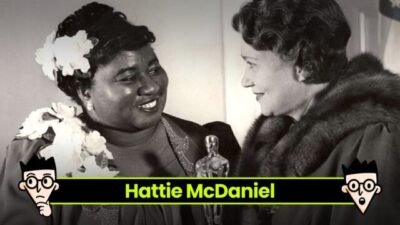
And if you thought Halle Berry was the first to win big at the Oscars, think again. The first black person to win an academy award for best supporting actress was Hattie McDaniel in 1940 for “Gone with the Wind.” Yes, she played a maid, but her win was historic. Even though she wasn’t allowed to sit with her white co-stars at the ceremony, she still made history. That’s the kind of strength black women have always brought to the table.
5) Wait, There Was a Travel Guide for Black People?!
Alright, gather ’round because this one’s wild. Ever heard of the Negro Motorist Green Book? It was basically the travel Bible for black Americans during the Jim Crow era. When racial segregation ruled the South (and let’s be real, a lot of the North too), this book was the difference between safe travels and life-threatening situations. It listed hotels, gas stations, diners, and homes that welcomed black people – because not everywhere did.
Think about that for a second. While white families were planning road trips with zero fear, black families had to strategize every single stop. They used the Green Book to avoid danger, humiliation, or worse. Black history isn’t just about struggle; it’s also about innovation and survival. The Green Book helped preserve black lives on the open road, and honestly, we should talk about it way more during black history month.
The wild part? The Green Book is still relevant today. Not because we need it in the same way (thankfully), but because the racial discrimination that made it necessary hasn’t totally disappeared. This guide showed the resilience and resourcefulness of the entire African American population. It was a quiet act of rebellion and protection in a very loud, unjust world.
6) Black Genius You’ve Never Heard About
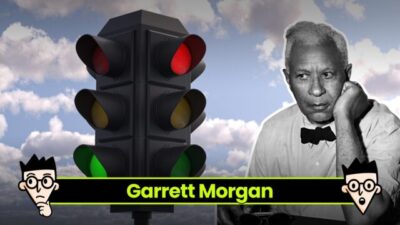
You wanna talk innovation? Let’s give it up for Garrett Morgan, the black man who invented the three position traffic signal. Yep, every time you stop at a red light and don’t crash into someone – thank a black inventor. He also created an early version of the gas mask, saving lives left and right. But how many times have you heard his name in school? Exactly.
Black leaders in science and medicine have been slaying for centuries. From people of African descent who developed surgical techniques, to doctors breaking barriers to get their medical degree – we’ve been brilliant. And not just brilliant – revolutionary. They weren’t just working in labs, they were smashing color barriers while doing it. Some even helped during world war ii with medical advancements that saved soldiers’ lives.
Let’s not forget the institutions that eventually had to acknowledge Black excellence. Harvard University, among others, was slow to admit black students, but they came through and excelled hard. These trailblazers didn’t just get degrees; they got revenge, with honor cords. Their names deserve to be in history books, not buried in footnotes.
Black history month isn’t just about activism – it’s about intellect, too. It’s about showing the next generation that they come from a legacy of brilliance. That’s the real black history fact you should remember.
7) Higher Ed? We’ve Been There.
Okay, let’s bust another myth: Black Americans in higher education are nothing new. The first black American to earn a four year college degree was Alexander Lucius Twilight in 1823. Yes, you read that right – 1823! Before the civil war, before the civil rights act, before anything was even close to equal. And he did it despite all the racial barriers thrown his way.
And can we talk about Oberlin College again? That school was ahead of its time, welcoming African American students and even Black women way before other schools even considered it. It was more than a college – it was a haven for change-makers. A space where early African American scholars could actually breathe and be seen. That’s some real black history month energy.
Being the “first” sounds glamorous, but let’s not sugarcoat it. These students faced isolation, racial discrimination, and had to be twice as good to get half the credit. But they pushed through anyway, laying the foundation for future black students to rise. That’s courage, plain and simple.
We have to honor that. Because every Black person walking across a graduation stage today is part of that same struggle, that same legacy. Education was a battlefield, and they came out warriors. And their victories? Still echoing today.
READ ALSO: How is Child Support Enforcement Affecting Low Income Black Community?
8) Supreme Court & Black Legal Heroes
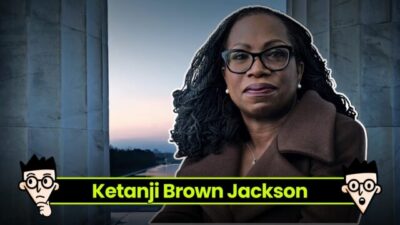
Alright, now let’s get legal. The Supreme Court has had its hands all over black history, for better and worse. From decisions that upheld racial segregation to ones that finally knocked it down, their rulings shaped every aspect of life for Black Americans. But you know what we don’t talk about enough? The first African American woman appointed to the Supreme Court: Ketanji Brown Jackson. Sis made history and walked in with all that black girl magic.
The civil rights movement had a massive legal impact. Think Brown v. Board of Education – that ruling started to end segregation in public schools. But that didn’t happen because the court suddenly cared. It happened because civil rights activists fought, protested, marched, and made it impossible to ignore. The law changed because black Americans made it change.
There have been other key black leaders in the justice system too. From lawyers who defended civil rights cases to judges who broke barriers in local courts, their influence is deep. These aren’t just people in robes; they were warriors for justice, fighting for every black person to have a fair shot.
And while the Supreme Court still has work to do, seeing representation on that bench matters. It shows that black excellence belongs at the highest level of law. That’s not just symbolic – it’s powerful. And it’s another black history fact they definitely don’t talk about enough.
9) A Black Man Almost Beat Everyone to the North Pole
Let me introduce you to Matthew Henson, the black man who literally walked on the North Pole before most folks even knew it was reachable. Henson was part of the famous 1909 expedition with Robert Peary, but guess who got the credit? Not Henson. Surprise, surprise. That’s how black history facts get buried – on purpose.
Henson did most of the navigating, spoke the local Inuit language, and had the survival skills to keep everyone alive. But the textbooks decided to erase him from the big win. That’s been the theme with a lot of black Americans in exploration, science, and even world war ii. They were there. They played key roles. And yet, they got ghosted in the history books.
We need to shout out all the overlooked pioneers who pushed boundaries across the globe. Black people who climbed mountains, crossed oceans, and risked it all to prove we belonged everywhere. From the North Pole to the battlefield, black excellence showed up and showed out. We’ve always been part of the story – they just didn’t want to tell it.
So here’s your reminder during black history month: dig deeper. Look beyond the basics. And give props to the black man who made it to the top of the world, even if history tried to leave him behind.
10) From West Africa to the New World
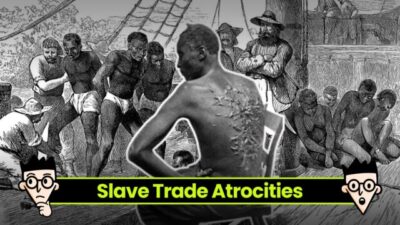
Let’s take it way back. Before America was even America, Black people from West Africa were being ripped from their homes. Many started as indentured servants, but it didn’t take long for things to shift into full-blown slavery. Slave owners realized they could make more money by treating people as property. And just like that, millions of enslaved people were forced to build the foundation of the so-called New World.
Let’s be crystal clear: Black lives were dehumanized, tortured, and sold like furniture. They weren’t just farmhands. They were engineers, midwives, chefs, and builders. And they were stripped of everything. The African American story didn’t start with chains – it started with brilliance and culture in West Africa.
Great Britain played a huge role in all of this. They were major players in the transatlantic slave trade, profiting off Black pain like it was stock market business. It wasn’t until Abraham Lincoln dropped the emancipation proclamation that things even started to change. But let’s be real – that didn’t instantly end slavery.
The journey from West Africa to America was brutal, but the strength and survival of African Americans is unmatched. That’s the kind of story we need to pass down, not skip over. This isn’t just black history – it’s world history.
Where Are We Now?
We’ve come a long way, but let’s not act like we’ve reached the promised land. The civil rights era sparked a revolution, but its effects are still rippling through today. Voting rights are still being challenged. Racial segregation may not be legal, but it still lives in housing, education, and the justice system. The lasting legacy of that fight is ongoing.
But here’s what’s different: we see more black women rising in power, politics, and leadership. We had a vice president who proudly represented the African American community. That representation matters. It tells little girls that they can be more than a footnote. It tells the entire African American population that they are seen.
Every black history month, we should be learning about new figures, new stories, new triumphs. We should know the names beyond martin luther king and rosa parks. There are thousands of unsung heroes, inventors, artists, and scholars who deserve shine. The black history month facts we pass down should spark pride, not just pain. We’re not done yet. But we’re walking in the light of those who paved the way. And that is powerful.
Key Takeaway: Let’s Stop Watering Down Black History
If there’s one thing I need you to remember, it’s this: Black History Month is not a highlight reel. It’s not a cute collection of trivia or one-week lesson plans. It’s deep, bold, complex, and forever. Black history facts are American history facts, and it’s time we start treating them that way.
We’ve got to do more than just post a quote from Martin Luther King jr. and call it a day. Let’s read, learn, and share the truth schools left out. Let’s bring up Harriet Tubman, Nat King Cole, Garrett Morgan, and all the other pioneers at dinner tables, classrooms, and office meetings. Let’s empower ourselves with knowledge and break the cycle of ignorance.
Every black person deserves to know where they come from. Every black man and black woman deserves to walk with pride. And the next generation? They deserve the history facts that actually tell the truth. So let’s stop watering it down. Let’s turn up the volume. Because the real story? It’s louder, prouder, and stronger than they ever taught us.
UP NEXT: Black Celeb Inspired Hairstyles With Sew In Hair Extensions
Frequently Asked Questions
1. What are some unknown Black history facts not taught in school?
Most public schools only cover surface-level Black history facts like Martin Luther King Jr. or Rosa Parks. But lesser-known facts include Matthew Henson being the first Black man to reach the North Pole, Garrett Morgan inventing the three position traffic signal, and Hattie McDaniel being the first Black person to win an Academy Award for Best Supporting Actress. These stories show the full scope of Black excellence across science, exploration, and entertainment. Unfortunately, many of these facts are left out of traditional classroom curriculums. Learning them gives a deeper understanding of the lasting legacy of the entire African American population.
2. Why is it important to teach real Black history facts beyond Black History Month?
Black history is American history, and it shouldn’t be confined to just one month. Teaching real, full-spectrum Black history facts helps correct the whitewashed narrative often taught in schools. It empowers Black Americans, especially Black women and youth, to see their heritage accurately represented. Knowing about contributions from African American artists, scientists, and civil rights activists creates a more honest and inclusive understanding of our nation. Every month—not just Black History Month—should reflect that truth.
3. Who was the first African American to achieve major milestones in U.S. history?
There are many first African American trailblazers worth knowing. William Tucker was the first Black person born in the U.S. Alexander Lucius Twilight was the first Black American to earn a four year college degree. Mary Jane Patterson was the first African American woman to graduate from college. These pioneers faced enormous racial barriers and still made history. Learning about their lives during Black History Month and beyond helps paint a fuller picture of America’s past and the power of Black excellence.
Source link