DAI vs. USDT/USDC: How MakerDAO’s Decentralized Stablecoin Stands Out in DeFi | BitcoinChaser
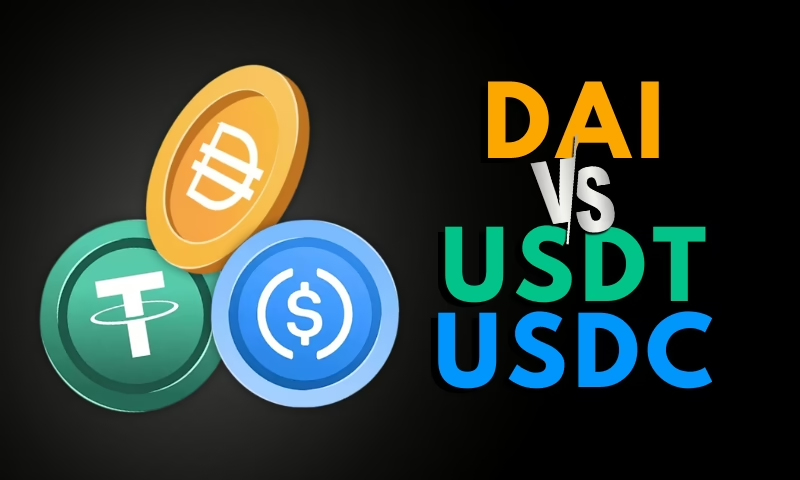
Stablecoins are a vital bridge between traditional finance and cryptocurrency, offering price stability in the volatile blockchain world. Among them, DAI, created by MakerDAO, is unique for its decentralized approach, setting it apart from centralized stablecoins like USDT (Tether) and USDC (Circle).
What is MakerDAO and DAI in Simple Terms?
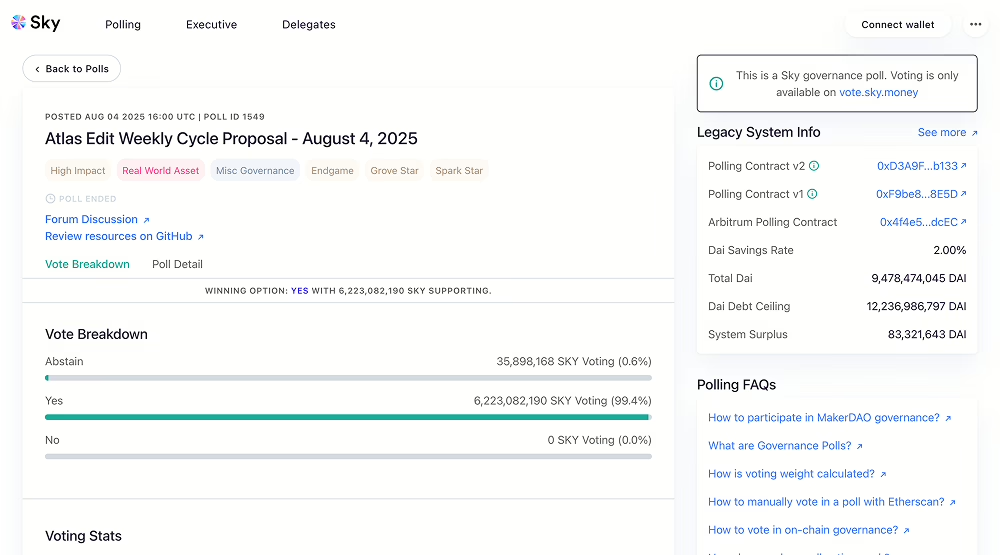
MakerDAO is a decentralized platform on the Ethereum blockchain that lets users create and manage DAI, a stablecoin designed to stay worth around $1. The MKR token, created for MakerDAO’s launch with a supply of about 1 million coins, enables holders to govern the platform by voting on key decisions. Unlike traditional money issued by banks, DAI is generated through smart contracts, or self-executing code that runs automatically on the blockchain.
Here’s how the DAI system works:
- Users deposit cryptocurrencies like Ethereum (ETH) into a Maker Vault, or a smart contract designed to store cryptocurrency used as collateral.
- The collateral must be worth more than the DAI created to keep the system stable.
- If the collateral’s value drops too low, the system may automatically sell it to maintain DAI’s $1 peg price.
- MKR token holders govern MakerDAO, voting on rules like interest rates or acceptable collateral types.
This setup eliminates the need for a central authority, making DAI a true community-driven currency. This is in contrast to the main centralized stablecoins, USDT and USDC, which rely on companies to manage their backing.
DAI’s Role in DeFi
Decentralized Finance (DeFi) refers to blockchain-based financial apps that operate without banks or brokers, enabling lending, borrowing, and trading via smart contracts. DAI is a cornerstone of DeFi because it’s a stable, decentralized currency widely used across DeFi platforms such as Aave or Compound, where you can lend or borrow coins against DAI or use it as a base currency in exchanges or to stake in liquidity pools to earn rewards.
DAI’s trustless nature aligns with DeFi’s goal of open, permissionless finance, unlike USDT or USDC, which face regulatory and issuer risks.
How DAI Differs from Other Stablecoins
While all stablecoins aim to hold a stable value of $1, DAI’s decentralized, crypto-backed design contrasts with the centralized, fiat-backed models of USDT and USDC. Here are some of the main practical differences:
1. Decentralization vs. Centralization
- DAI: Fully decentralized, run by smart contracts and governed by MKR token holders. No single company controls DAI, so it can’t be frozen or seized by a central authority. For example, in a country with strict crypto laws, you can use DAI without fear of an issuer blocking your wallet.
- USDT/USDC: Controlled by Tether and Circle, respectively. These companies hold reserves and can freeze accounts. For example, if USDC flags your account for potential illegal activity, your funds could be locked.
Practical Impact: DAI suits DeFi users who value privacy and autonomy but requires a wallet like MetaMask and some tech know how. USDT/USDC are easier for beginners, as they’re widely available on centralized exchanges like Binance.
2. Backing and Collateral
- DAI: Backed by crypto assets like ETH, which are locked in Maker Vaults. You need to deposit more collateral than the DAI you mint, and monitor it to avoid liquidation. For example, you lock 1 ETH (let’s say $3,500) to mint 2,000 DAI. If ETH’s price drops to $2,000, your Vault may be liquidated to cover the DAI.
- USDT/USDC: Backed by fiat reserves (cash, bonds) held by Tether/Circle, requiring trust in their solvency and audits. For example, you buy 1,000 USDC on Coinbase with a USD bank transfer with no collateral management necessary.
Practical Impact: DAI lets you create stable value from crypto without selling by letting you keep your ETH while receiving DAI coin in return. USDT/USDC are simpler for trading or payments but rely on the issuer’s financial health.
3. Stability and Risks
- DAI: Maintains its $1 peg via over collateralization and stability fees (interest paid by Vault users). It is robust, but the price can vary in extreme markets. For example, a market crash could liquidate your vault if the collateral drops too fast, but the DAI peg price usually recovers.
- USDT/USDC: Pegged tightly to $1 via fiat reserves, with rare deviations. Risks include issuer insolvency or regulatory bans. For example, if Tether mismanages reserves, USDT could lose its value.
Practical Impact: DAI’s peg is reliable for DeFi but riskier in volatile markets. USDT/USDC offer tighter stability for everyday use but depend on trust in the issuer.
4. Use Cases and Accessibility
- DAI: Ideal DeFi stable coin for lending, borrowing, or yield farming, where users stake cryptocurrency to provide liquidity in the DeFi apps in return for rewards. It requires a wallet and Ethereum gas fees.
- USDT/USDC: Dominate centralized exchanges for trading and payments, with support on multiple blockchains like Solana and Tron with lower fees.
Practical Impact: DAI is ideal for DeFi strategies, but less user-friendly. USDT/USDC are better for quick trades or non-DeFi uses due to their simplicity and broad acceptance.
5. Governance
- DAI: Community governed by MKR holders, who vote on protocol changes, making it adaptable but slower to update. For example, MKR holders might vote to add new collateral like SOL, expanding DAI’s use.
- USDT/USDC: Controlled by Tether/Circle, allowing fast decisions but no user input. For example, Circle can add USDC to a new blockchain overnight, but users have no say.
Practical Impact: DAI offers a voice to MKR holders, aligning with DeFi’s community-based structure. USDT/USDC both prioritize efficiency over decentralization.
Comparison Table
| Feature | DAI (MakerDAO – Decentralized) | USDT/USDC (Centralized) |
|---|---|---|
| Type | Decentralized, crypto-backed | Centralized, fiat-backed |
| How to Acquire | Mint via Vaults or buy on DEXs | Buy on exchanges |
| Primary Use | DeFi lending, borrowing, yield farming | Trading, payments |
| Risks | Liquidation, gas fees, contract bugs | Issuer default, blacklisting |
| Stability | Robust, minor wobbles in crashes | Highly stable, trust-dependent |
| Accessibility | Requires wallet/DeFi knowledge | Beginner friendly |
| Governance | Community via MKR token | Company controlled |
Get Started: Try swapping ETH for DAI on Uniswap or explore MakerDAO’s site to mint DAI. Start small and research risks to navigate DeFi confidently.
Disclaimer: Cryptocurrency and DeFi involve risks; always do your own research.