Day One – Currency Thoughts
Day One
January 21, 2025
President Trump’s transactional and zero-sum approach to domestic and foreign policy appears to have been validated in financial markets on his first day back in the White House.
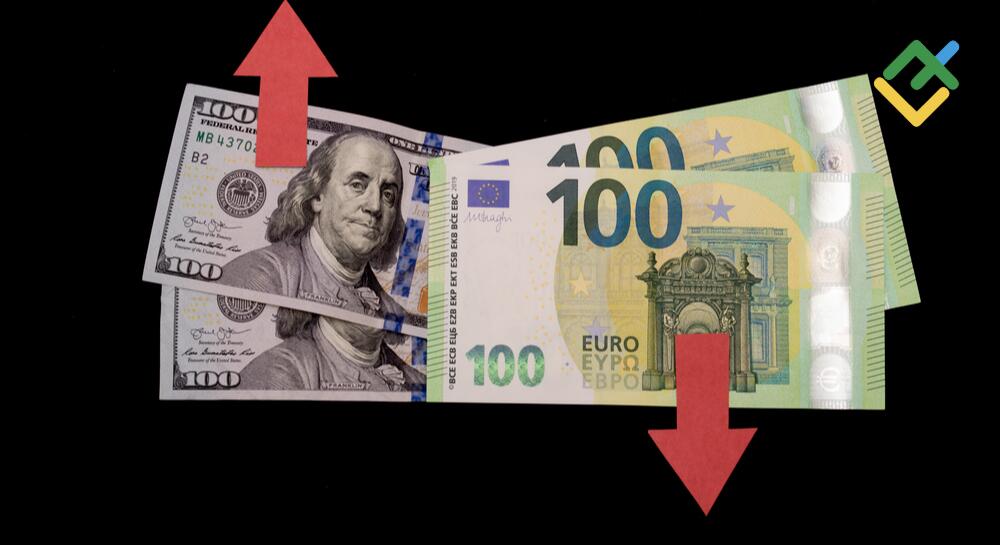
The dollar appreciated 1.2% against the Mexican peso, 0.9% versus the Canadian dollar, 0.8% relative to the Australian and New Zealand dollars, 0.6% relative to sterling, and 0.5% vis-a-vis the euro. Former President Reagan famously interpreted dollar appreciation during his first term as market validation of the correctness of his economic policies.
Trump’s campaign for the presidency repeatedly embraced digital currency. Volatility is okay, so long as the essential trend is upward. Bitcoin’s price today has been all over the map, ranging from marginally below $100,000 to a tad above 109,000 and quoted at this writing at $104.7k, a robust level for an asset that was hovering around $16,000 in late November 2022.
U.S. equity futures prior to reopening after yesterday’s MLK holiday show gains of about 0.5% in contrast to a 1.6% drop today in India’s Sensex and losses thus far of 0.6% in Italy and 0.5% in Spain.
The goal behind the drill-baby-drill slogan is U.S. energy independence and low energy costs. West Texas Intermediate crude oil is down 2.3% today.
The ten-year U.S. Treasury yield is seven basis points lower and, at 4.56%, down 23 basis points in the past week.
Trump’s second term has kicked off with tariff surprises. He is not inclined to delay 25% levies beyond February 1st against America’s immediate neighbors to the south and north, each of which are huge trading partners of the United States. In contrast, a decision on China remains undecided and seemingly, along with what gets done about TikTok, will seemingly be influenced by a much broader deal between the U.S. and China over many areas of economic and geopolitical competition. Trump expressed interest in visiting China soon.
The latest batch of British labor market statistics confirmed an expected jobless rate uptick to a 6-month high of 4.4%, a 36,000 increase in employment in September-November (least in seven months), and an unwelcome re-acceleration of wage increases to 5.6% year-on-year in September-November from 3.9% in June-August.
According to the monthly ZEW Institute investor sentiment index, the mood regarding the German economy remains gloomy, with uncertainties related the country’s February 23rd snap election and U.S. trade and defense policies during the second Trump presidency adding to the persistent weakness of German forward-looking economic data. Germany’s ZEW expectations index unexpectedly fell 5.4 points to a 2-month low of 15.7 in January and well below last June’s reading of 47.5. The current conditions index rebounded to a 2-month high but remained depressed overall at -53.8.
Regarding the whole Euroland economy, the ZEW expectations index unexpectedly recovered a point, but at 18.0 was still considerably less optimistic than in mid-2024 when the reading topped at 51.3. Moreover, the survey of investor perceptions of the euro area economy did little to alleviate a mounting concern that in the face of sticky inflation, scope for more ECB interest rate relief could be diminishing. A sub-index of price expectations rose to -14.8 in January from -23.9 in December.
Canadian consumer price inflation dipped 0.1 percentage point to 1.8% last month, not far above September’s 43-month low of 1.6%. This improvement may prove short-lived, since a tariff war with the United States has inflationary implications for both countries.
Other price data reported this Tuesday show
- A rebound in Lebanese consumer price inflation to a 3-month high of 18.1% in December from November’s 57-month low of 15.4%. The record high reading of 269% was touched less than a year ago in April 2023.
- Hong Kong CPI inflation of 1.4% last month matched the readings in November and October’s 5-month low.
- South Korean producer price inflation increased 0.3 percentage points last month to a 5-month high of 1.7%.
- Slovenian PPI inflation accelerated to a one-year high in December but was still low at +0.4%.
- Estonian PPI inflation rose to a 4-month high of 1.1% in December.
New Zealand’s service sector purchasing managers index fell to a 2-month low of 47.9 in December and was below the 50 level that divides improvement from deterioration for a ten straight time.
Euroland car sales were 5.1% greater in December than a year earlier, less than the on-year advances of 13.6% in 2024 and 13.9% in 2023.
Mexican retail sales underperformed expectations in November, dipping 0.1% on month and 1.9% on year.
Copyright 2025, Larry Greenberg. All rights reserved. No secondary distribution without express permission.
Tags: British labor market data, Canada CPI, Euroland and German ZEW expectations index, tariff threats


 ShareThis
You can leave a response, or trackback from your own site.