Dollar Exhibits Better Tone Ahead of U.S. CPI Releases, But Tech Stocks Retreat – Currency Thoughts
Dollar Exhibits Better Tone Ahead of U.S. CPI Releases, But Tech Stocks Retreat
February 13, 2026
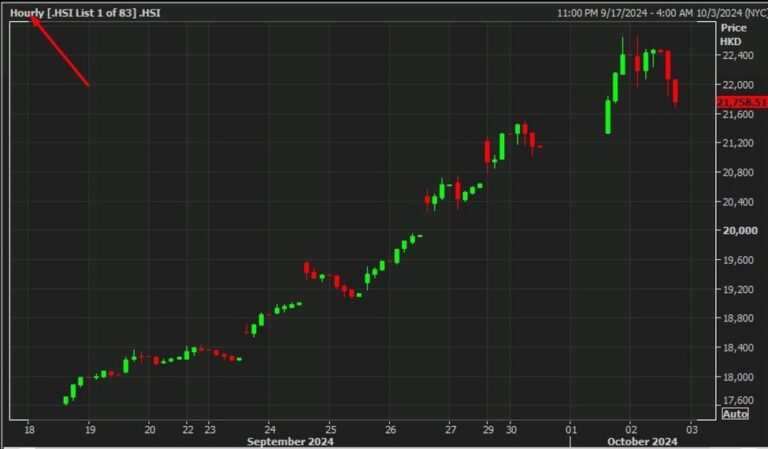
Thursday’s difficult session for U.S. equities, led by the tech sector, extended into other countries on Friday with share prices closing down 1.6% in Singapore, 1.4% in Australia, 1.3% in China and India, 1.7% in Hong Kong, and 1.6% in Singapore. Stock markets in Spain and Italy are so far also showing losses in excess of 1.0%. U.S. stock futures are lower but only slightly.
In contrast to stock markets, the dollar is doing better, rising 0.5% overnight so far against the Korean won, Japanese yen and New Zealand dollar and by a marginal 0.1% versus the euro and sterling. Silver, Bitcoin and gold prices are 2.4%, 1.3% and 0.8% firmer, while West Texas Intermediate oil has slipped by 0.6%. The 10-year U.S. Treasury yield is marking time at 4.10%, but two-percentage point dips have occurred in comparable Canadian, German, Japanese, British and Italian sovereign debt yields.
After reviewing Peruvian economic trends and prospects, the Board of the Central Reserve Bank of Peru suspects their economy will grow a little faster than forecast and are projecting in-target total and core inflation. The policy interest rate was kept at 4.25%, its level since September, which is well below the peak of 7.75% maintained through much of 2023. CPI inflation last month was at 1.7%.
Egyptian consumer price inflation, which crested in September 2023 at 38.0%, receded to 11.7% two years later and is currently at 11.9%. The Central Bank of Egypt‘s policy interest rate over the past ten months has been lowered from 27.25% ti 19.0%, including a 100-basis point cut announced yesterday. Board members “will continue to remain vigilant and stands prepared to adjust its policy instruments as needed to fulfill its price-stability mandate, steering inflation toward the CBE target of 7 percent (± 2 p.p.) in Q4 2026, on average.”
The Bank of Russia’s key interest rate was unexpectedly cut today by a further 50 basis points to 15.5%. That decision brings its cumulative decline since early last June to 550 basis points. The rate level is now its lowest since the first half of December 2023 but still about double the 7.5% level maintained from September 2022 to July 2023. Today’s statement acknowledges that Russian inflation jumped significantly last month due to higher VAT and excise taxes, more costly fruits and vegetables, and increased administered prices at the start of the new year, but officials see these factors as one-off shocks and project that disinflationary trends will return.
U.S. consumer price inflation in January was marginally below consensus forecasts. The total inflation pace of 2.4% year-on-year was at an 8-month low and just 0.1 percentage point last year’s low point of 2.3% hit in April. The energy component dropped sharply to a 2.3% 12-month rate of increase from 4.2% recorded in December, and food inflation eased to 2.9% from 3.1%. A 2.5% core inflation rate the excludes volatile food and energy was its lowest reading in 58 months. Shelter costs retreated a bit, but services overall posted a slightly higher pace of 3.3%. The data do not appear low enough to put a Federal Reserve interest rate cut as soon as next month back in play.
A second but still preliminary estimate GDP growth in the euro area during the final quarter of 2025 was reported earlier today. Coming just two weeks after the initial glimpse of the figures, it’s not surprising the the figures were unrevised, but more countries in the bloc were included. Compared to the third quarter and unlike the U.S. custom of annualizing quarterly changes, GDP expanded in the euro area overall and also by 0.3% in Germany and Italy. Quarterly increases of 0.2% were reported for France, Belgium, and Austria. Irish GDP fell 0.3% on quarter but recorded the largest year-on-year growth (6.7%) in the common currency area. For Euroland as a whole, GDP went up 1.3% compared to the final quarter of 2024. Following calendar year average growth of 0.4% in 2023 and 0.9% in 2024, GDP went up 1.5% last year but is believed likely to slow to 1.2% this year followed by 1.4% in 2027.
Euroland also released figures for employment growth and its trade balance. Employment grew 0.2% last quarter, matching the rise in 3Q 2025. On-year jobs growth of 0.6% was likewise the same as in last year’s third quarter. The seasonally adjusted trade surplus of EUR 11.6 billion in December was at a 2-month high but below its average monthly size in 2025. The full-year trade surplus of EUR 165 billion was hardly changed from the 2024 surplus in spite of tariff and geopolitical strains, and both exports and imports grew between 2% and 3% between the two years.
China’s current account surplus widened to $242 billion last quarter from around $200 billion in 3Q. As a percent of GDP, the current account in 2025 was robust at more than 4%. China’s continuing export machine contrasts with softer-than-hoped domestic demand there. Housing prices in January were 3.1% lower than a year earlier. New yuan loans in January of CNY 4.71 trillion fell short of market expectations, and on-year growth in outstanding yuan loans slid to a record low.
Several countries in addition to the United States released price data this Friday.
- German wholesale price inflation in January matched December’s 2-month low of 1.2% but was above zero percent for the 18th time in a row.
- Swiss consumer prices dipped 0.1% on month in January. At +0.1%, year-on-year inflation ranged between -0.1% and +0.2% for the tenth month in a row.
- Czech consumer price inflation slowed a half percentage point in January to a 110-month low of 1.6%.
- Polish CPI inflation of 2.2% last month was down from 2.4% in December, at a 10-month low, and close to the 2.0% cyclical low of February 2024.
- Spanish CPI inflation fell to a 7-month low of 2.3%. Excluding food and energy, the so-called core inflation stayed at 2.6% for a third straight month.
- Lithuanian CPI inflation slowed 0.3 percentage points to a 13-month low of 3.1% in January. Such had peaked at 24.1% in September 2022.
- Bulgarian CPI inflation fell back to a 9-month low of 3.6% in January from 5.0% in December.
New Zealand’s manufacturing purchasing managers index printed at a 2-month low of 55.2 in January but otherwise above all readings between August 2021 and November 2025.
Turkey’s current account deficit more than doubled to $25.2 billion in 2025.
Copyright 2026, Larry Greenberg. All rights reserved.
Tags: Bank of Russia, Central Bank of Egypt, Central Reserve Bank of Peru, Euroland GDP and trade surplus, U.S. CPI


 ShareThis
You can leave a response, or trackback from your own site.