Dollar Steps Up as Final Quarter of 2024 Begins – Currency Thoughts
Dollar Steps Up as Final Quarter of 2024 Begins
October 1, 2024
Remarks by Fed Chairman Powell yesterday afternoon countered mounting speculation of another 50-basis point rate cut, offering the alternative of two 25-bp moves before yearend as a far likelier scenario. In response, the dollar rebounded overnight by 0.4% against the euro, sterling and kiwi, 0.2% versus the yuan, and 0.1% against the yen, Swiss franc and Mexican peso.
As is customary on the first business day of every month, manufacturing purchasing manager surveys for a wide assortment of economies have been published. Today is also the first day of the last calendar quarter of 2024. Three months from now will mark the midpoint of the volatile 2020s, a decade that kicked off with a world pandemic whose reverberations continue to be felt. But first, an important U.S. election, now just five weeks away, will take place, and the impact of that vote may arguably exceed what Covid sowed. Vice-presidential candidates Vance and Walz hold their only scheduled debate on prime TV tonight.
Markets in China, Hong Kong and South Korea were closed today. China kicked off its Golden Week commemorating the 75-year observance of the Communist Party’s victory in that country’s civil war. While China will be closed through October 7, Hong Kong’s closure is just today. Likewise, South Korea in observance of National Foundation Day will be shut just today.
- China’s manufacturing PMI results announced Monday depicted pretty stagnant conditions, but investors instead reacted to greater-than-anticipated policy stimulus announced by the Xi government.
- Release of South Korea’s manufacturing PMI findings are scheduled for tomorrow, while Hong Kong’s private sector PMI report will not arrive until Friday.
Ten-year sovereign debt yields fell overnight by a dozen basis points in the case of France, 10 bps in Italy and Spain, 7 bps in Germany, 5 bps in Great Britain, 4 bps in the United States and a single basis point for Japan’s JGB.
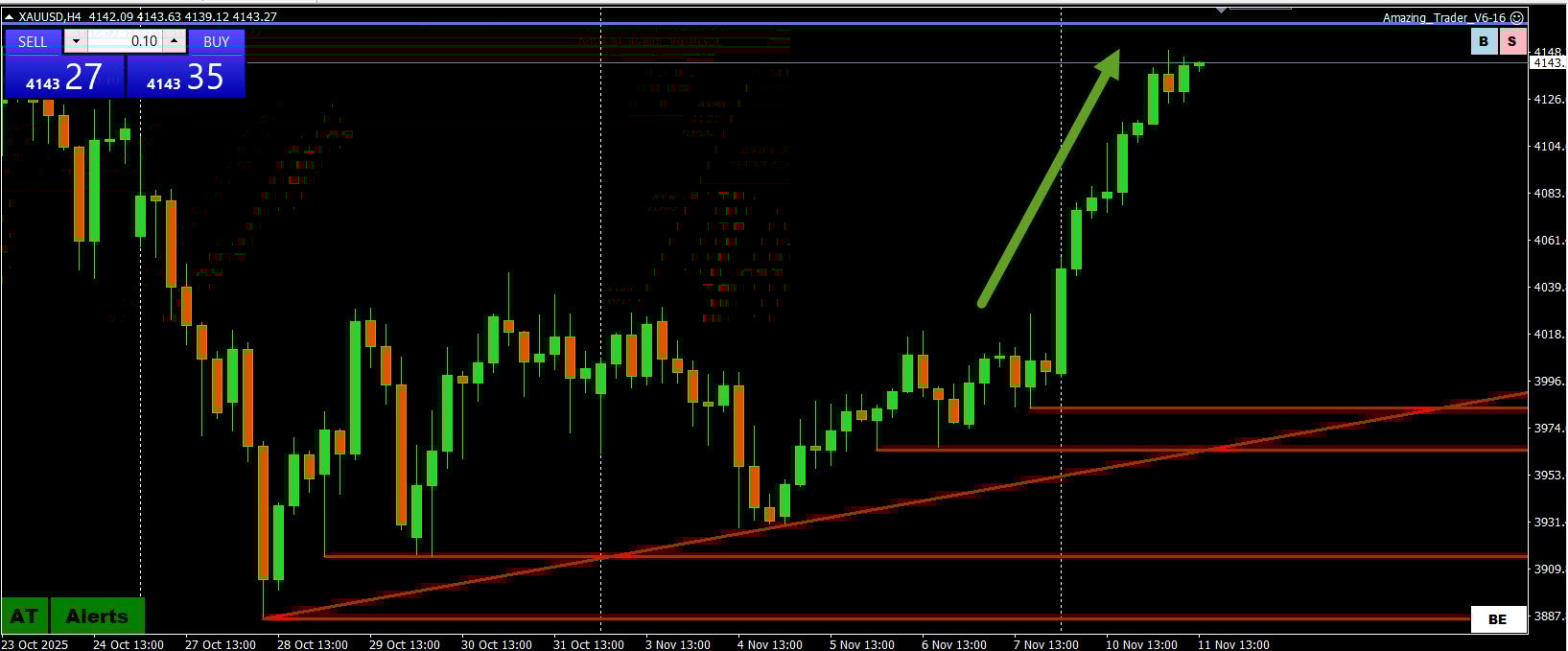
Among stock markets in the Pacific Rim that were open for trading today, share prices closed up 1.9% in Japan, 1.3% in Indonesia and 0.8% in Taiwan but 0.7% lower in Australia. In European stock markets, share prices have performed better in Germany and the U.K. than in France, Spain or Italy. U.S. stock futures are steady. Prices of Bitcoin and gold opened the quarter on a higher note, but old fell 0.7%.
Euroland’s revised September manufacturing purchasing managers index printed at 45.0, revised up from a flash estimate of 44.8 but nonetheless indicating the fastest rate of contraction (i.e. distance below the neutral 50 level) since last December. A one-year low in the German component (40.6) outweighed any boost from Spain’s 4-month high of 53.0. Greece was the only other reporting euro user with a score above 50, and its reading of 50.3 was the lowest in 12 months. The French and Austrian PMIs, like Germany’s, printed below 45. Three of the more disturbing aspects of the Euroland reports are 1) the combination of sharply declining demand with a reemergence of supply chain issues that are delaying delivery times; 2) evidence suggesting that employment growth is poised to take a turn for the worse; and 3) lessening optimism among manufacturers about the future.
Preliminary estimates of Euroland consumer price inflation in September also arrived this Tuesday and were below expectations. The CPI dipped 0.1% on month and experienced no net rise between June and September. On-year CPI inflation fell to a 41-month low of 1.8%, thus breaking below the 2.0% target, from 2.2% in August and the October 2022 peak of 10.6%. The main depressant was energy costs, which slumped 1.6% versus August and 6.0% compared to September 2023. However, core inflation also came in lower at 2.7% from 2.8% in the prior month and 5.7% at peak in March 2023.
Japan’s manufacturing PMI edged 0.1 point lower to a 2-month low of 49.7 in September. Two other Japanese data releases today offered brighter news:
- The unemployment rate returned to June’s 2.5% in August from July’s 2.7% reading.
- The Bank of Japan’s quarterly survey of roughly 9000 Japanese companies revealed positive but unchanged business conditions among large firms, with readings of +13 for manufacturers and +34 among non-manufacturers. The sharply stronger yen did not appear to curtail business investment plans.
The Bank of Japan also published a brief summary of the September 20-21 Board meeting that left policy settings unchanged. Interestingly, officials have mounting qualms about economic and market developments in other countries and are hesitant to boldly normalize their own monetary policy if financial and capital markets around the world prove unstable.
Among Pacific Rim PMI surveys reported today, Australia’s 46.7 reading was at a 52-month low. Five-month lows were reported in Malaysia of 49.3 and Taiwan of 50.8. The scores in Vietnam of 47.3 and Thailand of 50.4 represent 10- and 4-month lows, whereas Indonesia’s PMI recovered 0.3 points from August’s 3-year low to print at a 2-month high of 49.2. India’s PMI of 56.5 was higher than most but, for India, at an 8-month low.
In Eastern Europe, Russia’s PMI for manufacturing dropped 2.6 points in September to a 29-month low of 49.5. That was the first sub-50 score since April 2022, early in its war with Ukraine. Ten-month and 4-month highs of 48.6 and 49.7 were attained by the PMIs of Hungary and Poland, but the Czech index fell to a 2-month low of 46.0.
The British manufacturing PMI reading for September of 51.5 was unchanged from its preliminary estimate and remains within expansionary territory. But the rate of expansion has lessened, 51.5 being the lowest since April, and confidence in the future has softened, too.
Swiss manufacturing with a PMI of 49.9 has almost stopped falling. That was the best reading in 21 months.
South Africa’s Absa-compiled PMI rebounded sharply to 52.8 in September after plunging from 59.4 in July to 43.6 in August.
The Swedish and Norwegian PMIs of 51.3 and 51.8 were at respected 2- and 3-month lows.
Consumer price inflation in Indonesia slowed to a 34-month low of 1.8% last month from 3.0% back in March and a peak of 4.0% in September 2022. Austrian CPI inflation was also down to 1.8% in September following 2.4% in August.
Pakistani CPI inflation of 6.9% last month was down from 9.6% in August, 31.4% in September 2023 and a high of 38% in June 2022.
Copyright 2024, Larry Greenberg. All rights reserved. No secondary distribution without express permission.
Tags: Bank of Japan Tankan survey, Euroland CPI, manufacturing purchasing manager surveys


 ShareThis
You can leave a response, or trackback from your own site.