The Real Reason Trump Calls the EU a Threat (Hint: It’s All a Negotiation Tactic)
The European Union was not initially established as a competitor to the United States. Instead, its creation was rooted in the necessity to foster peace, economic cooperation, and political integration among European nations following the devastation of World War II. The foundation of the EU can be traced back to the formation of the European Coal and Steel Community (ECSC) in 1951, an initiative among six European countries to interconnect their coal and steel industries—both essential for warfare—so that future conflicts would become economically unfeasible. This integration was a strategic move to ensure political stability and prevent another catastrophic war on the European continent.
Over time, the EU evolved from this economic partnership into a broader political and economic union with key objectives that extend beyond mere trade relations. Among its core aims are the promotion of peace and security, the establishment of a single market with a common currency, the advancement of economic development and social progress, and the protection of human rights and democratic values. These goals, while facilitating economic strength, were never primarily designed to position the EU as an economic adversary to the U.S.
Despite its growth into a global economic force, the EU has maintained a generally cooperative relationship with the United States. Both entities are major trade and investment partners, often working in tandem on global economic policies. However, in recent years, economic competition between the EU and the U.S. has intensified in sectors such as technology and trade policy. This shift is less a result of the EU’s foundational purpose and more a consequence of its expansion and the evolving dynamics of global markets.
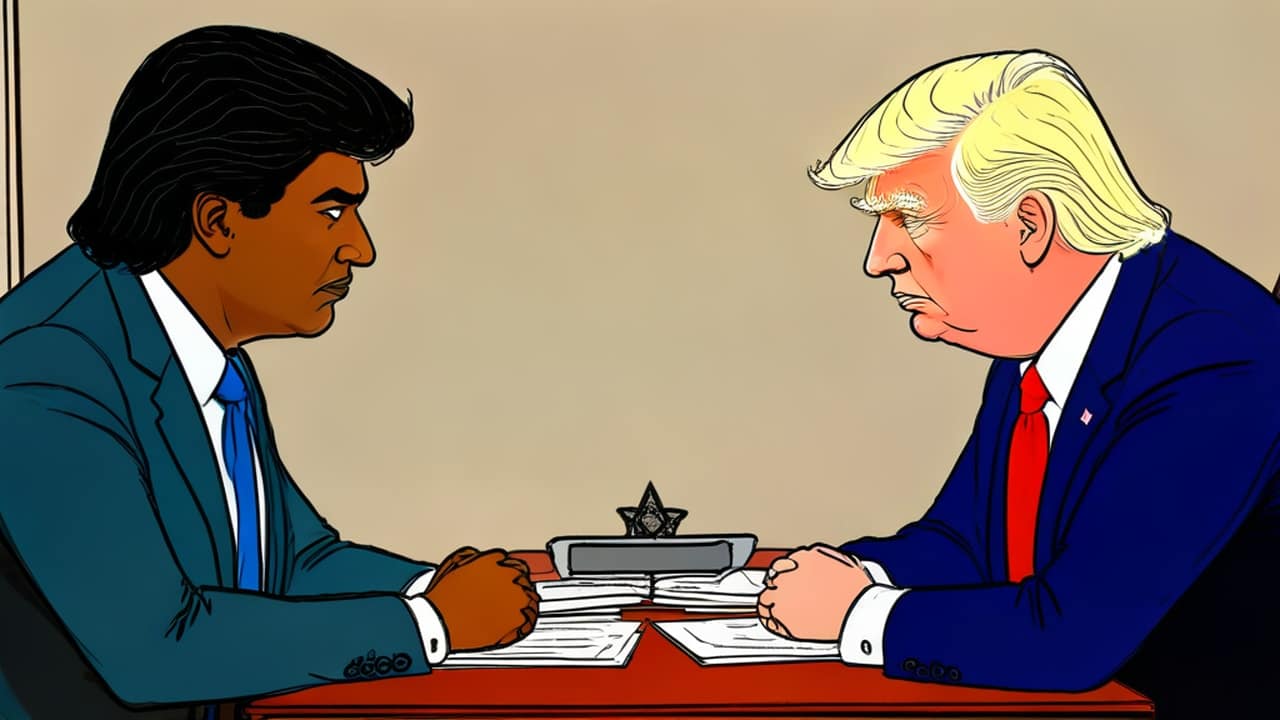
Former President Donald Trump has often presented the EU in a confrontational light, characterizing it as an entity designed to undermine the U.S. economy. This stance, however, aligns with his broader negotiation strategy rather than a factual interpretation of the EU’s origins. Trump’s approach to negotiations, which he has detailed in his 1987 book The Art of the Deal, frequently involves adopting extreme initial positions before gradually moderating them, creating the illusion of compromise. By portraying the EU as an adversarial force, he has applied a classic negotiation tactic: setting an aggressive starting point to extract greater concessions in trade agreements and policy discussions.
Trump’s negotiating style is built on a set of core principles that have remained consistent throughout his business career and political tenure. He emphasizes thinking big, protecting potential downsides, maximizing available options, and relying on instinct rather than extensive research. His approach is rooted in leverage, ensuring that he always possesses something the opposing party wants while never appearing desperate to close a deal. Additionally, Trump frequently manufactures a sense of urgency, compelling other parties to act swiftly under pressure.
A crucial component of Trump’s strategy is the use of anchoring, where he begins negotiations with extreme demands to steer the discussion in his favor. This tactic shifts the frame of reference, making any subsequent compromise appear more balanced, even if it remains advantageous to his position. He also simplifies complex negotiations into clear-cut victories and defeats, reinforcing his image as a master dealmaker.
Unpredictability is another cornerstone of Trump’s method. By keeping opponents uncertain about his intentions and positions, he disrupts their ability to prepare effective counter-strategies. He also wields public pressure as a tool, often making statements that force opponents to respond within the realm of public opinion rather than behind closed doors. This approach not only increases pressure on the opposing party but also bolsters his image among supporters.
Trump’s aggressive negotiation tactics, while effective in some scenarios, have also drawn criticism for their confrontational nature and long-term consequences. His high-pressure style and use of leverage, while yielding short-term wins, have at times strained diplomatic relationships, particularly with allies like the EU.
Trump’s 1987 book The Art of the Deal remains a key resource for understanding his mindset and approach to negotiations. The book details his belief in thinking big, creating strategic advantages, and maintaining flexibility in business dealings. It provides insight into his guiding principles for deal-making, emphasizing the importance of controlling negotiations, protecting potential risks, and projecting strength.
His approach to international trade and diplomacy has been a direct extension of these philosophies. By positioning the EU as a competitor rather than an ally, he has aimed to shift the balance of economic agreements in favor of the U.S. However, this framing does not necessarily align with the historical or economic realities of the EU’s creation.
While Trump’s negotiation style has proven successful in certain business and political arenas, its impact on international relations remains a subject of debate. His dealings with the EU exemplify his broader strategy of setting extreme positions to force concessions, yet they also highlight the risks of an overly aggressive diplomatic posture. Whether this approach yields long-term benefits or further complicates transatlantic relations is a question that continues to shape global economic discourse.

Lance Jepsen is the senior personal finance writer for Guerilla Stock Trading who has spent more than 25 years covering the stock market and economics. In addition, Lance has worked as a private stock analyst for a number of high worth individuals.