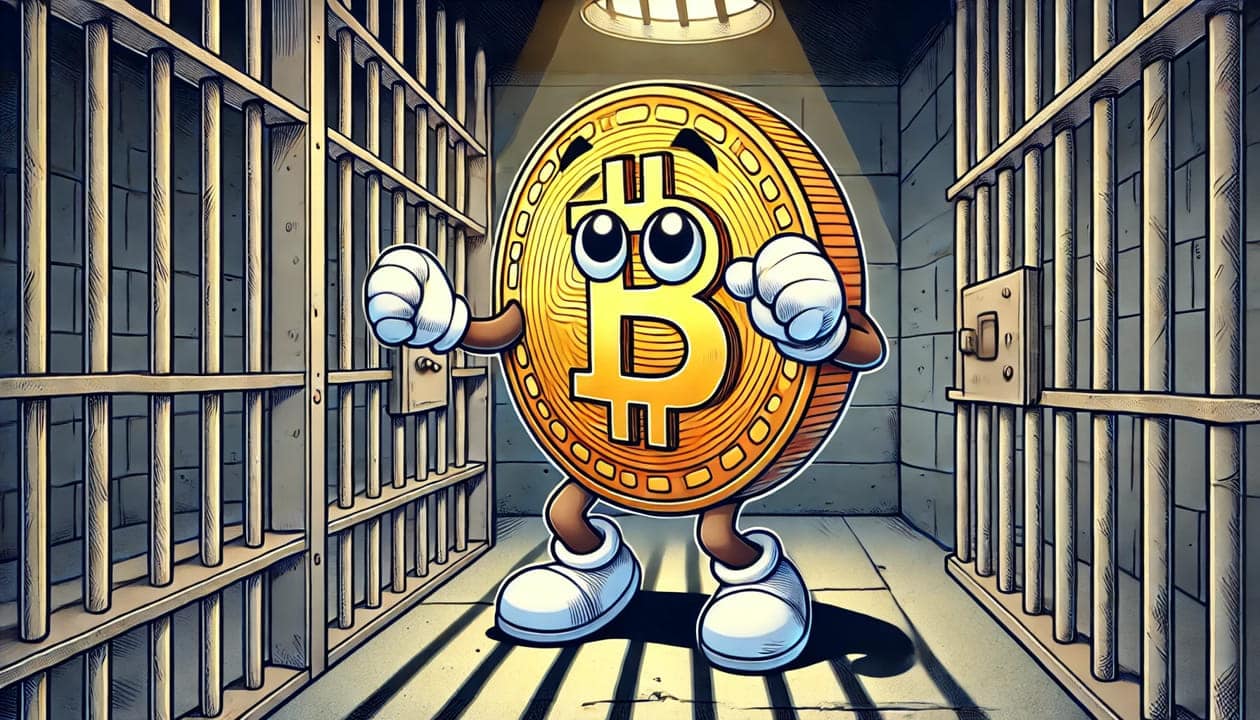
FDIC Document Dump Exposes Crypto Banking Roadblocks Ahead of Senate Hearing
The Federal Deposit Insurance Corporation (FDIC) has released 175 new documents revealing the extent to which banks exploring cryptocurrencyA cryptocurrency is a digital or virtual form of currency that uses cryptography for security. Unlike traditional currencies issued by central banks, cryptocurrencies operate on de… were blocked, delayed, or outright ignored under federal supervision. This latest disclosure comes just ahead of a critical Senate Banking Committee hearing on crypto debanking. Republican leaders are expected to scrutinize the FDIC’s past approach to digital assets during former President Joe Biden’s administration.
Regulatory Pushback on Crypto Banking
Acting FDIC Chairman Travis Hill, who has been tasked with addressing these regulatory issues, has acknowledged that the agency created a chilling effect on banks interested in blockchainA blockchain is a decentralized, distributed ledger technology (DLT) that records transactions in a secure, transparent, and tamper-proof manner. Each transaction is grouped into a… and distributed ledger technology. Under the previous administration, banks attempting to enter the crypto space faced bureaucratic roadblocks, with many encountering extended periods of silence, repeated requests for additional documentation, or outright directives to halt their digital asset initiatives.
The newly released documents include internal communications, letters, and prolonged exchanges between banks and FDIC officials. One such communication revealed an FDIC official advising a bank executive to “proceed cautiously” when considering any blockchain-related initiatives, citing potential regulatory scrutiny without providing a clear path forward. They paint a clear picture of an agency that systematically resisted banking involvement in crypto. The consequences were inevitable—most financial institutions abandoned their plans.
A Pattern of “Pause” Orders
Previously, the FDIC had made public 25 letters—commonly referred to as “pause” orders—sent to 24 banks, explicitly warning them to delay or reconsider their crypto expansion plans. However, this new trove of documents significantly broadens the scope of regulatory resistance, confirming a widespread pattern of obstruction.
According to Hill, the documents show that many banks waited months for responses after submitting proposals, while others received direct instructions to “pause, suspend, or refrain from expanding all crypto- or blockchain-related activity.” This coordinated resistance created an environment where banks felt discouraged from engaging with the digital asset sector.
“The vast majority of banks just stopped trying,” Hill admitted. He emphasized that the FDIC’s previous approach effectively shut down many financial institutions’ attempts to integrate blockchainA blockchain is a decentralized, distributed ledger technology (DLT) that records transactions in a secure, transparent, and tamper-proof manner. Each transaction is grouped into a… technology into their operations.
Overhauling FDIC’s Crypto Framework
As part of a broader regulatory shift, Hill announced that the FDIC would revoke Financial Institution Letter (FIL) 16-2022, the guideline that had served as a deterrent for banks considering crypto-related ventures. This move signals a major policy change aimed at fostering greater regulatory clarity for financial institutions looking to participate in the digital asset economy.
A new framework will be developed to ensure that banks can engage with cryptocurrenciesA cryptocurrency is a digital or virtual form of currency that uses cryptography for security. Unlike traditional currencies issued by central banks, cryptocurrencies operate on de… while maintaining safety and soundness principles. Hill also confirmed that the FDIC will collaborate with the President’s Working Group on Digital Asset Markets, an initiative established under former President Donald Trump’s January 2025 executive order.
A Pivotal Senate Hearing
The U.S. Senate Banking Committee held a hearing on Wednesday on an issue that has become a hot-button topic in recent months: debanking, particularly concerning crypto-related businesses and individuals.
Committee Chairman Tim Scott of South Carolina questioned the extent of crypto debanking, asking Nathan McCauley, CEO and co-founder of Anchorage Digital Bank—the only institutional crypto bank with a national charter—how pervasive the issue truly is.
“An anecdote I can share,” McCauley said, “is I was speaking at a meetup of about 100 crypto founders in San Francisco. As a show of hands, I asked, ‘Who here has had trouble getting an account or with debanking?’ All of the hands in the room went up.”
McCauley explained that the net result of these challenges has been the migration of businesses to friendlier jurisdictions. He also noted that his company had been in active discussions with various institutions to expand crypto-related services, but those efforts were derailed by what the industry has termed “Operation Choke Point 2.0,” referring to alleged coordinated regulatory pressure on financial institutions to cut off crypto businesses.
While banks often decline accounts as part of riskIn stock and crypto trading, risk refers to the possibility of losing some or all of the capital invested in a trade. It represents the uncertainty about the future performance of … management strategies, crypto advocates argue that the Biden administration colluded with financial institutions to systematically freeze crypto-related businesses out of the banking system. The hearing reflected this divide, with Republicans pushing for clear regulations to facilitate crypto banking, while Democrats shifted focus to concerns over Elon Musk’s involvement in federal payment systems.
Adding fuel to the debate, CoinbaseCoinbase is a leading cryptocurrency exchange platform that enables users to buy, sell, and manage digital assets such as Bitcoin, Ethereum, and other cryptocurrencies. Founded in … sent a letter to the FDIC the day before the hearing, calling the current state of crypto banking “untenable.” The letter criticized regulators for issuing unclear and inconsistent guidelines, arguing that the lack of transparency has left crypto custody and execution service providers in regulatory limbo. CoinbaseCoinbase is a leading cryptocurrency exchange platform that enables users to buy, sell, and manage digital assets such as Bitcoin, Ethereum, and other cryptocurrencies. Founded in … urged the FDIC to establish clear, durable rules to support fair banking access for the crypto industry. “Instead of issuing clear, durable rules through the proper notice-and-comment process, banking regulators have chosen to issue opaque, inconsistent guidance, leaving crypto custody and execution service providers and banks in regulatory limbo,” the letter stated.
The debanking issue gained significant public attention after venture capitalist Marc Andreessen, co-founder of Andreessen Horowitz (a16z), discussed the matter on “The Joe Rogan Experience” podcast, a widely followed show known for shaping public discourse on controversial topics through its long-form discussions. Andreessen described the experiences of crypto entrepreneurs facing sudden account closures as a deeply partisan problem, even taking aim at the Consumer Financial Protection Bureau (CFPB), which he called “Elizabeth Warren’s personal agency.”
Meanwhile, Treasury Secretary Scott Bessent, who now oversees the CFPB, halted its enforcement of debanking-related actions earlier this week.
Ripple CEO Brad Garlinghouse also shared his personal experience with debanking at a recent industry conference. “I personally have been debanked,” he stated. “They were like, ‘Look, you are a notable person in crypto, and having notable people in crypto and banking the crypto industry means more scrutiny from federal regulators. So we don’t want it.’”
During Joe Biden’s presidency, Senator Elizabeth Warren was notably critical of the cryptocurrencyA cryptocurrency is a digital or virtual form of currency that uses cryptography for security. Unlike traditional currencies issued by central banks, cryptocurrencies operate on de… industry rather than supportive.
Warren introduced and supported legislation aimed at imposing stricter regulations on the cryptocurrencyA cryptocurrency is a digital or virtual form of currency that uses cryptography for security. Unlike traditional currencies issued by central banks, cryptocurrencies operate on de… sector, particularly focusing on anti-money laundering measures. For instance, she introduced the Digital Asset Anti-Money Laundering Act alongside Senator Roger Marshall, which aims to close loopholes in the financial system that allow digital assets to be used for money laundering. This bill, although not passed, reflects her stance on needing more regulation rather than support for the industry.

Lance Jepsen is the senior personal finance writer for Guerilla Stock Trading who has spent more than 25 years covering the stock market and economics. In addition, Lance has worked as a private stock analyst for a number of high worth individuals.
Performance of Top 10 Cryptos (24 hours)
Do you have a news tip for GuerillaStockTrading? Please email us at
[email protected]
🗨️ JOIN OUR COMMUNITY OF CRYPTO TRADERS AND INVESTORS ON SOCIAL MEDIA
💥 GET OUR LATEST CONTENT IN YOUR RSS FEED READER
We are entirely supported by readers like you. Thank you.🧡
At GuerillaStockTrading, we maintain full transparency and impartiality; we never blog about stocks or crypto in which we hold a personal position unless explicitly stated in the article. Additionally, we do not accept paid promotions presented as content. All information shared is for informational purposes only and should not be construed as financial, investment, tax, or legal advice, nor as a recommendation to buy any security or financial asset. The content is general in nature and does not account for individual circumstances. It may not be suitable for your particular situation. Before making financial decisions, you are encouraged to seek guidance from your own financial or investment advisor.