Forex. The US dollar remains weak ahead of a busy week – ForexNews.PRO
 The US dollar starts the week in a moderately weakened state against the background of a very busy schedule of macro data and meetings of the central banks of the G10 countries. The key release will be the publication of US employment data for November, which will be released tomorrow, but the speeches of the Fed representatives will also be in the spotlight. In addition, the market continues to monitor which central banks are ready to accept the market pricing of rate increases in 2026.
USD: Williams’ speech from the Fed may be important
The dollar is starting one of the last major trading weeks of the year in a weakened mode. The pressure on him last week was caused by the fact that the Federal Reserve left the door open for further rate cuts, as well as the growing view that if the global economy remains so stable, then perhaps other countries should already start pricing in rate increases.
It was this factor that supported the euro and the Australian dollar last week. However, buying currencies based on this idea requires caution. So, overnight, the New Zealand dollar lost 0.7% after the new head of the Reserve Bank of New Zealand, Anna Bremen, opposed expectations of an increase in RBNZ rates next year.
As for the US domestic agenda this week, the focus will be on key macro data and speeches by Fed representatives. The main event will be tomorrow’s publication of non-agricultural Employment (NFP) data for November. A weak result is expected — about 50,000 jobs, and the unemployment rate is projected to rise to 4.5%.
Any data weaker than expected may bring closer the moment when the market starts planning the next Fed rate cut. We believe that the Federal Reserve may make another cut in March, but now the probability of such a scenario is estimated by the market at only 33%. Another important release will be the publication of the November CPI on Thursday — annual inflation is expected to rise slightly to 3.1%.
Of particular interest are also the speeches of key Fed officials and their views on the possibility of further policy easing. John Williams, the head of the Federal Reserve Bank of New York, who played an important role in the dovish shift in market expectations before the last Fed rate cut, will speak today at 16:30 Central European time. Chris Waller is also expected to speak on Wednesday with an overview of the economic outlook — he remains one of the most influential figures in the Federal Reserve in recent years.
This is the main agenda for the US currency market, but key meetings of central banks in the eurozone, Japan, Great Britain, Norway and Sweden will also be held this week. The biggest threat to short positions in the dollar from foreign markets may be the meeting of the European Central Bank on Thursday — if the growth forecasts of the eurozone economy are not revised up or if ECB President Christine Lagarde opposes expectations of a rate hike in 2026.
For today, the DXY index is likely to consolidate in the 98.00–98.50 range.
EUR: an important week for Europe
The EUR/USD pair maintains the growth achieved last week. Both the events in the United States and Thursday will have an impact. On this day, not only the ECB meeting will be held, but also the European Council summit. EU leaders will try to agree on a loan for reparations for Ukraine, as well as a trade agreement with Mercosur. This meeting will be a kind of litmus test of Europe’s ability to make decisions or succumb to local interests, such as Belgium’s position on the Ukrainian loan or French farmers on Mercosur.
In addition to politics, the week will be full of economic data. The preliminary PMIs for December will be released tomorrow, which will show whether the recent optimism remains in the last month of the year. After the final November CPI data on Thursday, the week will end with the publication of the consumer confidence index in the eurozone on Friday. Increased confidence will be a key factor for the region’s economy in 2026, given the high savings rate of European households.
The 1.1750/60 level now acts as an important intra-weekly resistance for EUR/USD. The NFP data and the ECB meeting are likely to be the two main factors determining whether the pair completes the week at our target level of 1.1800.
GBP: the volume of short positions is huge
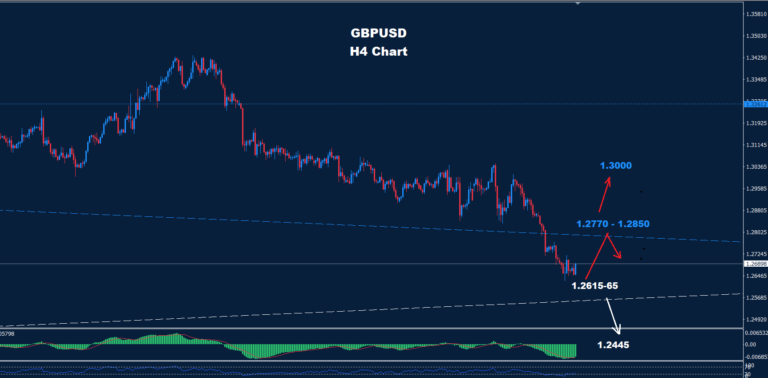
Weak UK GDP data for October, published on Friday, put pressure on the pound. There is a busy week ahead for British data, monetary policy and sterling. Ahead of the Bank of England’s expected rate cut on Thursday, data on the labor market will be released (including a slowdown in wage growth in the private sector), as well as the November CPI. Overall inflation is expected to decrease slightly, but core inflation and service sector inflation will remain relatively high, at 3.4% and 4.5% year—on-year, respectively.
The rate cut by the Bank of England this Thursday is now estimated by the market with a probability of 85%. At ING, adhering to a more dovish position, we expect that the head of the Bank of England, Andrew Bailey, will cross the Rubicon and ensure a 5-4 vote in favor of lowering the rate to 3.75%. Next, we expect another 50 bps of easing in 2026, which is the key reason why we see EUR/GBP rising towards 0.90 next year.
However, there is a serious risk for the “bears” on the pound — positioning. Asset managers now hold some of the largest short positions in sterling in more than a decade. Any positive surprises can lead to a sharp short-squeeze. It is possible that some managers will buy inexpensive protection against the growth of the pound, for example, deep out of money put options on the euro and call options on the pound.