Good Friday 2026 – Currency Thoughts
Good Friday 2026
April 3, 2026
Most markets in Europe and many in the Pacific Rim including Australia, New Zealand, India, Hong Kong, Taiwan, Indonesia and Singapore are closed today for the observance of Good Friday. The U.S. Treasury market and banks will have a shortened day to allow some reaction to U.S. March labor market data due within the half hour, but the stock exchange will be closed.
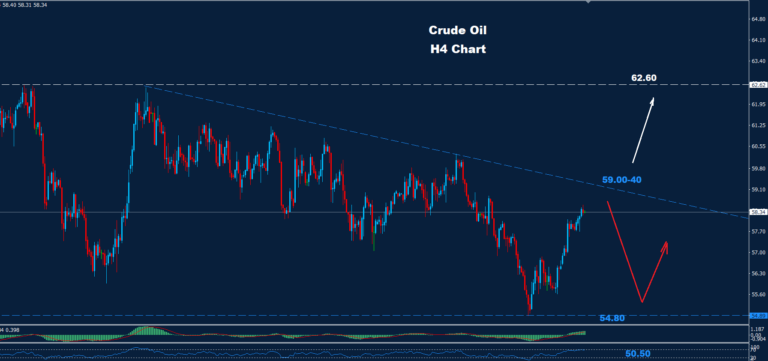
Good Friday nicely bookends a statement year that kicked off with President Trump’s initial roll-out of planned tariff hikes. A highly destructive Middle Eastern war during the past month has shut down the Strait of Hormuz. The war and tariffs each have inflationary implications, not just for the United States, but for most other countries as well. In overnight trading the dollar was flat to 0.1% softer against most other major currencies, as investors marked time ahead of the U.S. jobs report. Over the past twelve months, the U.S. currency has depreciated 12% against the Mexican peso, 9.6% versus the Swiss franc and 6.1% relative to the euro but also advanced by over 15% against the Turkish lira and 6.8% relative to the Japanese yen. Compared to a year ago, the price of West Texas Intermediate oil has soared around 64% to roughly $112 per barrel. Despite recent wobbles, gold is around 50% more expensive than a year ago, while Bitcoin has weakened by 23%.
Among the few data releases reported today, Turkish consumer prices posted a 1.9% monthly increase in March, but their 12-month 30.9% rate of increase was a tad under February’s 31.5% increase, while Turkish producer price inflation rose to 28.1%. The March readings represent a 2-month low for the CPI but a 15-month high in the PPI.
Georgian CPI inflation of 4.3% in March (a 3-month low) was down from 4.6% in February and even further below the 31-month high of 5.2% last October. Armenian CPI inflation climbed 0.2 percentage points to a three-year peak of 4.5% in March.
Japan’s composite and service sector purchasing manager indices from March were each revised marginally upward but still at respective two- and three-month lows of 53.0 and 52.1.
China’s composite and service PMI readings last month fell to 3-month lows of 51.5 and 52.1.
Russia’s composite and service PMIs each moved from above to below the 50 level that separates improvement from deterioration. Each reading for March was at a 6-month low of 48.8 overall and 49.5 among service sector firms.
The non-oil purchasing managers index for the United Arab Emirates dropped 2.1 points to a 7-month low in March.
French industrial production fell in February by 0.7%, its largest monthly slide since last August and resulting in a 0.3% dip compared to a year earlier.
The biggest surprise in the March batch of labor market data reported by the U.S. Labor Department was a 178 thousand increase in non-farm payroll jobs, which was almost three times greater the consensus forecast. The first quarter monthly average increase of 68k was four and a half times larger that the full-2025 mean. This rebound goes a long way toward alleviating the prevalent fears late last year that the U.S. economy might be slipping into recession. So does the continuing low unemployment rate, which unexpectedly dipped 0.1 percentage point to 4.3% last month, matching January’s reading and down from 4.5% last November. A broader U-6 definition of un- and under-employment that edged 0.1 percentage point higher to 8.0% and a continuing back-slide in labor market participation, which has now retreated to 61.9% from a November high of 62.5% are remaining concerns. A further surprise in the March data was a slowdown in the 12-month increase of average hourly earnings to a 5-month low of 3.5%. This attests to the overall sense of a soft labor market but is unlikely to allay the aroused higher inflation concern of Federal Reserve officials given the spectacular leap in world energy costs over such a short period of time.
At 09:15 EDT, the dollar was little changed against the euro or yen from its levels an hour before the U.S. labor market figures were released. Reactions reflected in stock futures trading were also quite muted, which is understandable in light of today’s holiday.
Copyright 2026, Larry Greenberg. All rights reserved.
Tags: Turkish CPI and PPI, U.S. March 2026 employment situation report


 ShareThis
You can leave a response, or trackback from your own site.