Guide to Shuffle KYC Verification: What Players Should Expect | BitcoinChaser
Shuffle Casino has built a reputation as a crypto gambling platform known for its original games and popular promotions such as the SHFL Lottery and $100K weekly race. These events attract players looking for exciting rewards and competitive gameplay.
Still, many new and experienced users wonder how strict Shuffle’s KYC process is. This guide breaks down what to expect, how verification works, and when additional checks may realistically be required.
Does Shuffle Casino Require KYC?
Yes, Shuffle Casino does require a form of KYC, but not in the way many traditional online casinos do. Like most licensed platforms, Shuffle follows compliance standards that explain why casinos ask for KYC in the first place. It’s for player safety, age verification, fraud prevention, and regulatory obligations.
That said, KYC at Shuffle is not instantly invasive, nor does it automatically block gameplay or withdrawals. The platform uses a tiered approach, meaning verification requirements depend on context rather than a single hard rule.
This structure allows most players to access core features without immediately handing over sensitive documents, while still giving Shuffle the ability to step in when additional checks are necessary.
Shuffle KYC Verification Levels: Explained
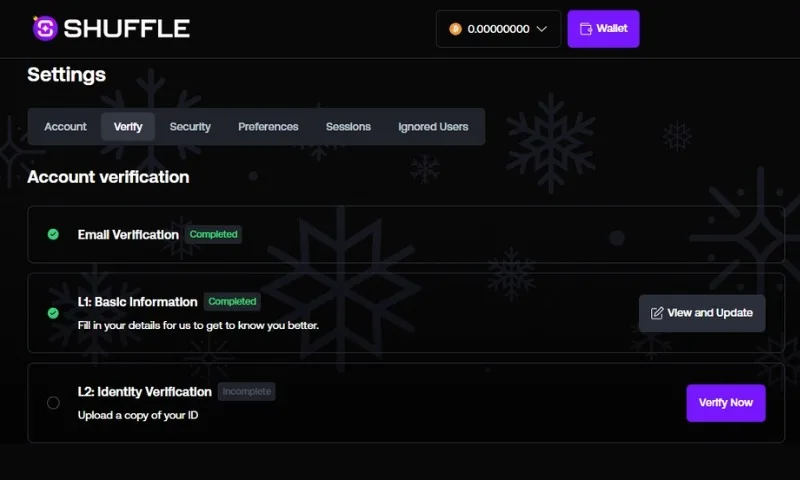
Shuffle keeps its verification framework intentionally simple by limiting it to two core levels. This design reduces friction for everyday users while still giving the platform flexibility to respond to risk-related scenarios when needed.
Level 1
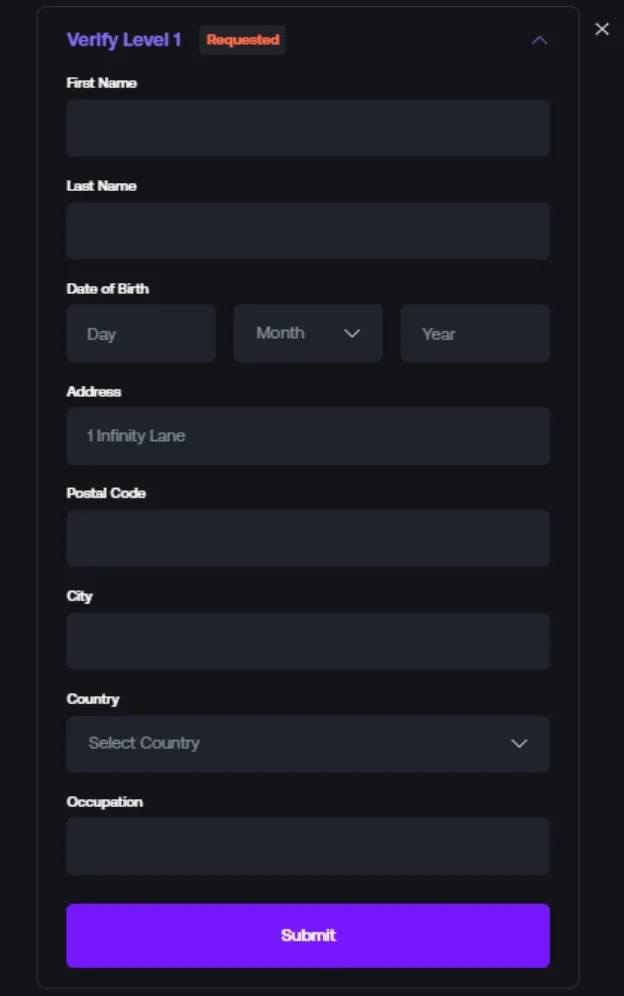
Level 1 is the baseline verification required for all Shuffle users. At this stage, players provide basic personal details such as their name, date of birth, and country of residence. No documents are uploaded, and the process is quick enough to complete in under a minute.
This level exists primarily to establish eligibility and meet basic compliance standards without compromising user privacy. For most players, Level 1 is the only verification step they will ever encounter.
Level 2
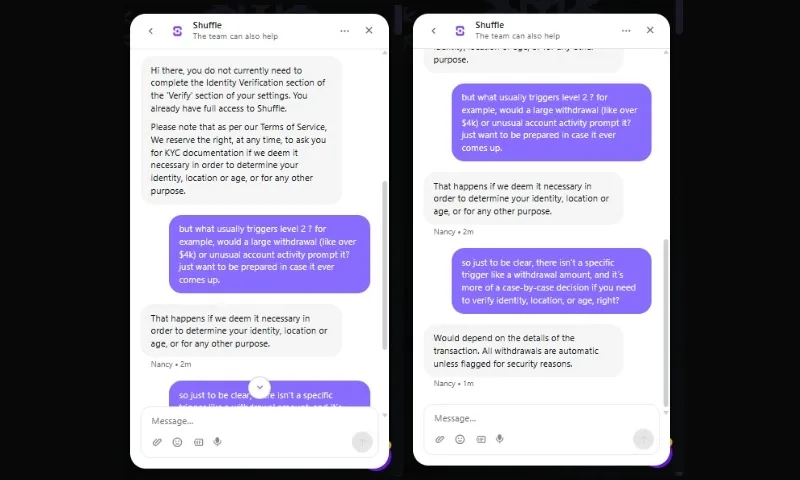
Level 2 verification is not automatic and does not appear to be tied to a fixed trigger like a specific withdrawal amount. Instead, it operates on a case-by-case basis, influenced by transaction context and internal risk assessments.
From a practical standpoint, this means that large withdrawals alone do not necessarily result in Level 2 checks. Rather, verification may be requested if activity needs clarification around identity, location, or account security.
Importantly, Shuffle’s system is largely automated, and withdrawals typically process without manual intervention unless something is flagged. For the average player operating normally, Level 2 remains the exception, not the rule.
Best No KYC Casino Alternatives
If minimizing verification is a priority, exploring alternative no KYC casino sites can make sense. Some crypto-first sites are designed around privacy, allowing players to register, deposit, and withdraw with little to no identity checks.
Tips for Smooth Shuffle KYC Verification
Always provide your real name, birthdate, and country when signing up. Mismatched details can delay verification or trigger additional checks, so accuracy is essential for a smooth KYC experience.
Have clear photos of your government-issued ID and a recent proof of address ready. Preparing these in advance saves time if Level 2 verification is requested.
Stick to a single Shuffle account. Using duplicates or shared devices can trigger red flags, potentially requiring extra verification or even temporary account restrictions.
Large, frequent withdrawals or unusual betting patterns can prompt additional checks. Play responsibly and avoid patterns that might appear suspicious to the system.
Using a VPN when withdrawing funds may raise security concerns. Ensure your real location is visible to prevent unnecessary verification delays or additional documentation requests.
Final Thoughts
Shuffle Casino’s KYC system sits in the middle ground between full anonymity and strict traditional verification. Level 1 keeps onboarding simple, while Level 2 exists as a safety net rather than a guaranteed hurdle.
Most players can enjoy the platform without ever facing deeper checks, but Shuffle clearly reserves the right to verify when circumstances require it. This approach balances privacy with compliance, which is increasingly rare in crypto gambling.
If you understand the rules, use accurate information, and play responsibly, Shuffle’s verification process is unlikely to disrupt your experience long term for most casual players worldwide today in practice.
Want to learn more about Shuffle? Read our Shuffle review.
Source link