Has the UAE banned crypto? All you Need to Know | BitcoinChaser
There has been considerable discussion lately about whether the UAE just banned crypto.
The short answer is no, they have not. But the situation is more complex than a simple yes or no.
The UAE is one of the most crypto-active nations in the world, and recent regulatory changes have confused those within and outside the country.
To understand what is happening, let’s examine the new rules and how they fit into a nation where digital assets are already deeply embedded in daily life.
Table of Contents
Crypto in the UAE: One of the Most Active Populations in the World
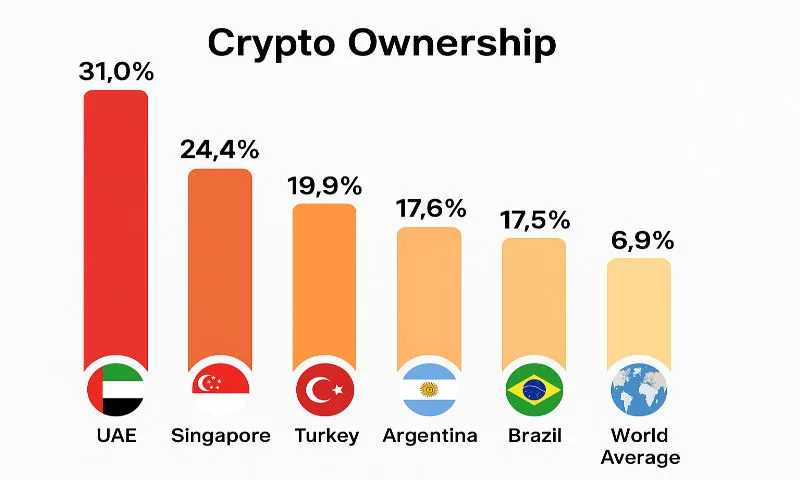
According to data from Triple-A the UAE has the highest crypto ownership rates in the world.
• Population: 9,516,871
• Crypto owners: 2,892,107
• Ownership rate: 30.39%
This means almost one in three residents holds cryptocurrency. For comparison:
• United Kingdom: 5.74% (roughly one in 20 people)
• United States: 15.56% (roughly one in 6 people)
Crypto is not a niche in the UAE; it is mainstream, widely adopted, and part of the country’s economic identity.
A National Crypto Hub: DMCC, Web3 Districts and the Crypto Tower
Dubai has positioned itself as a global centre for digital assets, and its growth is neither accidental nor superficial.
The DMCC Crypto Centre now hosts more than 700 blockchain and Web3 companies, forming one of the most concentrated crypto clusters in the world.
Building on this momentum, Dubai is developing a dedicated Crypto Tower, a 17-storey, 150,000 square-foot facility designed for Web3 companies, start-ups, and innovators.
The tower includes: blockchain businesses, an incubator, an AI innovation studio, an NFT gallery, high-security vaults, and a crypto-focused business club.
Crypto is not merely tolerated in the UAE; it is becoming a foundational part of the nation’s technological identity.
Abu Dhabi: Institutional Adoption and State-Linked Growth
While Dubai accelerates innovation, Abu Dhabi complements it with a more structured, institutional model.
Since 2018, ADGM has provided one of the region’s most mature digital-asset frameworks, attracting global firms in custody, tokenisation, and digital finance.
This environment aligns closely with the UAE’s sovereign-level ambitions, creating a coherent national strategy that blends commercial adoption with state-backed digital-asset development.
The UAE Is Mining Bitcoin at Scale
In an earlier article, we highlighted the UAE Royal Group’s mining of roughly 6,300 BTC, valued at around $700 million.
These Bitcoin reserves come from self-mining operations linked to Citadel Mining, powered by the UAE’s extensive energy capacity, including solar and natural gas.
This approach reduces reliance on external markets, strengthens national reserves and fits neatly within the UAE’s Vision 2031 initiative. Rather than retreating from Bitcoin, the UAE is building a strategic reserve through long-term accumulation.

What Changed: The New Central Bank Regulation
The major shift stems from Federal Decree-Law No. 6 of 2025, which significantly expanded the Central Bank’s authority across banking, fintech, and digital assets.
Under the new definitions, any tool or service that facilitates crypto transactions can be classified as a regulated financial activity.
Bitcoin remains legal, but the infrastructure around it is now treated as part of the formal financial system—a change that is subtle but undeniably consequential.
The Big Question: Did the UAE Ban Bitcoin?
No. Residents can still buy, hold, and trade Bitcoin legally.
Licensed exchanges and custodial platforms remain operational.
The crucial change concerns who can provide the tools needed to interact with Bitcoin.
Self-custody wallet apps, blockchain explorers, analytics platforms, APIs, DeFi interfaces, and similar services may now require a Central Bank licence if they are accessible to UAE residents.
The law targets infrastructure, not the asset itself.
What the New Rules Mean in Practice
The UAE now enforces one of the strictest frameworks for unlicensed crypto tools. Key effects include:
• Licensing requirements for any tool enabling crypto transactions
• Restrictions on unlicensed marketing and online promotion
• Penalties reaching up to AED 500 million
• Extraterritorial effects on foreign apps accessible from the UAE
This environment will deter smaller developers, open-source projects, and many DeFi platforms from seeking licenses, which could result in app-store restrictions or geo-blocking.
Why the UAE Would Tighten Control While Still Supporting Crypto
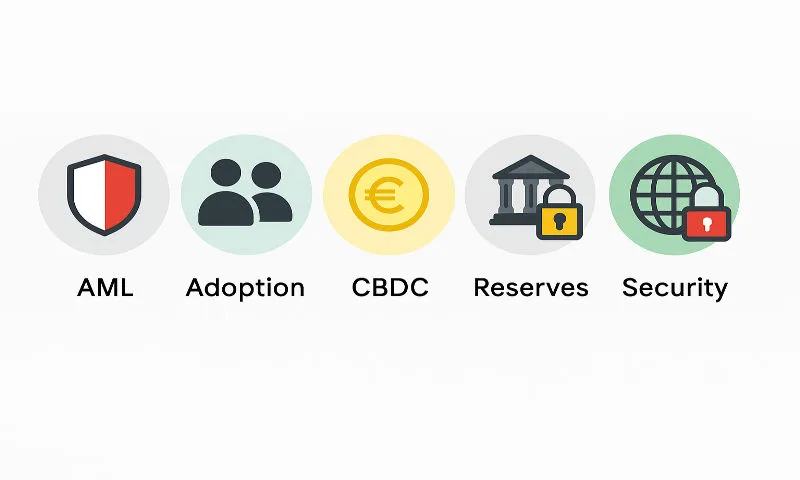
Several forces explain the tightening of regulations, and together they form a multifaceted policy framework:
• AML and FATF pressure, aligning the UAE with international standards
• High adoption levels, protecting millions of active users
• Digital dirham preparation, creating a controlled environment for a future CBDC
• Sovereign mining reserves, safeguarding national digital-asset strategies
• Risk management, limiting unregulated foreign platforms from serving residents
These motivations show that the UAE is not turning away from crypto; it is redefining it within a supervised financial architecture.
The Paradox of the UAE’s Crypto Strategy
The UAE presents a genuine paradox.
They have the world’s highest crypto ownership rate, a rapidly expanding business cluster in DMCC, a dedicated Crypto Tower, regulated cloud mining from a national telecom company, and a sovereign Bitcoin mining operation worth hundreds of millions.
Yet, at the same time, it imposes some of the strictest rules on unlicensed wallets and decentralised tools.
This is not an anti-crypto stance—it is a centralised, state-coordinated model of digital-asset integration.
Winners and Losers Under the New Framework
Winners:
• Licensed exchanges and custodians
• Corporate and state-backed mining platforms
• Institutional firms within ADGM and Dubai
• Larger companies capable of meeting compliance demands
Losers:
• Unlicensed self-custody wallet providers
• Open-source or small-scale developers
• DeFi platforms without local authorisation
• Users reliant on decentralised tools
This framework encourages a shift toward regulated intermediaries.
What This Means for Everyday UAE Crypto Users
Residents of the UAE can still legally buy and hold Bitcoin, but they will increasingly rely on licensed platforms, stricter KYC processes, and compliant service providers.
Self-custody is not outlawed, but using tools that fail to meet new licensing standards may become progressively more difficult.
Conclusion
So, did the UAE ban Bitcoin? No. The UAE has not banned Bitcoin.
Instead, it has established a controlled system that regulates the tools used to access digital assets.
This sits alongside one of the world’s most active crypto populations and significant national-level involvement, including more than 6,000 BTC mined by state-connected entities.
The UAE’s strategy is not anti-crypto—it is a deliberate effort to integrate, supervise, and institutionalise digital assets within a long-term economic and technological framework.
Source link