The Impact of Higher Interest Rates on Cryptocurrencies
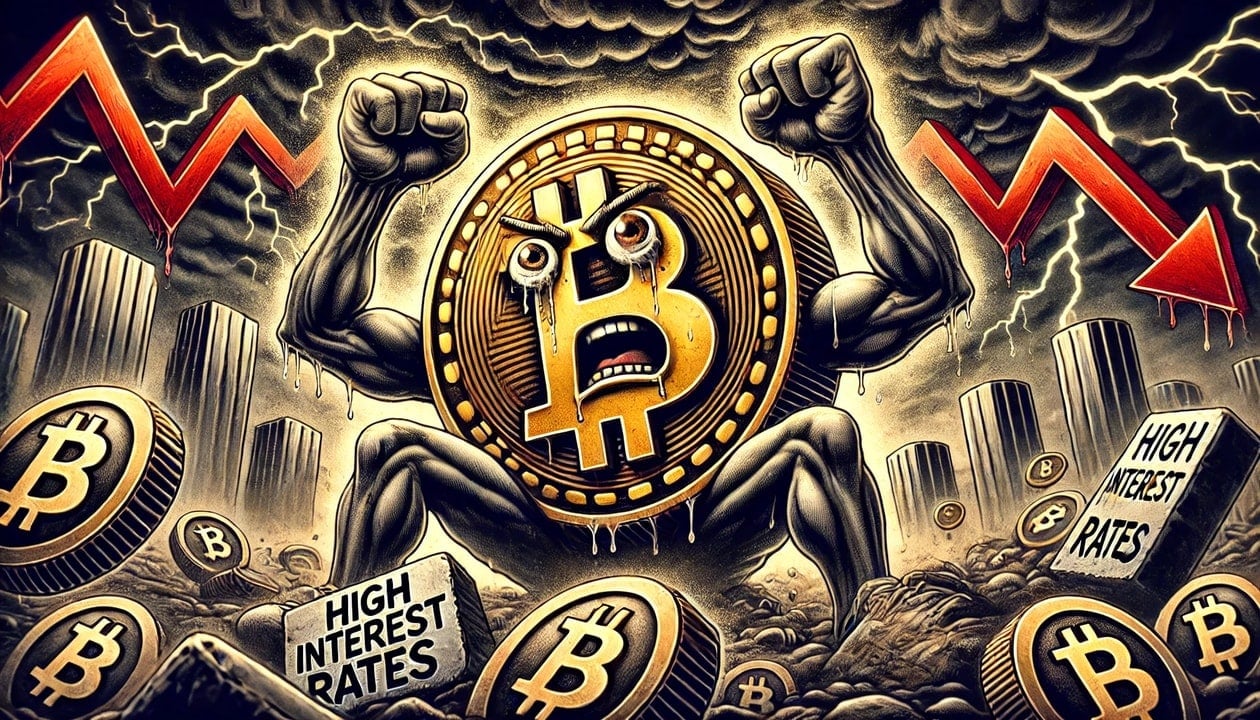
The impact of higher interest ratesInterest rates are the cost of borrowing money or the reward for saving money, typically expressed as a percentage of the principal amount. When it comes to interest rate trading, … and Federal Reserve Chair Jerome Powell’s cautious approach to delaying further rate cuts continues to weigh heavily on the cryptocurrencyA cryptocurrency is a digital or virtual form of currency that uses cryptography for security. Unlike traditional currencies issued by central banks, cryptocurrencies operate on de… market. Several interconnected mechanisms contribute to this pressure, leading to capital flight, reduced market liquidity, and an overall decline in investor enthusiasm for digital assets.
Capital Flight from Riskier Assets
Higher interest ratesInterest rates are the cost of borrowing money or the reward for saving money, typically expressed as a percentage of the principal amount. When it comes to interest rate trading, … make traditional fixed-income assets, such as U.S. Treasuries, more attractive by offering safer, guaranteed returns. This shift in investment preference reduces the appeal of riskier assets like cryptocurrenciesA cryptocurrency is a digital or virtual form of currency that uses cryptography for security. Unlike traditional currencies issued by central banks, cryptocurrencies operate on de…, which are inherently volatile and speculative. For example, the 10-year U.S. Treasury yield recently hovered around 4.52%, drawing investors toward stability rather than speculative digital assets. As capital rotates out of high-risk markets, cryptocurrenciesA cryptocurrency is a digital or virtual form of currency that uses cryptography for security. Unlike traditional currencies issued by central banks, cryptocurrencies operate on de… face sustained downward pressure.
Elevated borrowing costs further exacerbate the challenges facing the crypto market. Many institutional and retail investors rely on leverage to amplify their positions, but higher rates increase the cost of borrowing. This suppression of leveraged trading activity leads to decreased market participation, contributing to lower liquidity and heightened price volatility. In such an environment, margin calls become more frequent, forcing investors to liquidate holdings, which accelerates market declines.
The strengthening of the U.S. dollar is another headwind for the cryptocurrencyA cryptocurrency is a digital or virtual form of currency that uses cryptography for security. Unlike traditional currencies issued by central banks, cryptocurrencies operate on de… market. As interest ratesInterest rates are the cost of borrowing money or the reward for saving money, typically expressed as a percentage of the principal amount. When it comes to interest rate trading, … rise, the dollar appreciates, making dollar-denominated assets like BitcoinBitcoin is a decentralized digital currency that operates on a peer-to-peer network without a central authority or intermediaries like banks. Here are some key features and aspects… more expensive for international buyers. This reduces global demand for cryptocurrenciesA cryptocurrency is a digital or virtual form of currency that uses cryptography for security. Unlike traditional currencies issued by central banks, cryptocurrencies operate on de…, particularly in emerging markets where capital outflows intensify during rate hikes. Weaker international demand translates into a slowdown in crypto adoption, further contributing to market stagnation.
Challenges to Bitcoin’s Inflation Hedge Narrative
The narrative of BitcoinBitcoin is a decentralized digital currency that operates on a peer-to-peer network without a central authority or intermediaries like banks. Here are some key features and aspects… as an inflationInflation refers to the rate at which the overall price levels of goods and services increase, gradually reducing purchasing power over time. It is commonly measured using indices … hedge also faces challenges in the current macroeconomicAt its core, macroeconomics is the branch of economics that examines the behavior, performance, and structure of an economy as a whole. Unlike microeconomics, which focuses on indi… environment. While digital assets have been viewed as a store of value during periods of monetary instability, aggressive Federal Reserve rate hikes aimed at curbing inflationInflation refers to the rate at which the overall price levels of goods and services increase, gradually reducing purchasing power over time. It is commonly measured using indices … have weakened this argument. If inflationInflation refers to the rate at which the overall price levels of goods and services increase, gradually reducing purchasing power over time. It is commonly measured using indices … expectations stabilize due to effective monetary policy, the demand for cryptocurrenciesA cryptocurrency is a digital or virtual form of currency that uses cryptography for security. Unlike traditional currencies issued by central banks, cryptocurrencies operate on de… as a hedge diminishes. However, prolonged high inflationInflation refers to the rate at which the overall price levels of goods and services increase, gradually reducing purchasing power over time. It is commonly measured using indices … and delayed rate cuts could still drive some investors toward crypto assets as an alternative to fiat currencies.
Institutional hesitation has also emerged as a significant factor in recent months. Powell’s remarks about maintaining the current benchmark rate of 4.25%-4.5% reflect a “wait-and-see” approach that fosters uncertainty in financial markets. Institutional investors, who were instrumental in the 2024 crypto rally, are now delaying allocations until clearer policy signals emerge. The effects of this caution are evident in BitcoinBitcoin is a decentralized digital currency that operates on a peer-to-peer network without a central authority or intermediaries like banks. Here are some key features and aspects… ETF outflows recorded in early 2025, reflecting the broader sentiment of hesitation among major market players.
| Factor Weakening CryptocurrenciesA cryptocurrency is a digital or virtual form of currency that uses cryptography for security. Unlike traditional currencies issued by central banks, cryptocurrencies operate on de… | Explanation |
|---|---|
| Higher Interest RatesInterest rates are the cost of borrowing money or the reward for saving money, typically expressed as a percentage of the principal amount. When it comes to interest rate trading, … | Increases appeal of traditional assets like U.S. Treasuries, reducing demand for crypto. |
| Elevated Borrowing Costs | Suppresses leveraged trading, decreasing liquidity and participation. |
| Strengthening U.S. Dollar | Makes BitcoinBitcoin is a decentralized digital currency that operates on a peer-to-peer network without a central authority or intermediaries like banks. Here are some key features and aspects… more expensive for international buyers, reducing global demand. |
| Weakening InflationInflation refers to the rate at which the overall price levels of goods and services increase, gradually reducing purchasing power over time. It is commonly measured using indices … Hedge Narrative | Aggressive rate hikes stabilize inflationInflation refers to the rate at which the overall price levels of goods and services increase, gradually reducing purchasing power over time. It is commonly measured using indices … expectations, reducing crypto’s appeal as a hedge. |
| Institutional Hesitation | Large investors delay allocations due to uncertainty over Fed policy. |
| Market Volatility and Margin Calls | Increased liquidations due to higher leverage costs and frequent margin calls. |
| Regulatory Uncertainty | Concerns over potential regulations create hesitation in the market. |
Market Response and Future Outlook
The crypto market has already responded to these macroeconomicAt its core, macroeconomics is the branch of economics that examines the behavior, performance, and structure of an economy as a whole. Unlike microeconomics, which focuses on indi… pressures with sharp declines. BitcoinBitcoin is a decentralized digital currency that operates on a peer-to-peer network without a central authority or intermediaries like banks. Here are some key features and aspects… fell below $100,000 in December 2024 after the Federal Reserve signaled a slowdown in rate cuts. Additionally, ahead of Powell’s February 2025 testimony, the broader crypto market shed $150 billion in value, with BitcoinBitcoin is a decentralized digital currency that operates on a peer-to-peer network without a central authority or intermediaries like banks. Here are some key features and aspects… dropping 4% to $104,000. StablecoinsA stablecoin is a type of cryptocurrency designed to maintain a stable value relative to a specific asset or basket of assets. Unlike traditional cryptocurrencies such as Bitcoin o… such as USDC have also come under pressure, as declining Treasury yields reduce issuer revenue, threatening their long-term stability.
Despite these challenges, Powell’s stance on regulatory clarity offers some optimism for the sector. His support for stablecoinA stablecoin is a type of cryptocurrency designed to maintain a stable value relative to a specific asset or basket of assets. Unlike traditional cryptocurrencies such as Bitcoin o… regulation and opposition to central bank digital currencies (CBDCs) signal a commitment to maintaining the legitimacy of digital assets within the broader financial system. While higher rates continue to weigh on crypto prices, analysts suggest that even modest rate cuts later in 2025 could reignite liquidity-driven rallies. Investors continue to monitor the Federal Reserve’s policy direction closely, as any sign of easing could be a pivotal catalystIn stock trading, a catalyst refers to an event, news, or announcement that causes a significant and often rapid price movement in a stock or the broader market. Catalysts can be p… for the next phase of crypto market growth.

Lance Jepsen is the senior personal finance writer for Guerilla Stock Trading who has spent more than 25 years covering the stock market and economics. In addition, Lance has worked as a private stock analyst for a number of high worth individuals.
Performance of Top 10 Cryptos (24 hours)
🗨️ JOIN OUR COMMUNITY OF CRYPTO TRADERS AND INVESTORS ON SOCIAL MEDIA
At GuerillaStockTrading, we maintain full transparency and impartiality; we never blog about stocks or crypto in which we hold a personal position unless explicitly stated in the article. Additionally, we do not accept paid promotions presented as content. All information shared is for informational purposes only and should not be construed as financial, investment, tax, or legal advice, nor as a recommendation to buy any security or financial asset. The content is general in nature and does not account for individual circumstances. It may not be suitable for your particular situation. Before making financial decisions, you are encouraged to seek guidance from your own financial or investment advisor.