Institutional Investors Bet on Market Collapse: What Do They Know That We Don’t?
The Growing Hedge Fund Short Bets: A Warning Signal?
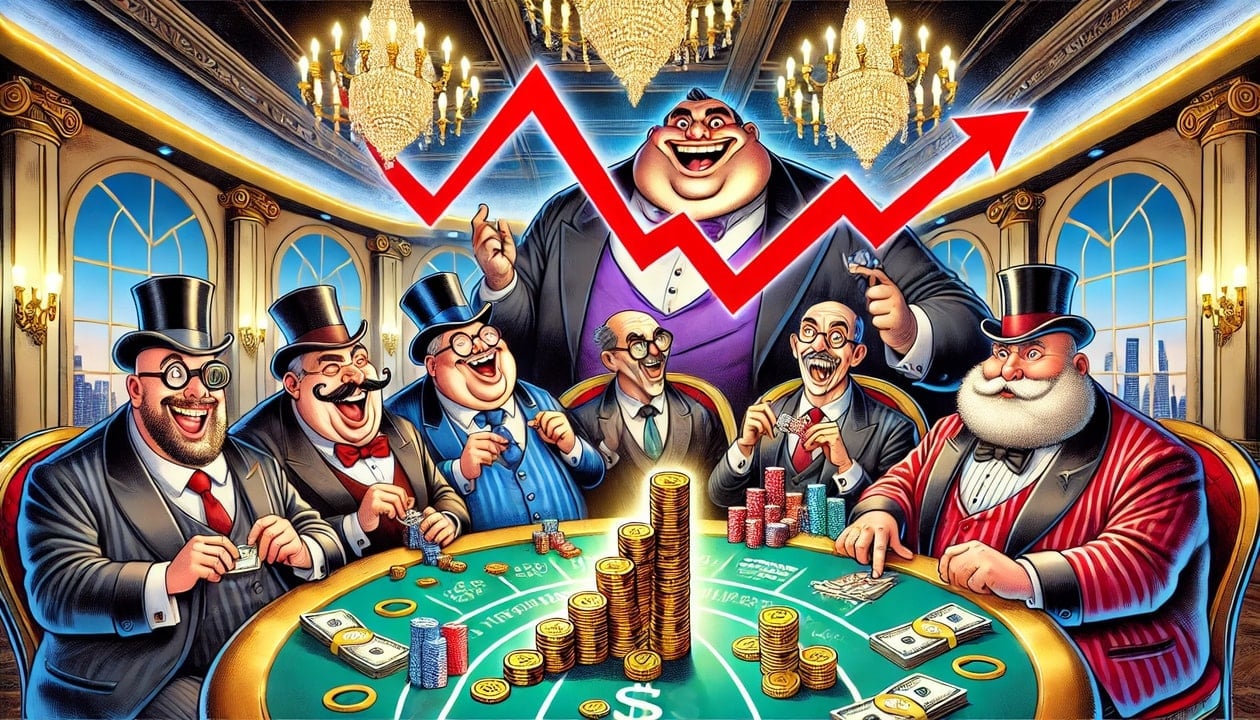
In a surprising turn of events, hedge funds are making massive bets that the stock market is poised for a severe downturn. These investment firmsFinancial stocks represent shares of companies operating in the finance industry. When trading financial stocks, investors should consider financial services, including banking, in…, which consistently profit from market movements, have placed billions of dollars in short positions against U.S. stocks. If they are correct, they stand to make enormous gains. If they are wrong, they will suffer heavy losses.
The Surge in Short Positions
Goldman Sachs recently reported that there has been an unprecedented rise in short positions against U.S. equities. In January alone, hedge funds placed ten times more bets on stock prices declining than they did on prices rising. This stark shift indicates that institutional investors foresee significant instability ahead.
While short selling is a routine part of financial markets, the sheer volume of these bets suggests something bigger may be at play. Investors are now questioning whether these hedge funds have insights that the broader public lacks.
The Potential Impact on Everyday Investors
For hedge funds, a market collapse would lead to windfall profits. However, the true victims of such an event would be millions of Americans who rely on their 401(k)s, pensions, and personal savings. A steep decline in equity markets could wipe out trillions in household wealth, leaving retirees and working professionals in financial distress.
Understanding hedge fund positioning is crucial for retail investors. When major financial players take significant short positions, it can indicate impending economic disruptions. Investors should remain informed and consider diversifying their portfolios to mitigate risks.
Trade War Concerns and Economic Consequences
Some analysts believe that hedge funds’ aggressive short positions may be linked to ongoing trade disputes. President Trump recently imposed sweeping tariffs:
- 25% on imports from Canada and Mexico
- 10% on Chinese goods
These tariffs have prompted swift retaliation. Canada announced a 25% counter-tariff on American goods, while China has vowed to challenge the tariffs at the World Trade Organization.
Market Reaction and Political Pressure
Harvard economist Jason Furman has suggested that financial markets may force President Trump to reconsider his tariff strategy. Historically, market downturns have pressured political leaders to alter economic policies. If the market declines sharply, Trump may face increased calls to ease trade restrictions.
Economic Fallout for Canada and Mexico
While the U.S. economy is expected to feel some pain, Mexico and Canada could face even more severe consequences. S&P Global Ratings has projected that:
- Mexico’s auto and electrical sectors will suffer substantial declines.
- Canada’s paper, rubber, and plastics industries are expected to be the hardest hit.
Investors should monitor multinational corporations with significant exposure to these markets, as trade disruptions could impact revenue and earnings.
Deutsche Bank’s Dire Warning
A far more dire and downbeat take comes from Deutsche Bank chief FX strategist George Saravelos. In a recent report titled “A Huge Shock”, Saravelos argues that if Trump’s tariffs proceed, they will constitute the largest disruption in global trade policy since the collapse of Bretton Woods. He warns of immediate recessionary consequences for affected economies and broad-based negative impacts on the global economy.
The Severity of the Trade War Measures
Saravelos notes that the tariffs represent the most aggressive form of protectionism yet seen:
- Speed of implementation: Tariffs take effect within days.
- Scope: All goods, including previously exempted small parcels, are covered.
- Breadth: Nearly 44% of total U.S. imports are affected.
- Energy tariffs: For the first time, energy imports from Canada are included.
The Deutsche Bank strategist emphasizes that the macroeconomicAt its core, macroeconomics is the branch of economics that examines the behavior, performance, and structure of an economy as a whole. Unlike microeconomics, which focuses on indi… implications could be devastating, especially for economies outside the U.S.
Market Repricing Trade War Risks
According to Saravelos, markets have underestimated the severity of these tariffs. He predicts that:
- U.S. inflationInflation refers to the rate at which the overall price levels of goods and services increase, gradually reducing purchasing power over time. It is commonly measured using indices … could rise by 1% if tariffs are sustained.
- The economic impact on Canada and Mexico could be worse than Brexit was for the UK.
- Equity markets will suffer a significant downturn.
He also warns that the foreign exchange markets will experience volatility, particularly with USD/CAD potentially surging to 1.50 and significant movements in USD/MXN.
Legal Challenges and Global Retaliation
The report outlines three key factors to watch:
- Market Reactions: How will the administration respond if markets crash?
- Legal Challenges: Will the courts attempt to block Trump’s tariffs under National Emergency powers?
- Global Retaliation: Will other countries escalate with their own countermeasures?
Saravelos concludes that the long-term consequence will be an elevated tariff riskIn stock and crypto trading, risk refers to the possibility of losing some or all of the capital invested in a trade. It represents the uncertainty about the future performance of … premium in global markets, leading to prolonged economic uncertainty.
The Flight to Gold Amid Uncertainty
As concerns over economic stability mount, investors are turning to gold as a safe haven asset. Gold prices have surged, creating a lucrative arbitrage opportunity for financial institutions.
JPMorgan’s Gold Arbitrage
JPMorgan Chase is reportedly delivering over $4 billion worth of gold bullion to New York futures contracts. The spike in gold demand reflects growing fears of economic instability and suggests that large institutions are bracing for market turbulence.
The Big Picture: Following the Money
The rapid increase in hedge fund short positions, escalating trade tensions, and rising gold prices all point to significant market volatility ahead. While it remains unclear whether a major crash is imminent, investors should take note of these warning signs and prepare accordingly.
Why Investors Should Watch These Companies
- Goldman Sachs (GS): Their data highlights shifting market sentiment and can provide early warnings of financial instability.
- JPMorgan Chase (JPM): As a major player in the gold trade, their movements in the commodities market can indicate broader economic concerns.
- Tesla (TSLA): A heavily shorted stock, Tesla often serves as a barometer for investor confidence in high-growth equities.
- Apple (AAPL): With significant exposure to international markets, Apple’s performance can signal how global trade tensions impact corporate earnings.
- SPDR Gold Shares (GLD): A key ETF tracking gold prices, it reflects investor sentiment toward safe-haven assets.
- S&P 500 Index (SPX): Monitoring its performance can provide insight into overall market trendsUnderstanding market trends is a critical component for businesses conducting industry analysis. For example, Netflix identified early on the growing demand for streaming services … and economic stability.
Final Thoughts
With hedge funds making multi-billion-dollar bets against the market, investors must remain vigilant. Economic uncertainties, escalating trade disputes, and shifting market dynamics all point to potential turbulence ahead. Following the movements of major financial players and diversifying investments can help safeguard portfolios from unexpected market shocks.

Lance Jepsen is the senior personal finance writer for Guerilla Stock Trading who has spent more than 25 years covering the stock market and economics. In addition, Lance has worked as a private stock analyst for a number of high worth individuals.
Top Performing Cryptos (24 hours)
Do you have a news tip for GuerillaStockTrading? Please email us at
[email protected]
🗨️ JOIN OUR COMMUNITY OF CRYPTO TRADERS AND INVESTORS ON SOCIAL MEDIA
💥 GET OUR LATEST CONTENT IN YOUR RSS FEED READER
We are entirely supported by readers like you. Thank you.🧡
At GuerillaStockTrading, we maintain full transparency and impartiality; we never blog about stocks or crypto in which we hold a personal position unless explicitly stated in the article. Additionally, we do not accept paid promotions presented as content. All information shared is for informational purposes only and should not be construed as financial, investment, tax, or legal advice, nor as a recommendation to buy any security or financial asset. The content is general in nature and does not account for individual circumstances. It may not be suitable for your particular situation. Before making financial decisions, you are encouraged to seek guidance from your own financial or investment advisor.