Lecture 3: Types Of Inside Bars – Separating Trading Gold From Fool’s Gold | Trading Strategy Guides
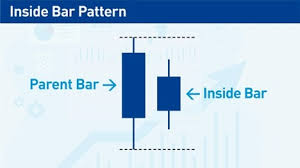
Welcome back! You’ve learned to spot inside bars and understand their psychology. Now comes the crucial part – learning which inside bars are worth your time and money, and which ones will drain your account.
Here’s the truth: not all inside bars are created equal. Some are absolute trading gold that can make your month in a single trade. Others are fool’s gold that look promising but lead to frustration and losses.
Today, I’m going to teach you exactly how to tell the difference.
The Inside Bar Hierarchy
After analyzing thousands of inside bar setups over the years, I’ve discovered they fall into six distinct categories. Think of this as your inside bar quality rating system – from premium grade to avoid-at-all-costs.
Let me walk you through each type, starting with the absolute best.
Type 1: The Micro Inside Bar (Grade A+ Gold)
This is the holy grail of inside bar trading. A micro inside bar is one where the inside bar’s range is less than 30% of the mother bar’s range. These tiny consolidations after big moves are compression at its absolute peak.
Why They’re So Powerful: When a market moves 200 pips and then consolidates in just a 40-pip range, you’re looking at extreme compression. It’s like squeezing a spring until it can barely compress further. When it releases, the explosion is spectacular.
I’ve seen micro inside bars in forex lead to 400+ pip moves. In stocks, they often signal the start of major trending phases that can last weeks.
How to Spot Them:
- Mother bar shows strong directional movement (100+ pips in forex)
- Inside bar range is tiny in comparison (30 pips or less)
- Often forms during low-volume periods
- Usually appears before major news events or technical breakouts
Google Search: Look up “micro inside bar trading patterns” to see examples of these powerful formations.
Type 2: The Pin Bar Inside Bar (Grade A Gold)
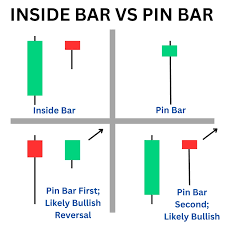
This is where two powerful patterns combine into one super-pattern. You get an inside bar that’s also a pin bar – meaning it has a long wick (rejection) and small body, while staying within the mother bar range.
What Makes Them Special: Pin bar inside bars show both indecision (inside bar) AND directional bias (pin bar rejection). You’re getting compression plus a hint about which way the market wants to break.
The Setup Requirements:
- Must qualify as a perfect inside bar first
- One wick should be at least 60% of the total range
- Body should be in the upper or lower 25% of the range
- The rejection should be at a significant level (support/resistance)
Trading Edge: These give you the best of both worlds – the explosive potential of inside bar compression plus the directional hint from the pin bar rejection.
Type 3: Multiple Inside Bars (Grade A- Gold)
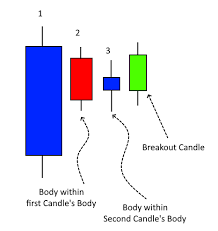
When you see two, three, or even four inside bars in a row, all contained within the original mother bar, you’re witnessing extended compression. Each additional inside bar adds more pressure to the system.
The Power of Sequences:
- Double inside bars are solid setups (Grade A-)
- Triple inside bars are excellent (Grade A)
- Four or more inside bars are rare but explosive (Grade A+)
What’s Happening: During multiple inside bar formation, weak hands are exiting positions, volume is drying up, and institutions are quietly accumulating. When the breakout finally comes, there’s often nobody left to stop it.
Trading Tip: The longer the sequence, the bigger the eventual move. I’ve seen five inside bars in a row lead to 600+ pip moves in major forex pairs.
Google Search: Search “multiple inside bars trading sequence” to see examples of these powerful compression patterns.
Type 4: The Standard Inside Bar (Grade B+ Silver)
This is your bread-and-butter inside bar. Clean formation, reasonable compression (40-60% of mother bar range), and proper context. Not spectacular, but consistently profitable when traded correctly.
Characteristics:
- Clear inside bar formation with adequate compression
- Forms at logical market levels (support/resistance)
- Has proper context backing it up
- Volume patterns support the setup
When to Trade Them: Standard inside bars become Grade A setups when they form at:
- Major support/resistance levels
- Confluence zones (multiple technical factors)
- After significant news events
- At key Fibonacci levels
The Reliability Factor: While not as explosive as micro inside bars, standard inside bars offer consistency. They’re perfect for building confidence and steady account growth.
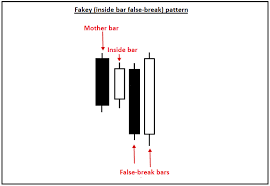
Type 5: The False Inside Bar (Grade F – Avoid)
These look like inside bars but fail the critical requirements. Common examples include:
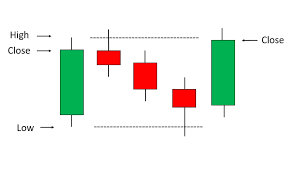
- Bars that touch the mother bar’s high or low (not truly “inside”)
- Inside bars with gaps that technically qualify but lack psychological validity
- Inside bars formed during extremely low volume periods with no real market interest
Why They Fail: False inside bars lack the psychological compression that makes real inside bars powerful. They’re often just random price noise rather than meaningful market indecision.
Red Flags:
- Formed during holiday periods
- No real compression visible
- Mother bar was weak or unconvincing
- No logical reason for the formation
The Context Multiplier Effect
Here’s something crucial: context can upgrade or downgrade any inside bar type. A standard inside bar (Grade B+) at a major support level with multiple confluence factors can become a Grade A+ setup. Conversely, even a micro inside bar in a random location might only be Grade B.
Context Upgrade Factors:
- Formation at major support/resistance
- Multiple timeframe alignment
- Confluence with Fibonacci levels
- Formation after significant news
- High volume on the mother bar
Context Downgrade Factors:
- Formation in market “no man’s land”
- Conflicting signals on higher timeframes
- Low volume environment
- Recent false breakouts in the area
Google Search: Look up “inside bar confluence trading” to see how context factors can dramatically improve setup quality.
My Personal Inside Bar Ranking System
After years of trading these patterns, here’s how I prioritize them:
Must Trade (Priority 1):
- Micro inside bars at key levels
- Pin bar inside bars with strong context
- Triple+ inside bar sequences
Should Trade (Priority 2):
- Standard inside bars with strong context
- Double inside bars at significant levels
- Any inside bar with multiple confluence factors
Maybe Trade (Priority 3):
- Standard inside bars with moderate context
- Borderline inside bars with exceptional context
Never Trade (Priority 4):
- False inside bars
- Any inside bar without proper context
- Inside bars against major trend without strong reversal signals
The Volume Secret
Here’s an advanced tip that separates professional inside bar traders from amateurs: always check volume patterns.
High-Quality Inside Bar Volume Pattern:
- High volume on the mother bar (shows conviction)
- Decreasing volume during inside bar formation (shows indecision)
- Volume expansion on breakout (confirms direction)
Low-Quality Volume Patterns:
- Low volume on the mother bar (weak initial move)
- High volume during inside bar (not real compression)
- No volume expansion on breakout (weak conviction)
Building Your Quality Filter
The key to successful inside bar trading isn’t just finding patterns – it’s finding the RIGHT patterns. Develop a quality filter that automatically screens out low-grade setups.
My Quick Quality Checklist:
- Is there real compression (inside bar
- Is the context compelling (key levels, confluence)?
- Does the volume pattern make sense?
- Is this a pattern type I actually want to trade?
If you can’t check at least 3 of these boxes, skip the trade. There will always be another inside bar tomorrow.
What’s Coming Tomorrow
Tomorrow, we’re diving into timeframe analysis – one of the most crucial aspects of inside bar trading. You’ll learn why a daily inside bar is worth 10 hourly inside bars, how to use multiple timeframes to confirm setups, and which timeframes produce the most reliable signals.
We’ll also start looking at the market session effects and how the same inside bar pattern can have completely different outcomes depending on when it forms.
But today, focus on building your quality recognition skills. Start seeing inside bars through the lens of grades and quality levels. Your account balance will thank you for developing this discipline.
Remember: it’s better to trade one high-quality inside bar per month than ten mediocre ones per week. Quality always beats quantity in trading.
Ready to become an inside bar quality expert? Tomorrow we’ll add the timeframe dimension to your analysis!
Source link