Lecture 3: What Is Liquidity In Trading? (Beginner Guide To Understanding How The Market Hunts Retail Traders) | Trading Strategy Guides
Introduction
Welcome to Lesson 3! If you’ve ever placed a trade and felt like the market knew exactly where your stop loss was, you’re not imagining things. This is all about liquidity — and it’s one of the most important concepts in Smart Money Concepts (SMC).
By the end of this lesson, you’ll understand:
- What liquidity is.
- How institutions use liquidity.
- Types of liquidity you need to know.
- How to spot liquidity zones on your charts.
- How Smart Money uses liquidity to trap beginners (and how to avoid the trap).
What is Liquidity?
Liquidity refers to the money sitting in the market waiting to be taken. Every time a trader places a stop loss, a pending order, or even a take profit, that creates liquidity. Institutions need liquidity to fill their massive orders — they can’t just enter or exit the market like small retail traders.
Think of liquidity as fuel for price movement. Price doesn’t just move randomly — it moves toward pools of liquidity where money is waiting.
Why Liquidity Matters to Smart Money
Institutions (Smart Money) don’t trade against the trend — they create the trend by using liquidity.
Their goal:
- Find where retail traders have placed their orders.
- Trigger those orders to generate liquidity.
- Use that liquidity to fill their massive trades.
If you understand where liquidity sits, you can predict where the price wants to go.
Types of Liquidity (Beginner Focus)
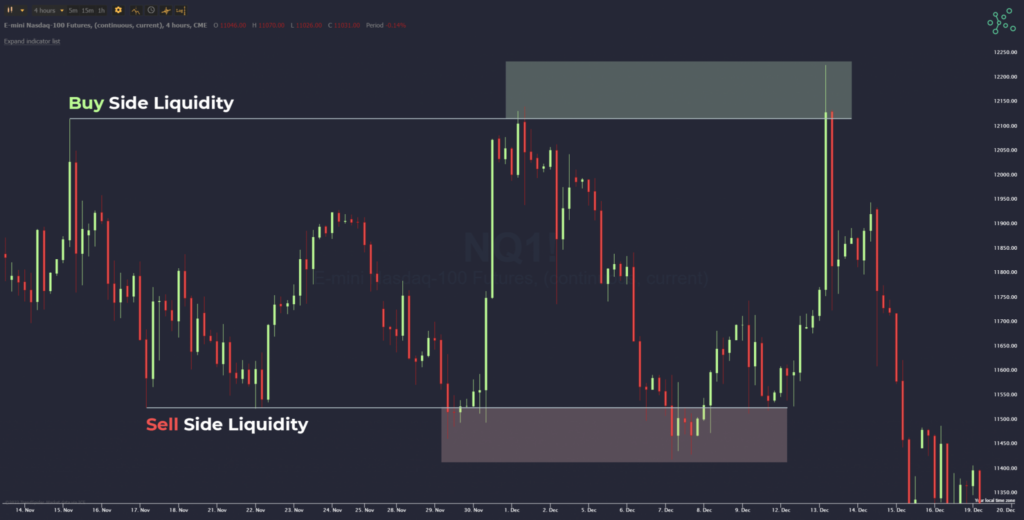
1. Buy-Side Liquidity (BSL)
These are stop losses from traders who sold the market.
Usually found above swing highs.
2. Sell-Side Liquidity (SSL)
These are stop losses from traders who bought the market.
Usually found below swing lows.
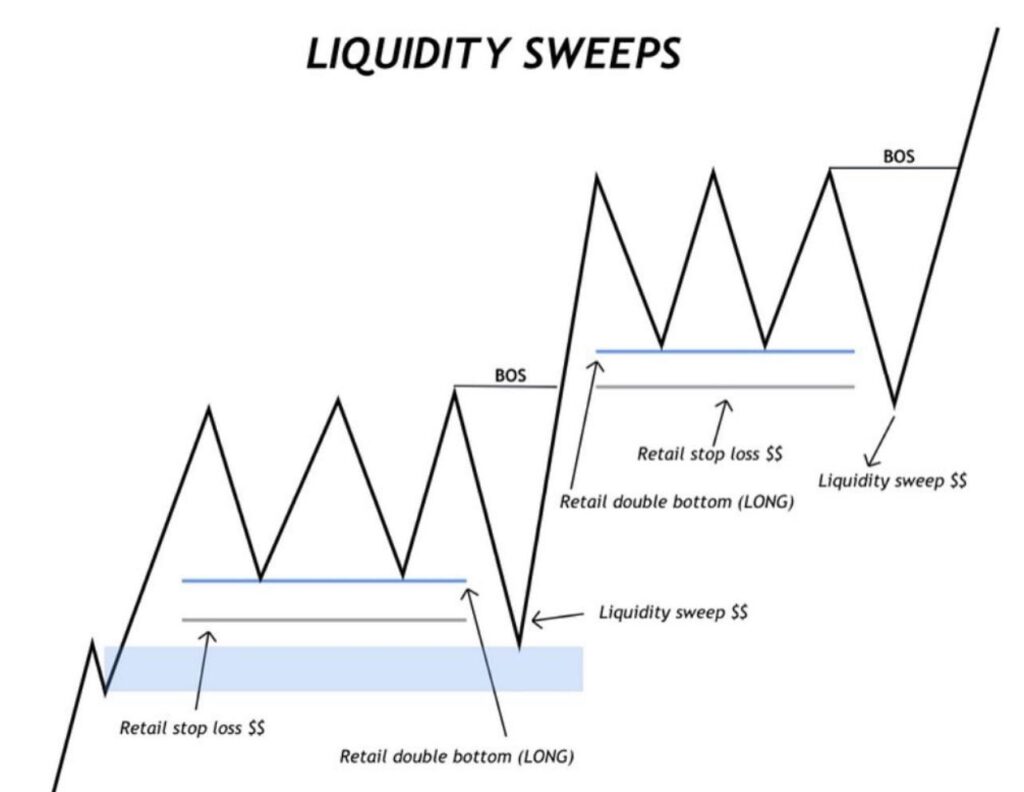
Diagram 1: Simple Liquidity Example
Uptrend:
Price makes higher highs and higher lows.
Stop losses from sellers sit above each swing high (Buy-Side Liquidity).
Price often spikes up to grab those stops before reversing.
Downtrend:
Price makes lower lows and lower highs.
Stop losses from buyers sit below each swing low (Sell-Side Liquidity).
Price often spikes down to grab those stops before reversing.
How Liquidity Grabs Work
This is where Smart Money plays its game.
A typical liquidity grab works like this:
- Price moves into a strong level.
- Retail traders enter trades, placing tight stop losses above or below that level.
- Smart Money drives price into those stops to trigger them.
- After grabbing that liquidity, the price reverses in the real direction Smart Money wants.
This is why retail traders always feel like the market hunts their stops — because it does.
Diagram 2: Liquidity Grab Process
Retail traders go short at resistance.
They place stop losses just above resistance.
Price spikes up, hits their stops (grabbing liquidity), then reverses down.
Key Zones Where Liquidity Forms
| Location | Explanation |
| Swing Highs / Lows | Traders place stops at obvious highs/lows. |
| Double Tops/Bottoms | Looks like strong support/resistance — perfect for traps. |
| Trendline Touches | Stops sit just outside trendlines — great liquidity targets. |
| Round Numbers (Psych Levels) | Big money often accumulates around key numbers (like 1.2000). |
Why Understanding Liquidity Helps You Trade Better
Retail Trader Mindset (Wrong)
“This resistance is strong, I’ll sell here and place my stop loss right above.”
Smart Money Trader Mindset (Right)
“Lots of retail stops sit above this resistance — Smart Money will grab that liquidity before dropping price.”
If you think like Smart Money, you’ll enter after the stop hunt, not before.
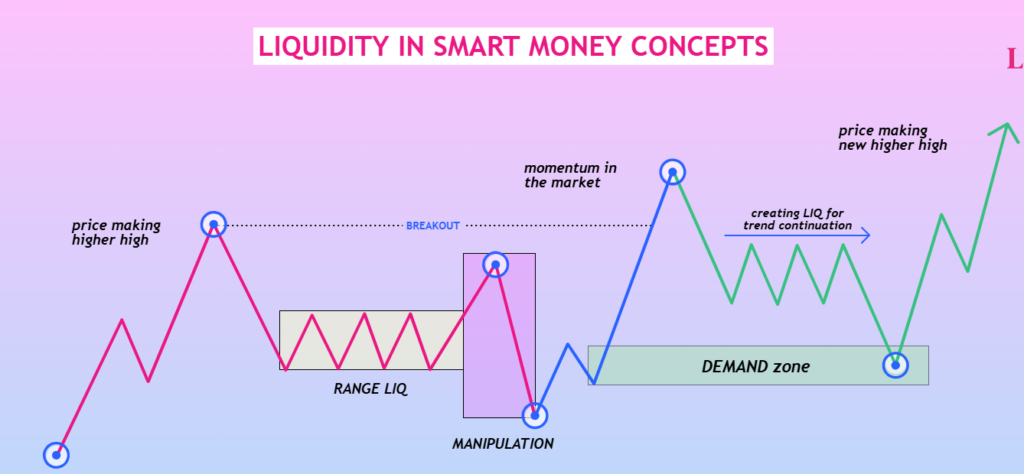
Simple Example – Buy-Side & Sell-Side Liquidity in Action
Price in a range.
Stops above the range = Buy-Side Liquidity.
Stops below the range = Sell-Side Liquidity.
Price breaks out both sides (stop hunt), then picks a real direction.
How to Use Liquidity in Your Trading
✅ Identify key swing highs and lows.
✅ Mark double tops and double bottoms (liquidity traps).
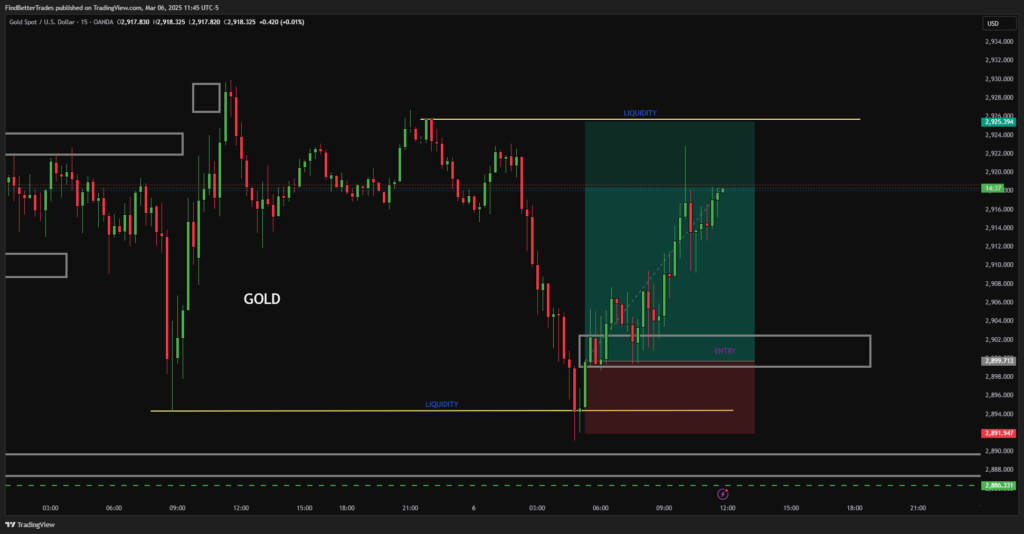
✅ Expect the price to grab liquidity before big moves.
✅ Wait for liquidity grab confirmation (wick or fakeout), then enter.
Pro Tip – Combine with Market Structure (Lesson 2)
Liquidity grabs work best when they align with:
- Break of structure (BOS) or change of character (CHoCH).
- Order blocks form after liquidity grabs (more in Lesson 4).
Diagram 3: Live Trade Example Using Liquidity Grab
Common Beginner Mistakes
⚠️ Trading every breakout without checking for liquidity.
⚠️ Place stops in obvious locations (where Smart Money can see them).
⚠️ Ignoring the relationship between liquidity and market structure.
Why Liquidity is the “Secret Sauce” of SMC
It reveals where Smart Money is hunting.
It shows where the price will likely move next.
It gives you high-probability entry points after the trap is set.
Quick Review – What You Should Remember
| Concept | Meaning |
| Buy-Side Liquidity | Stops above highs |
| Sell-Side Liquidity | Stops below lows |
| Liquidity Grab | Stop hunt followed by reversal |
| Liquidity + Structure | Best combination for high-quality trades |
Conclusion
If you master liquidity, you’ll stop trading like the crowd — and start trading with Smart Money. In the next lesson, we’ll tie this into Order Blocks, showing you how liquidity and order blocks work together to create precision entries.
Source link