Major Currency Pairs: A Guide to the Most Traded Forex Pairs | LiteFinance
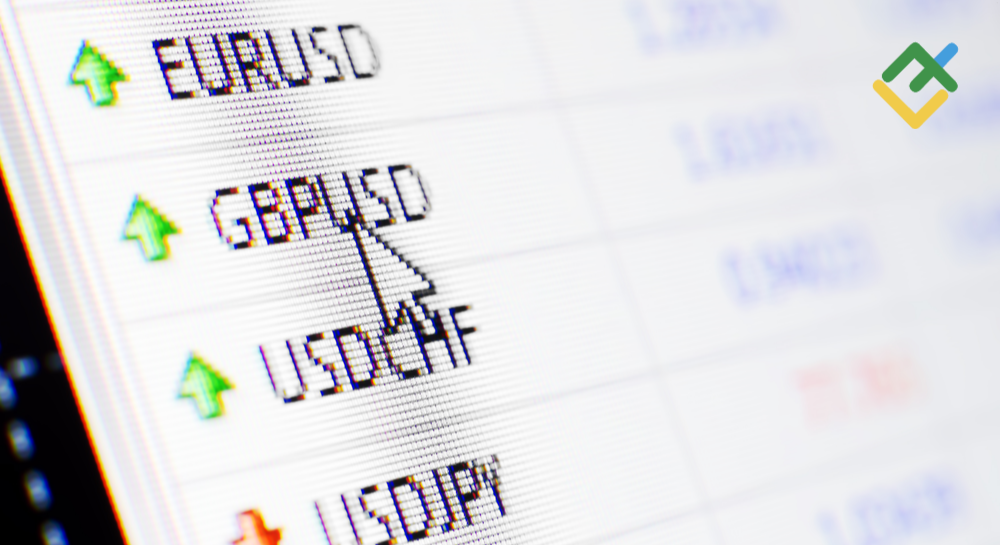

A currency pair on the trading market is the main tool for forming an offer to buy or sell a currency. A currency pair consists of two currencies: the main currency and the quote currency. The most traded currency pairs are those that contain the dollar, as it is the largest economy in the world. Examples of such pairs are EUR/USD, GBP/USD, JPY/USD and so on.
Of course, there are currency pairs that do not contain the dollar, they usually have smaller market volumes, and nevertheless, they are no worse for it. Pairs with a large market volume and a small market volume are called “major” and “minor”. It is critically important for a trader to understand what the difference between these pairs is, and that’s what we will talk about in this article.
The article covers the following subjects:
Major takeaways
Main Thesis | Insights and Key Points |
What is the Major Currency Pair? | Major Currency Pairs are essential financial instruments with large market volumes in Forex, offering opportunities to trade and profit. |
Why Do Traders choose the Major Currency Pairs? | Traders opt for Major Currency Pairs due to their liquidity, popularity, and potential for significant returns |
What are Traditional Major Pairs? | Traditional Major Currency Pairs are foundational in Forex, representing the world’s strongest economies: EURUSD, GBPUSD, USDJPY, USDCHF. Major Currency Pairs always contain US dollar. |
What are Commodity Currencies? | Commodity currency is the currency of states whose exports are focused mainly on one type of product, for example, raw materials. |
What are Cross Currencies? | Cross Currencies pairs are currency pairs that do not include US dollars. For example, EUR/GBP, GBP/CHF, AUD/CAD, CHF/JPY. |
How are the prices of currency pairs determined? | Prices of Major Currency Pairs are influenced by economic indicators, geopolitical events, and market sentiment. |
How to trade currency pairs? | To trade Major Currency Pairs, one must open long or short trades, based on technical and fundamental analysis. |
How are Major Currency Pairs calculated? | Major Currency Pairs are calculated based on the relative value of one currency against another in the pair. |
What Are the Forex Major Pairs?
Opinions differ on this question. Some experts name only four major currency pairs (EUR/USD, USD/JPY, GBP/USD, and USD/CHF), while others think that there are seven (the four given above plus NZD/USD, USD/CAD, and AUD/USD). But did you know, there are also some less famous, but equally intriguing, currency pairs? These tend to shy away from the limelight and don’t necessarily involve the US dollar.
These understated pairs are often referred to as ‘cross’ or ‘minor’ pairs. Although they’re so popular as major pairs, they hold a great potential for trading. It’s just that they might not be on everyone’s radar as they’re not in the usual trading limelight. But hey, don’t let that dissuade you!
To give you an idea, pairs like EUR/NOK (Euro and Norwegian Krone), and GBP/TRY (British Pound and Turkish Lira) are examples of these minor forex pairs. Notice something? Yep, they do not have the mighty US dollar in their mix. They might be less frequently used as trading instruments, but remember: in Forex it’s often the hidden gems that shine the brightest!
List of the Major Currency Pairs
Seven the most popular currency pairs:
The last three pairs from the list also function as commodity pairs, so sometimes they are excluded from the list of currency pairs.
Understanding the Major Currency Pairs
When you make a trade, you are simultaneously buying one currency and selling another. You buy the currency that is the first in the pair, it is also the base currency, and you sell the one that is the second in the pair – this is the quote currency.
The price of a currency, as well as the actual profitability of trading at one time or another, depends on the state of the economy of the currency country. It is of great importance what the economy of a particular country is based on. If the economy is mainly based on oil, then analyzing the oil market, you can see how the currency of this country behaves. This is a simple example, of course it is also necessary to take into account GDP, interest rates, economic growth (or recession). All these factors affect the price of a currency relative to other currencies.
If you have ever studied the Forex market, then you have probably already met the term “major currency pairs”. This term refers to several pairs that account for about 75% of Forex trading volumes. The fact is that these pairs are so popular because of the developed and stable economies of the countries to which they belong. As you might have guessed, among these currency pairs, there will be such currencies as USD, EUR, JPY, GBP, CHF. But there are only 4 main currency pairs: EUR/USD, USD/JPY, GBP/USD, and USD/CHF.
Why Traders Trade the Major Currency Pairs
The answer is simple: major pairs have a smaller spread, they attract more traders and therefore increase trading volumes. When trading volumes increase, it is easier to enter and exit the market. Major pairs are more stable and liquid currency pairs.
In this case, minor pairs are less attractive because small trading volumes increase the likelihood of slippage. As each transaction can have a large impact on the exchange rate, there is risk involved.
The Four Traditional Major Pairs
Different experts have different opinions. Some believe that there are only four major pairs.
EUR/USD
The pair consists of the Euro and the American dollar. Even though you can trade at any time you want, there are some secrets that can help you to minimize risks. The best time is when both European and American markets are open, and both are ready for business. However, it is a bad idea to start trading as soon as sessions are open — it’s better to wait a little. If you prefer day trading, try not to miss the period between 1 pm and 4 pm GMT, as it has the greatest efficiency.
USD/JPY
The best time to trade the American dollar for the Japanese yen is from 12 pm to 8 pm GMT (American trading session) and from 11 pm to 8 am (Asian trading session). This pair, just like many other ones, is strongly affected by GDP growth or fall, inflation, interest rates, and unemployment data.
GBP/USD
The best time to trade the Great Britain pound for the American dollar is from 6 am to 4 pm GMT, as you can extract a profit and cover spread and commission costs easier during this period. Maximum efficiency is waiting for you from 8 am to 10 am and from noon to 3 pm GMT.
USD/CHF
The time periods when you can get maximum profit in trading the American dollar for the Swiss franc are between 2 am and 5 am and between 8:30 am to 10 am due to the schedule of economic releases of both countries.
Commodity Currencies
Commodity currencies are unique in Forex trading because their prices are closely tied to global commodity prices. This happens when a country is heavily dependent on the export of certain commodities, making its currency more sensitive to any price changes in the commodity markets.
Commonly traded currencies include the New Zealand dollar, Australian dollar, Canadian dollar, Norwegian krone, South African rand, Brazilian real, Russian ruble and Chilean peso.
AUD/USD
The popularity of trading the Australian dollar for the American one has been growing slowly but steadily since 2000 after the Australian commodities boom. The best time to trade the Australian dollar to the American one is between 7 pm and 4:30 am GMT.
USD/CAD
The pair includes the American dollar and the Canadian one. The entire North American trading session opens at 12 pm and closes at 8 pm GMT. If you are thinking about trading the Canadian dollar for the American one, it is better to do it within the time limit to have better liquidity.
NZD/USD
The New Zealand dollar and the American dollar can be active sometimes from 10 pm to 7 am GMT, but the best time to trade the pair is between midnight to 2 am, from 6 am to 8 am, and between noon and 5 pm. The NZD/USD pairing is often called the Kiwi pair. It accounts for almost 2% of the total trading turnover.
Cross Currencies
As mentioned above, a cross currency pair does not include the US dollar. The most common cross currency pairs involve the Japanese yen and the euro.
GBP/EUR
The best time to trade this pair is from 7am to 4pm GMT.
EUR/CHF
This pair is heavily influenced by market announcements, but the best time to trade is from 8am to 4pm GMT.
EUR/JPY
The ideal time to trade this pair is from 13:30 to 20:30 GMT.
How are the prices of the major pairs determined?
Currency pair prices are divided into two categories: the bid (or buy) price and the ask (or sell) price. The value of a currency pair is determined by the strength or weakness of the base currency in relation to the cross currency. The base currency value is always 1.
How do I trade the major Forex pairs?
Trading currency pairs can be a complicated and nuanced process, but we’re here to make it a breeze.
If you’re ready to start trading a particular pair, follow these simple steps to get started:
Create an account and deposit some money.
Choose the pair you are interested in.
Perform technical and fundamental analysis.
Choose the Forex strategy and think about risk management. Our experts at LiteFinance are here to provide guidance.
Open a buy or sell position.
Monitor the market to avoid unexpected losses.
Get access to a demo account on an easy-to-use Forex platform without registration
How is a currency pair calculated?
Let’s take the GBP/JPY currency pair for example, with a rate 137.020, which means that one British pound is worth 137.020 Japanese yen.
Now let’s examine the key parameters that every trader needs to understand when trading any major currency pair.
Pip price
In Forex, a pip is the minimum price difference for a two traded currency pair each, usually limited to ten thousandths of a unit. For example, for a trader trading 1 lot of GBP/JPY, the cost per pip is £0.72982.
The value of the pip is derived by dividing 0.001 by the current rate (137.020) and multiplying by the volume of the trade (100,000 units). So 100,000*0.001/137.02= £0.72982.
Margin and Leverage
Leverage is an essential tool that allows traders to increase their trading volume by borrowing funds from brokers, while collateral refers to the minimum amount required to maintain a position.
Suppose a trader wants to initiate a 1 lot GBP/JPY trade. In this case, they’ll need around ¥137,020 to open trade. However, you may reduce margin requirements by increasing the leverage ratio to 1:200, so you need only ¥685.1 to open a trade.
Position Size
Position size measures the volume of a trade based on the number of lots purchased. One lot is equal to 100,000 units of the base currency used. The basic rule of thumb is to risk no more than 2% of the account equity.
For example, a trader with an account equity of $10,000 may wish to risk 100 pips on the EURUSD. Point value is $1.
$10,000*0,02/100/1 = 2 lots per trade.
Forex market trends and trending currency pairs
First of all, let’s have a clear understanding of what a trend is. A Forex trend is a consistent direction in the price of an asset over a period of time, characterised by a clear intensity and frequent updates of local highs and lows.
Let’s look at the three main types of trends that occur in the market:
An uptrend, also known as a bullish trend, is characterised by rising price trends and continues as each successive high outperforms its previous one.
A downtrend, or bearish trend, is a falling price with repeated lows. Prices fall below previous lows when an asset is in a downtrend.
A sideways or flat trend occurs when the price of an asset is not moving in a definite direction. It is the most common market condition observed in Forex trading.
It’s important to note that a trend will continue until there is a signal to end it. For example, in a bullish market, the price may stop rising above the previous high, signalling a possible reverse.
EUR/USD
EUR/USD is the most popular Forex pair as it includes the currencies of the two largest economies in the world. It is highly volatile (96 pips on average), making it an excellent choice for intraday trading. Following the changes in EUR/USD, it is easy to follow the news, as the macroeconomic indicators of the US and the EU, as well as the minutes of the Fed and ECB meetings are regularly published on the Internet.
USD/CAD
This pair is highly liquid and volatile (80-100 pips). USD/CAD is so popular because of Canada’s strong oil and gold export-oriented economy. For this reason, the pair’s rate is easy to predict based on the state of the precious metals and oil markets.
AUD/USD
This pair is also known for long and strong trends. The AUD/USD rate depends on production volumes and commodity prices, as Australia is a major exporter of agricultural products and minerals. The state of the economies of China and Japan also affects the pair’s rate.
GBP/JPY
GBP/JPY is also popular among traders. Its average volatility is 110 pips. However, novice traders rarely choose this pair, as too many factors affect its rate. When trading GBP/JPY, speculators need to consider the state of the UK and EU economies (data on GDP, unemployment, inflation, industrial production, etc.), as well as Japan’s monetary policy. This pair is often used in the carry trade strategy due to the difference in interest rates.
Example of a major pair price quote and fluctuation
Currency prices are constantly changing. The prices of major pairs change more often because so many traders put through orders all the time. However, the price volatility is low, as these pairs are considered the most stable.
The price for the EUR/USD may be 1.1285, which means it costs $1.1285 to buy €1. If the rate moves down to 1.1238, that means the Euro has decreased in value because it now costs $1.1238 to buy €1. If the rate rises to 1.1290, it costs more USD to buy a Euro, so the US dollar has decreased in value, or the Euro has appreciated.
Major currency pairs FAQs
The content of this article reflects the author’s opinion and does not necessarily reflect the official position of LiteFinance. The material published on this page is provided for informational purposes only and should not be considered as the provision of investment advice for the purposes of Directive 2004/39/EC.
Source link