Market Snapshot April 3rd 2026 – The Concept Trading
NFP and Holiday in one, should be trading or not. Your money, your choice!
Note: Please get yourself updated with the current status of this war, as it will update per second; any volatility from the next morning will get the charts to the highest levels. Stay highly cautious.
Data:
🔵 Market Theme
Relief faded fast. Markets swung back into a war-premium / stagflation setup after President Trump signaled there would be no near-term truce, reigniting fears of a prolonged Iran conflict, renewed Strait of Hormuz disruption, and another leg higher in oil. The result was a classic cross-asset risk-off reset: oil surged, Asia sold off sharply, Europe weakened, and bond markets cheapened as inflation fears overpowered growth support.
[🟦 Global Rates | Oil-led inflation fears pushed yields higher again]
- United States:S. Treasury yields moved higher as markets priced the inflationary implications of another oil spike, with the 10Y around 4.08%, the 2Y around 3.46–3.48%, and the 30Y around 4.70%+. The move reflected a renewed shift away from near-term easing expectations and back toward a “higher-for-longer” rate path.
- United Kingdom / Europe: UK gilt yields stayed elevated in the mid-4% area, while Bunds held in the upper-2% range and broader euro-area yields remained firm as the region continued to absorb the imported-energy inflation shock.
- Japan / Australia / Canada / China: Japan’s 10Y JGB stayed around the low-2% area, still near multi-decade highs; Australia’s 10Y remained in the high-4% range; Canada’s 10Y held around the low-to-mid 3% area; China’s 10Y remained comparatively anchored, consistent with a more accommodative domestic backdrop.
👉 Trading implication:
This was not a clean duration bid. The bond market again traded the idea that higher oil = delayed cuts, even as growth concerns remain alive beneath the surface.
[🟥 U.S. Equities | Mixed close, but the tone turned defensive again]
- Dow Jones: roughly -0.1%
- S&P 500 (US500): roughly flat to slightly positive
- Nasdaq Composite: modestly positive, but leadership was narrow
The U.S. tape was more resilient than Asia or Europe, but the session was still dominated by defensive positioning. The market absorbed the oil shock better than expected, yet upside remained constrained by higher yields, geopolitical uncertainty, and fears that another energy spike would feed directly into inflation expectations.
👉 Trading implication:
The U.S. still screens as the relative winner, but this was not broad-based risk-on. Traders were rotating selectively rather than embracing beta.
[🟥 Europe Equities | Europe stayed the cleanest loser on imported-energy risk]
- Euro Stoxx 50 (EU50): softer on the day
- DAX (GER40): lower
- CAC 40: lower
European equities underperformed again as the region remains the most exposed major block to renewed energy inflation. Reuters highlighted that continental markets weakened as the oil surge forced investors to reprice macro downside and cost pressure at the same time. Energy-sensitive cyclicals stayed under pressure, while any support from energy producers was not enough to offset the broader drag.
👉 Trading implication:
Europe remains the weakest developed-market equity region on a relative basis while oil volatility stays high.
[🟥 Asia / Japan | Asia took the hardest hit]
- Nikkei 225: down roughly 4%
- KOSPI: down roughly 7%
Asia was the clearest expression of the renewed risk-off move. Reuters emphasized that the combination of higher oil, weaker local currencies, and dependence on Middle East energy imports left the region highly vulnerable. Japan again traded like an imported-inflation market, while South Korea saw a much sharper de-risking move.
👉 Trading implication:
Asia remains the highest-beta oil-import shock trade. Rebounds should still be treated tactically.
[🟥 Macro “Red News” | Markets stayed focused on growth resilience vs. inflation shock]
- S. labor backdrop: Reuters noted the labor market still looked superficially stable ahead of the next payrolls release, but underlying indicators continue to show weaker hiring momentum and a softer labor supply picture.
- Inflation / policy backdrop: The oil surge pushed markets back toward an explicitly more hawkish inflation interpretation, with the conflict making it harder for central banks to pivot toward cuts.
- Asia macro risk: Reuters flagged that Asian economies are increasingly forced to balance weaker currencies, higher imported-energy costs, and tighter financial conditions all at once.
👉 Trading implication:
The macro backdrop still reads as slowdown risk without inflation relief, which is exactly why cross-asset volatility remains high.
[🟧 High-Impact Headlines | What actually moved traders on 02.4]
- Trump ruled out a near-term end to the war, telling markets to expect two to three more weeks of military action, which reversed earlier truce hopes.
- WTI surged more than 11% to about $111.54, while Brent rose nearly 8% to around $109.03, marking one of the sharpest one-day oil moves since 2020.
- The Strait of Hormuz remained the core macro risk, with renewed fears that shipping disruption could prolong the inflation shock.
- Asian equities sold off hard, especially in Japan and Korea, confirming that oil-importing markets remain the most fragile.
- Gold eased rather than rallied, as a stronger U.S. dollar offset part of the usual safe-haven demand.
- Private credit stress also surfaced, with Reuters noting redemption restrictions at major funds, adding another layer of financial-stability concern to an already volatile macro backdrop.
- The U.S. dollar rebounded, reinforcing the message that the market still defaults to USD strength when oil, war risk, and policy uncertainty all rise together.
⚡ Cross-Asset Signal Map
| Asset | 02.4 signal | Bias |
| USD | Haven + yield support | Bullish |
| Oil / Energy | Shock re-accelerates | Bullish |
| Rates / Duration | Inflation premium dominates | Bearish bonds / cautious duration |
| U.S. Equities | Relative resilience, narrow breadth | Tactical only |
| Europe | Imported inflation + weak growth | Bearish |
| Asia ex-exporters | Oil + FX stress | Bearish / fragile |
💡 One-Line Trade Takeaway
02.4 put the market back into a clean premium-desk stance: long USD, long energy, cautious on duration, underweight Europe, and very selective on Asia risk until oil and Hormuz headlines de-escalate.
Companies.
+) Conagra Brands — Pricing Power vs Volume Pressure (Accumulate / Defensive Long)
Results showed resilient margins driven by pricing, but volumes remained soft, reinforcing a defensive rotation into staples despite underlying demand fragility.
👉 Strategy: Accumulate
👉 Risk: Volume contraction
+) RH — High-End Demand Losing Momentum (Underweight / Sell rallies)
RH declined as luxury housing-linked demand softened, signaling that even higher-income consumers are becoming more cautious.
👉 Strategy: Sell into strength
👉 Risk: Housing rebound
+) Lamb Weston — Cost Pressures Still Elevated (Underweight bias)
Margins remained under pressure from input costs, highlighting persistent inflation impact across food supply chains.
👉 Strategy: Avoid / sell rallies
👉 Risk: Cost normalization
+) Marvell Technology — AI Networking Demand Expands (Overweight / Buy dips)
Marvell gained as demand for AI networking infrastructure continued to accelerate, expanding the AI investment theme beyond GPUs.
👉 Strategy: Buy on pullbacks
👉 Risk: Capex slowdown
+) Schlumberger — Energy Capex Cycle Holding (Buy dips)
Oilfield services remained supported by stable upstream investment, signaling continued strength in global energy capex cycles.
👉 Strategy: Buy dips
👉 Risk: Oil demand shock
+) Paychex — Labor Market Stability Signal (Accumulate selectively)
Paychex reflected steady employment conditions, supporting a soft-landing narrative despite broader macro uncertainty.
👉 Strategy: Accumulate selectively
👉 Risk: Labor market deterioration
+) Datadog — AI Observability Tailwind (Tactical Long)
Datadog continued to benefit from rising AI workloads requiring monitoring solutions, reinforcing its position in the AI ecosystem.
👉 Strategy: Momentum trade
👉 Risk: Valuation stretch
Equity Dashboard (All-in-One)
| Category | Name | Trend | Key Driver |
| Sector | Consumer Staples | Strong | Defensive rotation |
| Energy | Stable | Capex support | |
| Technology | Positive | AI expansion | |
| Gainer — Big Cap | Marvell Technology | ↑ | AI networking |
| Schlumberger | ↑ | Energy capex | |
| Gainer — SMID Cap | Datadog | ↑ | AI observability |
| Paychex | ↑ | Labor stability | |
| Loser — Big Cap | Conagra Brands | ↓ | Volume pressure |
| RH | ↓ | Weak demand | |
| Loser — SMID Cap | Lamb Weston | ↓ | Cost pressure |
| Rivian | ↓ | EV competition | |
| ETF | SPDR S&P 500 ETF (SPY) | → | Mixed sentiment |
| Invesco QQQ Trust (QQQ) | ↑ | Tech strength | |
| Energy Select Sector SPDR Fund (XLE) | ↑ | Oil support |
General
PART I — Macro & Policy (Rates, Inflation, Liquidity)
1) Inflation narrative shifts from spike → persistence
Energy prices have stabilized after March volatility, but the key macro shift is toward second-round inflation effects, particularly in transport, food, and industrial inputs. Markets are increasingly focused on persistence rather than direction.
Market Impact:
- Core inflation risks drifting higher
- Disinflation timeline pushed further out
- Inflation expectations remain anchored above target
2) Central banks remain firmly in “wait-and-see” mode
Despite stabilization in oil, policymakers are not signaling any easing pivot, maintaining a data-dependent and restrictive stance.
Market Impact:
- Rate cuts continue to be repriced later
- Front-end yields remain supported
- Policy limits upside in risk assets
3) Financial conditions — tight but no longer worsening
The March tightening phase has transitioned into a stable but restrictive environment, with no fresh tightening impulse.
Market Impact:
- Liquidity remains constrained
- Credit conditions selective
- Risk appetite capped but not collapsing
PART II — Markets (Cross-Asset Positioning)
1) Oil stabilizes within elevated range
Crude prices are consolidating, reflecting reduced panic but ongoing supply uncertainty.
Market Impact:
- Energy sector remains supported
- Oil downside limited without full normalization
- Volatility declines modestly
2) Equities — stabilization with fragile structure
Global equities are holding recent levels, but upside remains limited due to cost pressures and policy constraints.
Market Impact:
- Defensive sectors maintain leadership
- Cyclicals lack strong momentum
- Earnings outlook remains cautious
3) Rates & FX — consolidation phase continues
Yields and the USD remain elevated but stable, reflecting balanced positioning after March repricing.
Market Impact:
- USD stays firm
- Bond volatility declines
- EM markets stabilize but remain sensitive
4) Commodities — broad support remains intact
Commodity markets continue to reflect supply risks and inflation hedging demand, though without aggressive upside moves.
Market Impact:
- Gold remains supported
- Industrial metals stable
- Commodity complex retains structural bid
PART III — Geopolitics, Macro Spillovers & Strategic Implications
1) Geopolitics — “contained but unresolved” remains base case
Markets continue to price a prolonged standoff, with no clear escalation but no resolution either.
Market Impact:
- Oil risk premium stabilizes
- Volatility declines from peak but remains elevated
- Markets remain headline-sensitive
2) Trade & Energy Flows — partial normalization only
Shipping conditions have improved, but logistics remain inefficient and costly, preventing full recovery.
Market Impact:
- Freight & insurance costs remain elevated
- Supply chains still constrained
- Energy markets retain structural support
3) Policy Interaction — energy shock still constraining central banks
Even with oil stabilizing, prior volatility continues to influence policy caution and inflation expectations.
Market Impact:
- Rate cuts delayed
- Yields remain supported
- Equity upside capped
4) Global Growth — divergence persists
- S.: resilient but slowing
- Europe: weak but stabilizing
- China: supported but uneven
Market Impact:
- Mixed demand outlook
- Industrial sector fragile
- Commodities supported but not rallying
Strategic Scenarios (02.04 positioning lens)
Base Case:
- Stable geopolitical backdrop
- Oil ~$90–100
- Markets range-bound, defensive bias
Bull Case:
- Clear diplomatic progress
- Oil declines further
- Risk-on resumes
Bear Case:
- Renewed disruption
- Oil spikes again
- Broad risk-off returns
Bottom Line (Institutional Takeaway)
Markets are in a “stable but constrained” macro regime:
- Inflation persistent, not accelerating
- Policy restrictive, not tightening further
- Energy markets stable but tight
- Risk assets consolidating
➡️ Positioning bias: neutral-to-defensive, maintain inflation hedges, selective exposure to cyclicals
Upcoming News
Markets head into Friday with a high-conviction, labour-market focus, as the U.S. Non-Farm Payrolls (NFP) report becomes the dominant macro catalyst shaping global FX, rates, and risk sentiment. Overall market sense is cautious but highly reactive, with investors tightening positioning after a week of labour and activity data. Volatility is expected to spike around the payrolls release, particularly across USD pairs, U.S. Treasury yields, gold, and equity index futures, as markets reassess the strength of the labour market and its implications for the Fed’s policy path in Q2.
In the United States, attention centers on Non-Farm Payrolls, the Unemployment Rate, and Average Hourly Earnings. Markets will focus heavily on wage growth, given its direct link to services inflation and policy expectations. A scenario featuring moderate job gains and easing wage pressures would reinforce the soft-landing narrative and support expectations for gradual Fed easing later in 2026, likely weighing on the USD and supporting Treasuries. Conversely, a strong payrolls print accompanied by firm wage growth could trigger a sharp repricing higher in yields and lend the dollar near-term support.
Across Europe, the macro calendar is relatively light, leaving EUR and GBP largely reactive to U.S. yield movements and cross-asset sentiment following the payrolls outcome. In the Asia–Pacific region, Australia’s labour data provides an important regional parallel to the U.S. jobs report, influencing AUD positioning into the weekend. Meanwhile, China’s trade and activity indicators continue to shape regional risk sentiment. Corporate catalysts remain limited, ensuring that today’s session is overwhelmingly macro-driven, with payrolls likely determining market direction into the weekly close.
| Time (GMT+7) | Category | Country / Region | Event | Market Relevance |
| 08:30 | 🔴 Red News | Australia | Employment Change | Labour momentum; AUD sensitivity |
| 08:30 | 🔴 Red News | Australia | Unemployment Rate | Labour slack; RBA policy implications |
| 20:30 | 🔴 Red News | United States | Non-Farm Payrolls | Primary labour-market catalyst; USD & rates |
| 20:30 | 🔴 Red News | United States | Unemployment Rate | Labour slack indicator; Fed policy expectations |
| 20:30 | 🔴 Red News | United States | Average Hourly Earnings | Wage inflation; key for services inflation |
| All day | 🔶 Stress / Headlines | Global | NFP-driven volatility / week-end positioning | May amplify intraday moves |
Snapshot (02.4.2026)
🛢 Oil | Sharp Spike Signals Supply Shock
- WTI Crude 112.05 (+13.30%)
Oil surged aggressively, marking a significant breakout driven by renewed supply concerns and geopolitical tensions—this is a key macro driver for markets.
🟡 USD Slightly Softer | DXY 99.98 (-0.03%)
The U.S. Dollar edged lower but remained near the 100 level, showing resilience despite the sharp move in commodities.
🔄 G7 FX | Mild Risk-On Tilt
- EUR/USD 1.1541 (+0.03%)
- GBP/USD 1.3232 (+0.07%)
- AUD/USD 0.6913 (+0.06%)
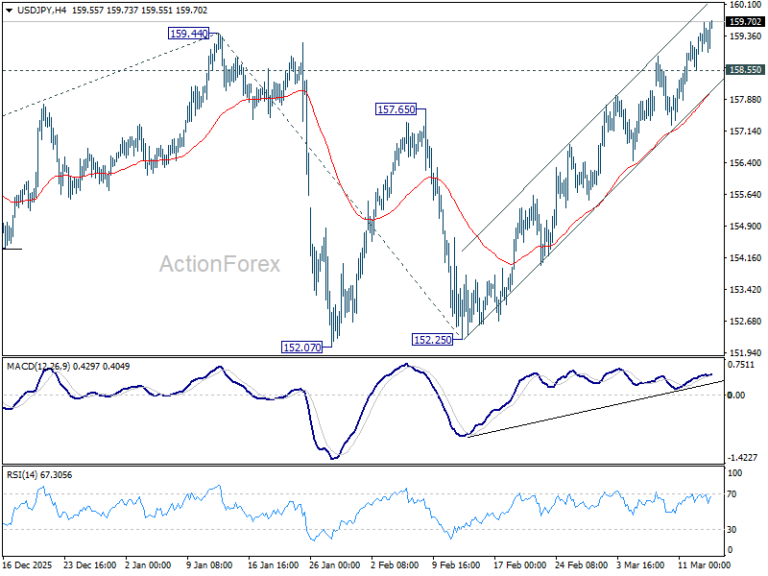
- USD/JPY 159.49 (-0.06%)
FX markets showed a slight shift toward risk currencies, with USD easing modestly across major pairs.
🪙 Crypto | Stable Despite Volatility Elsewhere
- BTC 66,907 (+0.03%)
- ETH 2,058 (+0.06%)
Crypto remained relatively stable, showing limited reaction to the sharp oil-driven macro volatility.
🥇 Metals | Pullback on Mixed Flows
- Gold 4,676 (-1.72%)
- Silver 73.01 (-2.70%)
Precious metals declined despite the oil surge, suggesting rotation out of safe havens or profit-taking after recent strength.
📊 Equities | Divergence with Volatility Spike
- S&P 500 6,582.68 (+0.11%)
- Dow Jones 46,504.67 (-0.13%)
- Nasdaq 24,073.71 (+0.04%)
- VIX 23.87 (+2.73%)
Equities showed mixed performance, but the rise in volatility highlights growing uncertainty as markets digest the sharp spike in oil prices.
This report is provided to The Concept Trading from Van Hung Nguyen.