Markets overview. Oil Spike May Drive Dollar Higher If US Joins Middle East Conflict – ForexNews.PRO
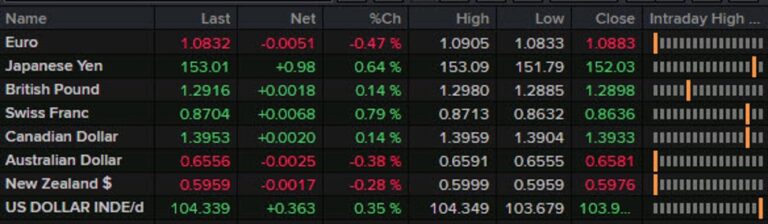
 Market participants are now speculating about potential US military involvement in Iran, leading to a surge in oil prices. Consequently, the US dollar has seen a resurgence in its appeal as a safe haven, though this appears to be contingent on the current extraordinary circumstances. The Federal Reserve (Fed) has an opportunity to bolster the dollar today, but geopolitical factors will likely remain the primary driver.
USD: Oil to Overshadow FOMC
The combination of escalating geopolitical risks and rising oil prices has momentarily restored some of the dollar’s safe-haven status. Yesterday’s USD rally was likely amplified by positioning adjustments, and triggered by a further increase in oil prices as Israel intensified its attacks, and speculation about the US joining the attack flared up.
If these speculations prove accurate, the upside risks for oil could increase further, creating additional upward potential for the dollar.
The extent to which the Middle East conflict impacts foreign exchange markets is closely tied to the effect on oil prices. While the current risk premium on crude oil is difficult to counteract, higher prices will need to be supported by evidence of supply disruptions. Without such evidence, any dollar recovery may be as fleeting as the oil price spike.
This also introduces a new layer of uncertainty for FX markets, as commodity price swings driven by geopolitical events are having a greater impact than macroeconomic news. Yesterday’s weak US retail sales figures exemplify this point.
Domestically, all eyes will be on the Fed today. The FOMC is widely expected to maintain current interest rates, with attention primarily focused on the new “dot plot” projections. We anticipate these projections will remain unchanged at 50 basis points of easing by year-end, but risks are strongly skewed toward a more hawkish revision to just 25bp. The recent surge in oil prices may be offsetting recent positive inflation data, particularly given the Fed’s continued concern regarding tariff-related price increases in the coming months.
Overall, the message from the Fed today is likely to be cautiously hawkish, with continued restraint regarding easing plans. This could help the dollar find support even if the bullish impetus from events in the Middle East begins to wane.
Another important macro event today is the release of TIC data for April. Our rates team previews the release here. We expect that the adjustment in foreign Treasury holdings might not have been too dramatic in April, and at least a couple of months’ data after ’Liberation Day’ are likely needed to assess the extent of the rotation away from US assets.
EUR: Buying the Dips Remains a Clear Risk
Geopolitical events are causing a temporary dislocation from macro-driven price action in EUR/USD. Even before very soft US retail sales were published, the German ZEW had come in quite strong, with the “expectations” index essentially back at pre-’Liberation Day’ levels. Although the overbought and overvalued condition of EUR/USD suggests further corrections, the preference to buy on dips due to structural bearish views on the USD may only be put on pause until oil prices absorb the geopolitical shock.
So while the dollar may indeed regain some near-term momentum, we don’t think this will be enough to take EUR/USD sustainably back to the 1.12-1.13 area. Our near-term target remains 1.14 for the pair.
Today, the eurozone data calendar is light, but there are plenty of ECB speakers. Given the sensitivity of the ECB’s inflation projections to oil price swings, we can probably expect even more cautiousness by the Governing Council in light of recent events. Markets will probably feel little pressure to price back a rate cut earlier than December for now.
Elsewhere in Europe, Sweden’s Riksbank is expected to cut rates by 25bp, in what in our view will be the last move of the cycle. While the recent oil price spike means a slightly greater chance of hold, we doubt the Riksbank will want to surprise a market that is pricing in 22bp.
The risks are, however, skewed to the hawkish side when it comes to forward-looking language, which can offset the rate cut impact on SEK. The krona’s limited reaction to geopolitical risk reinforces its new role as a stable currency, and we still expect gradual EUR/SEK depreciation in the coming months.