More Tariff Letters, Extended Uncertainty, and the Beat of Released Data and Central Bank Watching Goes On – Currency Thoughts
More Tariff Letters, Extended Uncertainty, and the Beat of Released Data and Central Bank Watching Goes On
July 9, 2025
Many governments received formal letters from President Trump yesterday, and others will get their “greetings” today. One is struck by the similarity of tariff threats assigned to each country to what had been promised nearly 100 days ago. One is also struck by the continuing drip of fresh elements, like a 50% tariff on copper imports and the contemplation of perhaps a 200% duty (tripling their cost) on pharma imports. D-Day has been pushed out again to August 1, leaving a little wiggle room to achieve a last minute trade deal or two. Will that trim back the ultimate tariff size? Maybe yes, maybe no. The world is Trump’s oyster, and the fat lady never sings. But if one looks under the covers, important advantages have been secured.
- The direct impact of tariff policy on growth, inflation and the ultimately sought prize of a smaller U.S. trade deficit will not get known until sometime after the big tariff hikes are done. It could be a messy process, certainly at first. By delaying D-day, Trump avoided worrisome business news headlines that might have derailed the legislation he sought, which was bundled into a single package and now accomplished.
- Redirecting the news cycle back to tariff policy creates camouflage over criticism of the passed big, beautiful tax and spending bill and the flurry of recent favorable supreme court rulings. Everyone likes to follow a show with suspense, and the tariff story has plenty of that.
- By allowing investors to get used to the size of intended tariff hikes, delaying their effective date has numbed financial markets from reacting too violently to the news.
In overnight financial market action, dollar movements were minimal — no net change against the yen, a 0.2% rise relative to the euro and 0.1% upticks versus sterling and the Canadian, Australian and New Zealand dollars. Ten-year sovereign debt yields rose by two basis points in the United States and one bp in Japan but also slid a basis point in each of Euroland’s four largest economies. U.S. stock futures have strengthened about 0.2%. In Asia, the Hang Seng index lost 1.1%, but markets in Japan, China, India and Singapore moved less than 0.3%. The main stock exchanges in the euro area are each up around 1% so far, easily outperforming U.S. futures. Movements in Bitcoin, oil and gold prices have been unremarkable.
Even with the equivalent of three calendar quarters left on Fed Chairman Powell’s term, the Trump Administration is blatantly shifting attention to the central bank’s next chapter with a highly publicized recruitment of his successor and continuing course complaints about current policy. Minutes from the June 17-18 Federal Open Market Committee meeting will be published today at 14:00 EDT.
Other central banks in New Zealand and Malaysia earlier today completed monetary policy reviews. The Reserve Bank of New Zealand’s Official Cash Rate was left at a nearly 3-year low of 3.25% in a pause that had been widely anticipated. From a high of 5.5% maintained from May 2023 until August 2024, the rate had previously been cut six times. CPI inflation in New Zealand has decelerated from 7.3% in the second quarter of 2022 and at 2.5% now is back within the 1-3% target range. Today’s decision likely does not end the easing cycle, according to a released statement:
The economic outlook remains highly uncertain. Further data on the speed of New Zealand’s economic recovery, the persistence of inflation, and the impacts of tariffs will influence the future path of the Official Cash Rate. If medium-term inflation pressures continue to ease as projected, the Committee expects to lower the Official Cash Rate further.
Officials at the Central Bank of Malaysia had not reduced their policy interest rate since August 2020 when it reached a cyclical low of 1.75%. The ensuing cyclical peak of 3.0% had been maintained from June 2023 until today’s meeting that cut such to 2.75%. Malaysian officials appear more worried about negative effects on growth than upside risks to inflation stemming from external developments and characterize today’s action as follows: “Uncertainties surrounding external developments could affect Malaysia’s growth prospects. The reduction in the OPR is, therefore, a pre-emptive measure aimed at preserving Malaysia’s steady growth path amid moderate inflation prospects.”
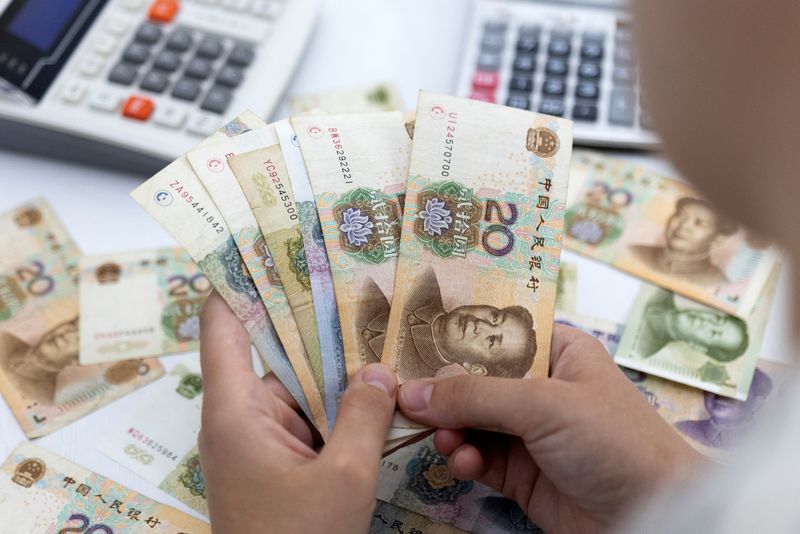
Today’s feature data release involved Chinese consumer and producer price figures. Consumer price inflation in June returned to positive ground for the first time since January, albeit at only 0.1%. Core CPI was somewhat higher at 0.6%, but a bigger-than-forecast 3.6% year-on-year drop of producer prices logged in June gave further proof that China is still flirting with unwelcome deflation.
Other price statistics out this Wednesday include Greek consumer prices (up 0.8% in June resulting in a 9-month year-on-year high of 2.8%); a 2-month low in Egyptian consumer price inflation, which crested at 38% in September 2023 and remained well into double-digit territory last month at 14.9%; a 7-month low rate of Mongolian CPI inflation (8.2% in June); the smallest year-on-year decline in Lithuanian producer prices (-2.7%) during June since March; and Norwegian producer prices, which in June slid 0.3% on month and 1.0% on year.
Machine tool orders in Japan posted their first year-on-year decline (-0.5% in June) in seven months.
U.S. mortgage applications last week leaped 9.4%, their biggest increase in four weeks, as the 30-year fixed mortgage rate edged two basis points lower to a 3-month low of 6.77%.
Copyright 2025, Larry Greenberg. All rights reserved. No secondary distribution without express permission.
Tags: Chinese CPI and PPI, FOMC Minutes, tariff news


 ShareThis
You can leave a response, or trackback from your own site.