Most Expensive Metal in the World Now: What Is More Valuable Than Gold | LiteFinance
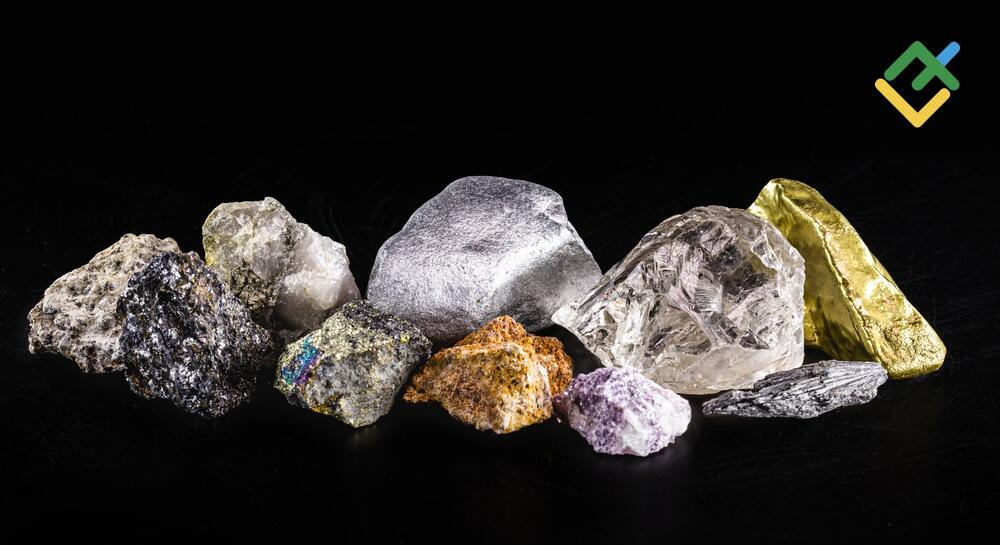

Are there metals more expensive than gold? Surprisingly, although this iconic precious metal continues to rise in price, gold does not even rank among the three most valuable metals. Most people are unaware that the most expensive material in the world is produced artificially rather than occurring naturally.
At present, the most valuable metal in the world is not gold or silver, nor even platinum, but the little-known californium. Due to their high cost, rare metals are seldom traded on the open market. However, there are a number of other precious metals that you can easily buy on the exchange and profit from price fluctuations.
This article explains which metals are more expensive than gold and how you can make money on them.
The article covers the following subjects:
Major Takeaways
What are precious metals? | Precious metals, or noble metals, are characterized by high resistance to corrosion and oxidation, high electrical conductivity, ductility, and high mechanical strength. |
The most expensive metals in the world | The list of the most expensive precious metals is constantly changing. As of the end of 2025, the most valuable metals are californium, osmium, rhodium, iridium, gold, platinum, palladium, ruthenium, rhenium, and silver. |
Why are rare metals so expensive? | The most famous precious metals are expensive due to their rarity, the difficulty of extraction, high industrial demand, and limited supply. |
How to trade precious metals on the exchange? | You can trade physical metals or precious metals futures. On Forex, contracts for difference allow you to profit from both rising and falling metal prices. |
What metals are the most traded on the exchange? | Gold, silver, platinum, and palladium are commonly traded precious metals on the exchange. Copper and zinc are also among the most popular commodities. |
In which markets are metals traded? | Precious metals are traded on international commodity exchanges or on the over-the-counter market. The most significant trading volumes are observed on the NYMEX, CME, and LME exchanges. |
Where are rare metals mined? | Major precious metals are sourced from China, Russia, South America, and Australia. Africa also holds significant deposits. |
What Makes a Metal More Valuable Than Gold?
Few people realize that, besides well-known metals like gold and silver, there are far more valuable metals. However, gold has remained in the spotlight for many years because it is widely regarded as a safe-haven asset.
If you look a bit deeper, you will find that gold is far from the most expensive metal. That title belongs to californium, a man-made element not found naturally on Earth and estimated to be around 8,000 times more valuable than gold.
When it comes to naturally occurring metals, osmium-187 is the most expensive. It is rarely found in pure form, which makes it around 50 times more costly than gold.
Where Are the Most Valuable Metals Mined?
The rarest metals are seldom found in pure form and are generally extracted from mineral ores.
Open-pit mines in South Africa are renowned for some of the richest deposits of platinum-group metals, including other PGMs produced in limited quantities, significantly influencing global supply. The country accounts for up to 70% of global platinum production, 85% of global rhodium supplies, and 80% of global iridium production.
Russia holds one of the leading positions in terms of the number of rare earth ore deposits. Platinum, palladium, iridium, rhodium, copper, gold, silver, and many other metals are mined in this country.
South America, the US, and Australia are among the largest metal producers. Notably, сalifornium-252 is synthesized in only two places: Oak Ridge National Laboratory in the US and the Research Institute of Nuclear Reactors in Russia.
Top Most Precious Metals in the World
Today, there are about 20 truly expensive and rare metals that are widely used in industry and science. When ranked by cost, the positions from fifth place down change literally every month. Below is the current top 10 list of the most expensive metals in the world.
Californium
The most expensive metal on the planet was first obtained in 1950 at the University of California, Berkeley, and was named in honor of the institution.
Nowadays, the fastest way to synthesize californium is by producing it from curium. However, there is also a longer production method that starts from plutonium. Using this approach, around 10 kilograms of plutonium are required to extract just 1 milligram of californium-252.
The metal is so rare that scientists synthesize approximately 10 milligrams per year, and only about 10 grams of the metal have been synthesized to date. Despite its rarity, californium is highly sought after worldwide and is used in medicine, geological exploration, nuclear energy, and the analysis of ancient artifacts.
The current value of Californium is $27 million per gram.
Osmium
The most expensive naturally occurring element ever discovered was identified by the English chemist Smithson Tennant in 1805. Osmium is the densest naturally occurring element in the world. Its density is 22.61 g/cm³. This means that a cube of the metal measuring 10 cm on each side weighs more than 22 kg.
Osmium is extremely rare in the Earth’s crust, with an estimated concentration of just 0.00005 parts per million (ppm). Only about 100–120 kg of the metal is produced each year. It does not occur in pure form in nature and is obtained as a by-product of platinum ore processing. Despite its scarcity, osmium is in high demand and is used in the chemical industry, in the production of ultra-hard alloys, and in electronics and microelectronics.
The current value of crystallized osmium is $2,400 per gram.
Rhodium
The most expensive jewelry metal was discovered by English chemist William Wollaston in 1803. Rhodium is an extremely hard element with a density of 12.4 g/cm³.
Nowadays, the amount of rhodium in the Earth is estimated to be only 0.0002 ppm, and only 29–30 tons of this metal are mined annually. Rhodium is in high demand worldwide and is used in the global automotive industry, electronics, and optics. Additionally, it is used for rhodium plating, where a thin layer of the metal is applied to silver jewelry and silver-gold alloys to enhance surface hardness and reflectivity. Up to 80% of all industrial rhodium is currently used in the production of catalytic converters for gasoline engines, which prevent harmful emissions, including carbon monoxide and other components formed during fuel combustion.
The current rhodium price is $8,000 per ounce.
Iridium
Iridium, one of the rarest natural metals on earth, was discovered by English chemist Smithson Tennant in 1803. Iridium has a density of 22.56 g/cm³, which is only slightly less than that of osmium.
Today, iridium concentrations in the Earth’s crust are estimated at 0.001 ppm, with approximately 8 tons of the metal mined annually. This metal is utilized as an additive to strengthen alloys and in high-temperature applications such as spark plugs and crucibles. Iridium is applied in the manufacture of medical equipment, automotive catalytic converters, and the aerospace industry. Additionally, it is widely used in jewelry.
The current value of iridium is $4,500 per ounce.
Gold
The best-known precious metal throughout human history was discovered around 4,000 BC in ancient Mesopotamia and Egypt. Gold is a soft yet heavy natural element with a density of 19.32 g/cm³.
Now, gold content in the ground is estimated at about 132,000 tons, and about 3,600 tons of the metal are mined each year. Gold is used in the jewelry industry, including white gold alloys for wedding rings, as well as in the electronics, automotive, and aerospace industries. Furthermore, gold is one of the most traded commodities on the stock market, with a daily trading volume of about $200 billion across global exchanges.
The current value of gold is $4 463.69 per ounce.
Platinum
This precious metal was discovered in the 16th century in what is now Colombia. Platinum is one of the heaviest metals, with a density of 21.09 g/cm³, inferior only to osmium and iridium.
Platinum deposits are estimated at 0.005 ppm, with approximately 170 metric tons of the metal mined annually. The element is used in platinum jewelry, electronics, and the automotive industries. Moreover, platinum metals play a crucial role in the aerospace sector due to their durability and chemical stability.
The current value of platinum is $2 307.82 per ounce.
Palladium
Palladium was discovered in 1803 by the English chemist William Hyde Wollaston. It is a relatively ductile metal with a density of 12.02 g/cm³. Palladium is highly valued for its ability to reversibly absorb hydrogen: at room temperature, one volume of palladium can absorb up to 800 volumes of hydrogen.
At present, the amount of palladium in the earth’s crust is estimated at 0.015 ppm, and approximately 190 metric tons of the metal are mined annually. Palladium is applied in jewelry, the electronics industry, automotive manufacturing, and dentistry.
The current value of palladium is $1 741.60 per ounce.
Ruthenium
Ruthenium was discovered by Carl Claus in 1844. This metal is a malleable natural element with a density of 12.45 g/cm³, which is slightly higher than that of platinum and palladium.
Today, the abundance of ruthenium in the Earth’s crust is estimated at only 0.005 ppm, and it is found mainly in the mineral laurite. Only about 20 tons of ruthenium are mined annually. The metal is highly valued for its catalytic properties in industry: it is used in the manufacture of electrical contacts, as a catalyst in chemical reactions, and in the production of heat-resistant structures, owing to its very high melting point.
The current value of ruthenium is $1,038.74 per ounce.
Rhenium
This naturally occurring metal was discovered by German chemists Ida and Walter Noddack in 1925. The density of rhenium is 21.02 g/cm³, which is close to the density of iridium.
Presently, the content of rhenium in the Earth’s crust is estimated at only 0.07 ppb. Approximately 60 tons of metal are mined annually. Rhenium is used in the production of catalysts for the petroleum industry, in strengthening nickel superalloys, and in the production of molybdenum and tungsten alloys.
The current value of rhenium is $128.44 per ounce.
Silver
Silver was discovered in ancient Egypt around 5,000 BC. This metal is soft and relatively light, with a density of 10.5 g/cm³.
As of today, silver occurs in the Earth’s crust at an average concentration of about 0.075 grams per ton, with approximately 22,000 tons mined annually. Silver is used in the jewelry, electronics, automotive, and photography industries.
The current value of silver is $79.472 per ounce.
Investment Potential: Comparing Expensive Metals
Only four expensive precious metals are widely considered suitable for investment worldwide: gold, silver, platinum, and palladium. Other precious metals cannot be freely traded.
Gold is considered the most stable precious metal and is often regarded as a safe-haven asset. Given the popularity of the XAUUSD pair, analysts generally offer optimistic forecasts for gold prices. Since the beginning of 2024, the asset has climbed from $1,800 to $4,400 per ounce. However, such rapid growth can be both a positive and a negative factor. Investors pay attention not to the price itself but to the potential return, and gold’s upside has temporarily declined.
A $1,000 increase in the current gold price would yield only a 25% return.
Silver is considered the second most popular precious metal. On the stock exchange, silver is often regarded as a more affordable alternative to gold. Besides, XAG is viewed as a safe-haven asset, though its price is significantly lower than that of gold.
Due to weaker market demand, silver often trades sideways. However, since the beginning of 2024, XAG has advanced from $22 to $62. In terms of investment potential, silver offers much higher returns than gold.
A $100 increase from the current silver price will bring investors a 152% return on their investment.
Unlike gold and silver, platinum is used extensively in industry. As a result, its price largely depends on industrial output and global demand. In the automotive sector in particular, platinum is considered unmatched.
Experts often predict platinum prices will remain flat due to low investment demand. However, since spring 2025, the XPT price has jumped from $910 to $1,700. Moreover, platinum’s upside potential is way higher than gold’s.
A $1,000 increase from the current platinum price will generate a 62% return on investment.
Palladium is very similar in properties to platinum, and its price also depends on the level of production and industrial demand. The price of these precious metals is practically the same.
Due to low investment demand, palladium often trades sideways. However, since spring 2025, the XPD price has grown from $900 to $1,600.
A $1,000 increase from the current palladium price will result in a 66% return for investors.
Conclusion
Metal trading is widely popular among traders. Beginners often opt for CFDs on gold, as the metal tends to exhibit higher price volatility. However, like any other commodity, it is a complex financial instrument, and successful trading requires a solid understanding of the factors that influence its price.
When it comes to investments, silver currently has the highest potential. A troy ounce of this metal is worth $79.472, which allows traders to invest in silver even with a small amount of capital. However, investments in gold are also very popular, especially during economic crises.
Most Expensive Metals FAQs
The content of this article reflects the author’s opinion and does not necessarily reflect the official position of LiteFinance broker. The material published on this page is provided for informational purposes only and should not be considered as the provision of investment advice for the purposes of Directive 2014/65/EU.
According to copyright law, this article is considered intellectual property, which includes a prohibition on copying and distributing it without consent.
Source link