Ondo.finance Platform Review 2025 | BitcoinChaser
Ondo Finance is a decentralized finance (DeFi) platform that brings investment in real-world assets (RWAs) to the public through blockchain technology. It was co-founded in March 2021 by Nathan Allman, a former Goldman Sachs employee. The protocol was publicly announced on July 27, 2021.
In the following review, we will explain what Ondo is, how it works, and how to trade on the platform. We will also take a look at the benefits and risks of working with Ondo.
What Is Ondo?
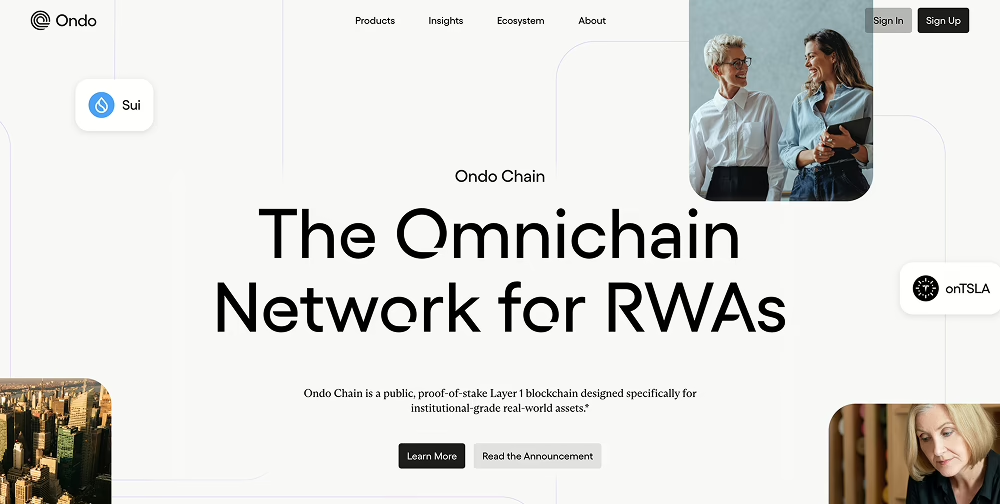
Ondo Finance is a decentralized asset financing platform that tokenizes real-world assets (RWAs) like US Treasuries, government bonds, fixed-income securities, and ETFs. It is built on Ethereum and compatible with chains like Solana, Aptos, Mantle, Arbitrum, and Cosmos via LayerZero cross-chain protocol and its own Ondo Chain, a layer 1 blockchain that enables communication between different blockchains.
Ondo allows businesses and institutions to tokenize different types of financial assets in order to secure funding more quickly. The two main aspects of Ondo include asset managers tokenizing funds and investors accessing yield-bearing opportunities through this tokenization process.
How Ondo Works: Tokenizing RWAs Step by Step
Ondo operates by allowing users to convert RWAs into digital tokens that can be traded or used in DeFi. This process enables institutions to access capital without traditional banks. Here’s how it works:
1. Asset Selection and Verification: Businesses choose a Real-World Asset (RWA), like a US Treasury bond worth $10,000. The asset is verified for authenticity and creditworthiness through legal audits and oracles like Chainlink.
2. Tokenization: Using Ondo’s infrastructure, the asset is digitized into tokens on the blockchain. For Treasuries, this creates fractional shares that represent ownership of both the yield and principal.
3. Pool Creation and Funding: Tokenized assets are placed into liquidity pools, allowing for trading of different assets in the pool. Investors fund these pools, providing immediate capital to the issuer, for example $9,500 for the $10,000 Treasury, in exchange for yields when the asset matures.
4. Smart Contracts and Governance: Smart contracts handle distributions, repayments, and risk parameters. The ONDO token enables governance voting on protocol upgrades.
5. Settlement: When the asset matures (the bond pays out), funds are automatically distributed to investors.
Ondo Chain was launched in February 2025, introducing multi-chain support, allowing seamless liquidity management across Ethereum, Solana, and others, powered by the LayerZero multi-chain protocol. This update eliminated “liquidity fragmentation,” making it easier for fund managers and investors to operate by pooling assets across multiple blockchain protocols.
The Role of ONDO Token
ONDO is Ondo’s native utility and governance token, essential for the operation of the platform. The token traded at a high of $2.15 on December 12, 2024, with a current price (August 2025) in the range of $1.00.
The ONDO tokens are used for the following purposes:
- Governance: Token holders vote on protocol decisions, like risk parameters.
- Staking: Users can lock ONDO in the system to secure the network while earning rewards.
- Liquidity: ONDO allows trading liquidity for asset pools.
How to Trade on Ondo: A Step-by-Step Guide
1. Set Up a Wallet
Use a compatible wallet like MetaMask or Ledger. Connect to Ethereum or other supported chains such as Solana.
2. Buy ONDO Token
- Go to an exchange like Binance, KuCoin, Gate.io, or Coinbase.
- Create an account.
- Verify through exchange KYC.
- Deposit crypto funds such as USDT and search for ONDO pairs (ONDO/USDT).
- Buy ONDO tokens.
- Withdraw ONDO to your wallet.
3. Access Ondo App
Visit Ondo.finance and connect your wallet.
- Choose Ethereum, Ondo Chain, Solana, Aptos, or Mantle Network.
- Choose MetaMask, WalletConnect, or Coinbase Wallet.
4. Invest in Pools
- Browse a list of tokenized assets.
- Stake your ONDO or deposit stablecoins into the desired asset pool.
- Monitor performance via real-time dashboards.
5. Trade Tokens
Use DeFi platforms like Uniswap for ONDO swaps or Ondo’s interface for asset trades. Pay gas fees and confirm transactions.
6. Withdraw and Secure
Redeem yields from your invested asset pools or exit pools. Withdraw assets to your wallet.
Benefits and Risks of Ondo
Benefits
- Liquidity for Businesses: Businesses can Tokenize Treasuries for quicker cash flow.
- Yields for Investors: Earn from diversified RWAs.
- Scalability: The Multi-chain Ondo Chain protocol reduces fragmentation, allowing for more liquidity across different blockchains.
Risks
- Depegging: Assets may lose peg if underlying RWAs fail, like in a case of bond defaults.
- Regulatory Issues: RWAs face securities laws.
- Volatility: ONDO price fluctuations as well as smart contract risks.
Future Outlook for Ondo in 2025
Analysts are bullish for ONDO token, forecasting a potential $3.05 price by year’s end. Partnerships with other DeFi protocols, such as BlackRock, and expansions into fixed-income signal strong momentum for Ondo.finance going forward.