Politics As Science Explained Like A High School Drama Plot

Alright, picture this: politics as science is like your favorite high school drama, where everyone’s got an agenda and no one plays fair. The political parties are the cliques, the scientific community are the nerds with the facts, and the government is the overworked teacher trying to keep the peace. Add a few plot twists, rumors from Fox News, and sudden policy shifts, and you’ve got yourself a real-life teen movie playing out on the global stage.
Now, before you roll your eyes, let’s break it down. Politics isn’t just yelling on TV. It’s a system based on research, knowledge, and the scientific method but mixed with human emotion and power. The scientific institutions provide data, scientific research, and evidence, while the administration decides how to spin it for votes. Every act, every law, and every decision has implications that shape society, health, and even the environment. From the Reagan administration to Barack Obama and even the Trump administration, leaders have tried to blend science and politics some better than others.
And here’s the kicker political science is an actual field where experts study how this whole messy system works. It’s the scientific enterprise that examines power, laws, and interests, all to understand how society evolves. So yes, when you hear politics as science, think of it as the biggest real-world experiment in human behavior, with global stakes.
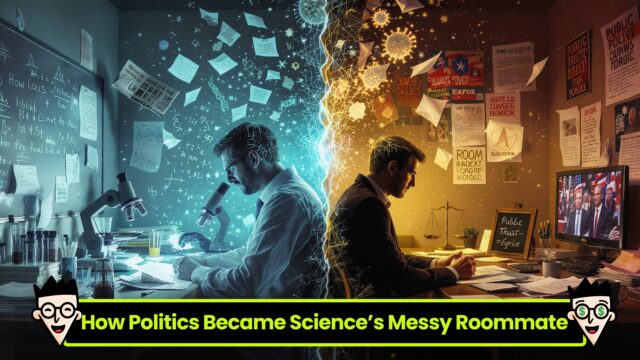
How Politics Became Science’s Messy Roommate
Let’s be real science and politics have been messy roommates since forever. They share the same space but constantly bicker about priorities. The scientific community thrives on truth, evidence, and peer review, while politicians care about headlines, votes, and what plays well on TV. That’s why every major issue—climate change, healthcare, or education ends up being a tug-of-war between logic and emotion.
Take the Trump administration, for example. President Donald Trump, federal agencies, and public health officials often clashed over scientific research, from climate policies to the novel coronavirus response. It showed how fragile public trust in science can be when political lines get blurred. Even institutions like the National Academy and House Committees had to step in, acting like referees in a chaotic match.
But it’s not all doom and gloom. According to the Pew Research Center, the general public still values scientific research, even when political parties disagree. Conservatives, Democrats, and independents alike recognize that science when respected drives public policy and innovation. The scientific method, after all, is about learning from failure, adapting, and growing just like society itself.
READ ALSO: Government Shutdown At Midnight, White House Says Oops
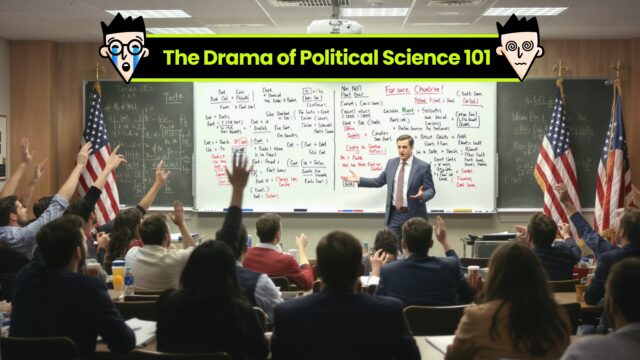
The Drama of Political Science 101
If politics as science had a class, it’d be called Political Science 101 and it would be the most dramatic subject in school. Here, we study power, institutions, and how humans behave when they’re chasing influence. Think of it like a mix between psychology, history, and a reality TV show. You’ve got your presidents, representatives, and congress members all fighting for support while balancing the needs of society.
The scientific method applies here too. Hypothesis? A new act or law. Experiment? Implement it and see what happens. Observation? Watch society react. The results tell us everything from cultural shifts to political divides. Every administration, whether Reagan, Bush, or Obama, has treated the world like one big test lab, trying out policies and measuring the outcomes.
A mistake to avoid? Believing science and politics exist separately. They don’t. Both influence each other constantly. Scientific research fuels innovation, but political interests decide how it’s used. Ignore one, and the other collapses. Just look at how health policies evolved after global pandemics it’s a perfect example of political science and scientific institutions shaping the future together.
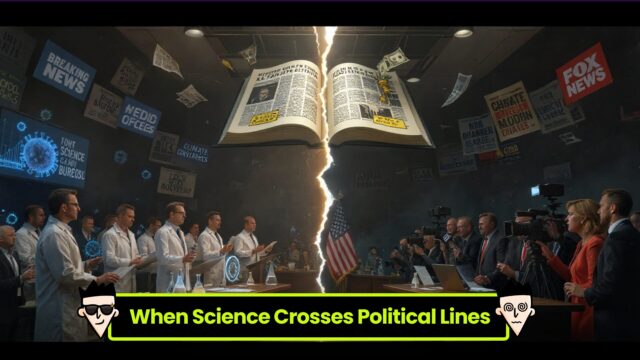
When Science Crosses Political Lines
Here’s where the drama gets juicy. Science doesn’t stay in its lane it often crosses into political territory. Think climate change, public health, or disease control. The scientists push for more research, but the politicians worry about money, image, and public support. The scientific method demands honesty, but politics thrives on compromise.
During the novel coronavirus outbreak, the world saw how federal agencies, surgeon generals, and the White House handled conflicting data. Even medical journals became battlegrounds of truth and opinion. And let’s not forget Fox News, which added a daily dose of drama to keep the story alive. Still, the scientific community pressed on, driven by knowledge, education, and a deep sense of responsibility.
In the end, the scientific institutions held firm, pushing public policy rooted in evidence, not ego. They reminded us that science may be influenced by politics, but it’s also what saves society from chaos. It’s the anchor when emotions and agendas start to drown out logic.
ALSO READ: How to Get Involved in Local Politics
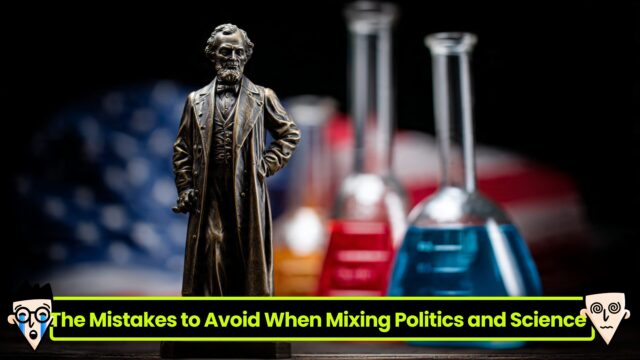
The Mistakes to Avoid When Mixing Politics and Science
Here’s the part everyone needs to hear. The biggest mistake to avoid when blending science and politics is ignoring evidence for convenience. When political parties twist data to fit their interests, the whole system suffers. Science doesn’t bend to opinion it stands on truth. If you lose that, you lose progress.
Another huge mistake? Undermining scientific institutions and federal agencies. These organizations uphold public service, protect health, and maintain accountability. The Reagan administration and President Bush once downplayed climate science, and now we’re living with the consequences. Ignoring scientific research isn’t just careless it’s dangerous.
And finally, never forget that science is inherently political. It depends on funding, which depends on government priorities. But here’s the balance: scientists must remain objective, while politicians must use knowledge and truth responsibly. When both sides do their part, society wins.
Takeaway: Science and Politics Are Frenemies Forever
So here’s the takeaway science and politics will always be that chaotic duo that drives the world forward. They bicker, they collide, but somehow they make progress. From Barack Obama’s clean energy initiatives to the Trump administration’s reversals, every administration shows how dependent these two fields are on each other.
Science gives us facts, research, and evidence. Politics gives us action, laws, and support. Together, they create the framework for society, health, and innovation. Sure, it’s messy, and yes, it’s emotional but it’s also the only way real change happens. The scientific community, conservatives, Democrats, and everyone in between play their role in shaping the world we live in.
At the end of the day, politics as science isn’t just theory it’s the study of how knowledge, power, and people collide. And if you’ve ever wondered why the world feels like one big drama, it’s because it is. The only difference? This time, the stakes are real.
UP NEXT: Left Wing Versus Right Wing Politics Explained In Simple Terms
Frequently Asked Questions
1. What does politics as science mean?
It’s understanding political science through scientific research, evidence, and how policies shape society.
2. Why is science considered political?
Because government funding, interests, and agendas influence what gets studied and supported.
3. What’s the role of scientific institutions in politics?
They provide knowledge, ensure truth, and help guide public policy based on research.
4. How do political parties affect science?
Political parties shape budgets, priorities, and the direction of scientific research and education.
5. Why is public trust important in science and politics?
Without public trust, both systems lose control, support, and the ability to improve society.
Source link