Portfolio Protection With Puts: How To Hedge Your Stock Positions
When the market starts showing cracks, most investors freeze.
They watch their portfolios bleed, hoping things will turn around.
But smart traders know that hope isn’t a strategy – insurance is.
Contents
Understanding Portfolio Protection
Portfolio protection using put options is like buying insurance for your stock holdings.
Just as you wouldn’t drive without car insurance, significant stock positions deserve protection during uncertain market conditions.
The concept is straightforward: you purchase put options on the stocks you own (or on index ETFs that track your holdings).
If the market drops, your puts increase in value, offsetting losses in your stock positions.
This strategy is particularly valuable for investors with concentrated positions or substantial unrealized gains they want to protect.
However, like all insurance, protective puts come with a cost.
The key is knowing when protection makes sense and how to implement it efficiently without destroying your returns.
Position Sizing And Protection Ratios
The first decision you’ll face is determining how much of your portfolio actually needs protection.
You have several options, each with different cost implications and risk profiles.
Full Protection (1:1 Ratio)
This means buying one put contract for every 100 shares you own.
If you hold 1,000 shares of a stock, you’d buy 10 put contracts.
This provides complete downside protection below your chosen strike price.
Full protection makes sense when you’re sitting on significant unrealized gains that you’re not ready to realize for tax purposes, or when you have high conviction about a position long-term but are concerned about short-term volatility.
Partial Protection
A more cost-effective approach is hedging 50-75% of your position.
This reduces your insurance costs while still providing meaningful downside protection.
Think of it as having a higher deductible on your insurance policy.
For example, with 1,000 shares, you might buy 5-7 put contracts.
If the stock drops 15%, your unhedged portion takes the full hit, but your hedged portion is protected.
This balanced approach works well for diversified portfolios where you’re managing overall portfolio risk rather than protecting individual positions.
Remember, the goal of hedging isn’t to eliminate all risk—that would also eliminate your upside potential.
It’s about managing the magnitude of potential losses while maintaining your ability to participate in gains.
Strike Selection Strategy
Choosing the right strike price is a balancing act between cost and protection level.
Your strike selection should reflect both your risk tolerance and how much paper loss you’re willing to accept before your insurance kicks in.
10% Out-of-the-Money Puts
These offer the most cost-effective protection but leave you exposed to the first 10% of any decline.
If you own stock at $100, you’d buy $90 strike puts.
This strategy works best when you’re protecting against catastrophic moves rather than normal market volatility.
The advantage?
Lower premium costs mean less drag on your overall returns.
The disadvantage?
You’ll feel the pain of smaller corrections that don’t reach your strike price.
5% Out-of-the-Money Puts
This is the sweet spot for most investors.
Using the same $100 stock example, you’d purchase $95 strike puts.
You’re accepting moderate risk (the first 5% decline) while getting meaningful protection against larger moves.
This strike selection offers reasonable premium costs while providing protection against moves beyond normal market noise.
It’s particularly effective during periods of elevated uncertainty when you want protection without overpaying.
At-the-Money Puts
ATM puts provide maximum protection starting from your current stock price, but they’re also the most expensive.
These make sense only when you’re highly confident about an imminent decline or when you’re protecting extraordinary gains.
For most long-term investors, ATM protection is overkill.
The premium cost typically outweighs the benefit of protecting against small, temporary price fluctuations.
Delta Considerations For Hedging
Understanding delta helps you balance protection effectiveness against cost.
Delta represents how much your option value changes for every $1 move in the underlying stock.
20-30 Delta Puts
These are your cost-effective protection options.
A 25-delta put costs significantly less than higher delta alternatives but provides less downside protection initially.
As the stock price falls and the put moves closer to the money, the delta increases, offering more protection precisely when you need it most.
This delta range works well for protection against significant market dislocations rather than minor corrections.
Think of these as catastrophic coverage—they won’t help much with small drops, but they’ll be there when things really fall apart.
30-40 Delta Puts
For more robust hedging, consider this delta range.
These puts cost more but respond more immediately to price declines.
A 35-delta put will gain approximately $35 in value for every $100 drop in the stock price (initially—this ratio changes as the stock moves).
This range represents a middle ground between cost efficiency and immediate protection.
They’re ideal when market conditions are deteriorating, and you want your hedges to kick in quickly.
Remember, a lower delta means a cheaper premium but less immediate protection.
A higher delta means higher cost but better protection from the start.
Your choice should reflect your risk tolerance and market outlook.
Choosing The Right Expiration
Expiration selection significantly impacts both your cost and the effectiveness of your protection strategy.
Too short, and you’re constantly rolling and paying transaction costs.
Too long, and you’re overpaying for time you might not need.
30-45 Days Until Expiration
This shorter timeframe requires active management.
You’ll need to roll your puts regularly, paying commissions and dealing with bid-ask spreads multiple times per year.
However, the monthly premium is relatively low.
This approach works if you’re comfortable with active portfolio management and want flexibility to adjust your protection level frequently based on changing market conditions.
The downside?
Time decay accelerates in the final 30 days, so you’re constantly fighting theta.
60-90 Days: The Sweet Spot
This is my preferred expiration range for most portfolio protection strategies.
You get meaningful protection without overpaying for excessive time premium.
Rolling every 60-90 days keeps transaction costs reasonable while maintaining continuous coverage.
At this timeframe, theta decay is manageable, and you have enough time for your protection to work if market conditions deteriorate.
You’re not constantly managing your hedges, but you’re also not committing to long-term protection costs.
3-6 Months
Longer-dated puts cost more upfront due to higher time premium, but they require less maintenance.
If you’re taking a multi-month trip or simply want set-and-forget protection, this timeframe makes sense.
The trade-off is clear: you pay more for convenience and longer coverage, but you reduce the risk of being unprotected if you forget to roll or if markets gap down suddenly.
I generally avoid buying protection with less than 30 days to expiration because time decay accelerates dramatically.
You’re paying for rapidly eroding value, which makes the insurance inefficient.
Real-World Hedging Example
Let’s walk through a practical scenario to see how this works in action.
The Situation
You own 1,000 shares of XYZ Corp, currently trading at $100 per share.
Your position is worth $100,000, and you’ve got a nice profit you’d like to protect.
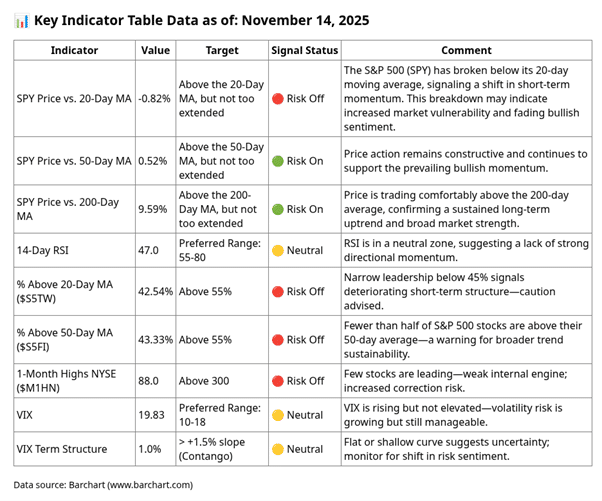
Market conditions are showing some warning signs—volatility is picking up, breadth is deteriorating, and you’re seeing concerning patterns in the major indices.
The Protection Strategy
Based on our guidelines, here’s how you might structure your hedge:
Position Size: Buy 10 put contracts for full protection, or 5-7 contracts for partial protection (50-70% hedge)
Strike Selection: Choose the $95 strike (5% OTM) to balance cost with meaningful protection
Expiration: Select puts with 75 days to expiration (middle of our 60-90 day sweet spot)
Delta Target: Look for puts with 25-30 delta for cost-effective protection
Cost Analysis
Let’s say these $95 strike puts are trading at $2.50 per share ($250 per contract):
- Full hedge (10 contracts): $2,500 total cost (2.5% of position value)
- Partial hedge (7 contracts): $1,750 total cost (1.75% of position value)
The Protection Payoff
If XYZ drops to $85 (a 15% decline):
- Your stock loses $15,000 in value
- Your 10 puts are now worth approximately $10 each ($100 intrinsic value – original cost)
- Put profit: $7,500 (10 contracts × $7.50 gain per share × 100 shares)
- Net portfolio loss: $7,500 instead of $15,000
With the partial hedge (7 contracts), you’d recover about $5,250, reducing your net loss to $9,750.
You’ve cut your drawdown by roughly one-third while spending significantly less on insurance.
Cost Management Strategies
The biggest objection to protective puts is cost.
If you’re consistently spending 2-3% per quarter on insurance, that’s a serious drag on returns.
Here are strategies to make protection more affordable:
The Collar Strategy
Instead of just buying puts, simultaneously sell out-of-the-money covered calls against your shares.
The premium you collect from the calls helps finance the puts, sometimes reducing your net cost to zero.
Example: Buy $95 puts for $2.50, sell $110 calls for $2.00.
Your net cost is just $0.50 per share, or $500 for 1,000 shares.
The trade-off?
Your upside is capped at $110.
This works beautifully when you’re willing to sell shares at a predetermined profit level anyway.
You’re essentially saying, “I want protection below $95, but I’m happy to sell at $110.”
Use Put Spreads Instead
Rather than buying straight puts, consider put spreads.
Buy a higher strike put and sell a lower strike put.
This reduces your cost but also caps your protection.
Example: Buy $95 puts for $2.50, sell $85 puts for $1.00.
Your net cost is $1.50, but your maximum protection is $10 per share (the spread width) minus your cost.
Put spreads make sense when you’re protecting against moderate declines rather than crashes.
They’re particularly effective in range-bound markets where catastrophic drops are unlikely.
Time Your Hedges When IV Is Low
Implied volatility directly impacts option prices.
Buying protection when the VIX is at 30+ means you’re overpaying.
Whenever possible, establish your hedges when volatility is relatively subdued.
This doesn’t mean trying to time the market perfectly—it means being strategic about when you pay for insurance.
If you know you’ll want protection for the next quarter, buying when IV spikes after a small correction will cost significantly more than buying during calm periods.
Adjust Strike Width Based on Conditions
When protection is expensive, consider going further out of the money.
Instead of 5% OTM puts, look at 10% or even 15% OTM options.
You’re accepting more risk while keeping costs manageable.
Think of this as adjusting your insurance deductible based on premium costs.
When insurance is cheap, buy comprehensive coverage.
When it’s expensive, opt for catastrophic-only coverage.
When To Implement Hedges
Timing your hedges is crucial.
The worst time to buy insurance is after the accident has already happened.
Here’s when you should seriously consider implementing portfolio protection:
Market Warning Signs
Don’t wait for the market to crash before buying protection.
Watch for early warning indicators:
- VIX backwardation (near-term volatility higher than longer-term)
- Deteriorating market breadth (fewer stocks participating in rallies)
- Distribution days clustering in major indices
- Credit spreads are widening significantly
- Technical breakdowns of key support levels
These signals won’t perfectly predict every correction, but they often precede significant market moves.
Having protection in place when these warnings flash gives you peace of mind and portfolio stability.
Protecting Significant Gains
If you’re sitting on substantial unrealized profits, especially in concentrated positions, consider protection even in the absence of clear market warnings.
The bigger your gains, the more painful it is to watch them evaporate.
This is particularly relevant for employees with large concentrated stock positions or investors who’ve captured extraordinary returns in specific holdings.
Sometimes protecting gains is more important than seeking additional upside.
Concentrated Position Risk
Position sizing discipline suggests no single holding should exceed 10-15% of your portfolio.
If you’ve violated this rule (often because a position has run up significantly), hedging becomes more critical.
Concentrated positions expose you to company-specific risk beyond broader market risk.
Protective puts allow you to maintain your position while reducing tail risk.
Seasonal Patterns
Historically, September and October see increased market volatility.
While past performance doesn’t guarantee future results, many professional investors implement hedges heading into these traditionally volatile months.
Event-Driven Protection
Earnings announcements, Fed meetings, elections, and other major events can trigger volatility.
If you’re nervous about a specific event but don’t want to sell, temporary protection makes sense.
Common Mistakes To Avoid
Even experienced traders make errors when hedging.
Here are the pitfalls to watch out for:
Waiting Too Long to Hedge
The time to buy insurance is before you need it, not after the market has already dropped 10%.
Once volatility spikes, protection becomes extremely expensive.
Many investors make the mistake of buying puts after a decline, paying peak prices for coverage when they’ve already absorbed significant losses.
Over-Hedging Your Portfolio
Some investors become insurance addicts, constantly maintaining expensive hedges that drag down returns year after year.
If you’re paying 8-12% annually for protection, you need outsized returns just to break even.
Remember, markets go up more often than they go down.
Over-hedging is like buying fire insurance on every piece of clothing you own—theoretically, it protects you, but practically, it bankrupts you.
Ignoring Cost in Return Calculations
Many traders establish protective puts but fail to factor in the cost when calculating their return expectations.
If you’re consistently spending 3% per quarter on puts, that’s 12% annually you need to overcome.
Be honest about the costs of protection and whether your strategy can sustain them.
Sometimes the math simply doesn’t work, and you’re better off with other risk management approaches like position sizing or diversification.
Buying Too Short-Dated Options
Purchasing puts with less than 30 days to expiration means fighting accelerated time decay.
Unless you’re hedging a specific short-term event, avoid very short-dated protection.
The theta burn makes the insurance inefficient.
Forgetting to Roll or Adjust
Suppose you establish a hedge, set calendar reminders to roll before expiration.
Nothing is worse than realizing your protection expired two weeks ago, right as the market starts selling off.
Treat your hedges like recurring expenses that require active management.
Final Thoughts On Risk Management
Portfolio protection with puts isn’t about eliminating risk—it’s about managing the magnitude of losses while maintaining your ability to participate in gains.
Think of it as risk management, not risk elimination.
The goal isn’t to hedge everything all the time.
That would destroy your returns and eliminate the upside that makes stock investing worthwhile.
Instead, use protective puts strategically when market conditions warrant extra caution or when protecting significant unrealized gains.
Always factor in the cost of protection when calculating your overall return expectations.
Insurance is valuable, but it’s not free.
If you’re consistently paying for protection, you need higher returns just to stay even.
Be realistic about whether your strategy can sustain the ongoing cost.
Focus on process over perfection.
You won’t time hedges perfectly—sometimes you’ll pay for insurance you don’t use, and sometimes you’ll wish you had more protection.
That’s normal.
What matters is having a systematic risk-management approach that keeps you in the game in the long term.
As I always tell my students: “It’s not about avoiding losses—it’s about managing the size of losses.”
Small, manageable losses are part of investing.
Catastrophic losses that destroy your capital and confidence are what we’re trying to prevent.
Remember, the best investors aren’t those who never lose money—they’re the ones who survive long enough to capitalize on opportunities when the next bull market arrives.
Protection strategies help ensure you’ll still be playing the game when the next bull market arrives.
Want to Master Portfolio Protection Strategies?
Understanding protective puts is just one component of comprehensive risk management.
Whether you’re managing a six-figure portfolio or building toward that goal, systematic risk management separates successful long-term investors from those who wash out during the next market correction.
If you’re interested in learning more about options strategies for income generation and portfolio protection:
Options Income Mastery: Learn the foundational strategies for using options to generate consistent income while managing risk effectively ($397)
The Accelerator Program: Advanced training covering sophisticated hedging techniques, adjustment strategies, and portfolio-level risk management for serious investors ($997)
Related Articles
We hope you enjoyed this article on the portfolio protection with puts.
If you have any questions, please send an email or leave a comment below.
Trade safely!
Trade safe!
Disclaimer: The information above is for educational purposes only and should not be treated as investment advice. The strategy presented would not be suitable for investors who are not familiar with exchange traded options. Any readers interested in this strategy should do their own research and seek advice from a licensed financial adviser.

Source link