Quarter-End Ushers in Crunch Time for U.S. Budget Bill and Trade Talks as Well as A Flood of Data – Currency Thoughts
Quarter-End Ushers in Crunch Time for U.S. Budget Bill and Trade Talks as Well as A Flood of Data
June 30, 2025
It’s do-or-die time for President Trump’s big beautiful budget tax and spending bill, and the July 9th deadline for bilateral trade deals that would greatly scale back threatened huge reciprocal tariffs is just over a week away as well. The U.S. senate is closing in on the final debate and vote on the bill, which then must be reconciled with the House’s version of the proposed law and signed by Independence Day. The U.S. and China have secured a trade deal. Trade talks with Canada got suspended but then reopened after Canada agreed to drop its tech tax. Talks with Japan are reportedly bogged down.
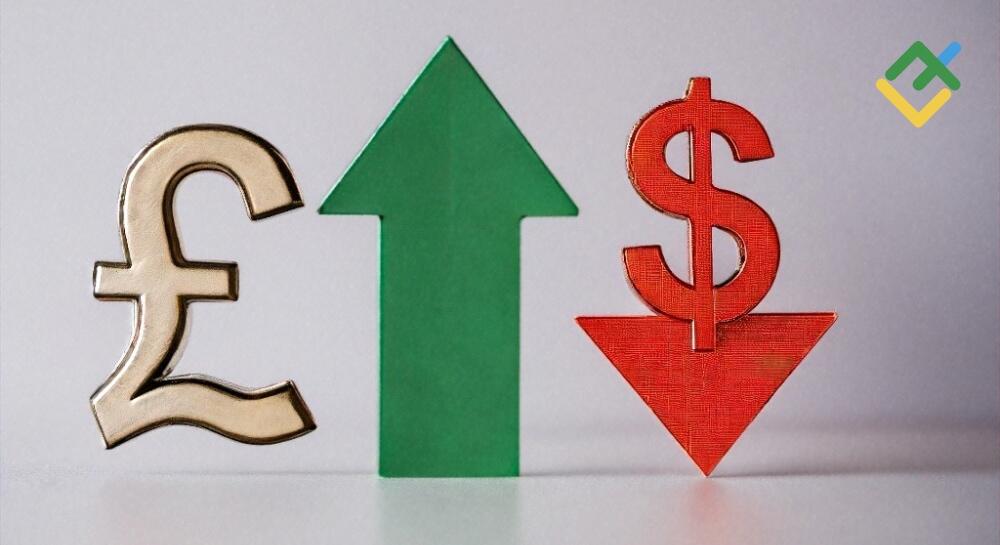
Today marks month-end, quarter-end and the unofficial mid-point of 2025. It’s been a difficult half-year for the dollar, but not an unsurprisingly one given President Trump’s distaste for the U.S. trade deficit and radical dismantlement many other norms. Current dollar levels compared to end-2024 levels are down 12.2% against the Swiss franc, 11.7% versus the euro, and 8.7% relative to sterling. Overnight dollar losses have been inconsequential however.
U.S. stock futures are about 0.5% above Friday closing levels. European share prices have edged marginally lower, and Asian equities closed mixed, with gains of 1.4% in Taiwan, 0.8% in Japan and 0.6% om China but losses of 0.9% in Hong Kong and 0.5% in India.
Ten-year sovereign debt yields have slipped two basis points in the U.K. and United States and a basis point in Japan, Germany, France, Spain, and Italy.
The prices of Bitcoin and WTI oil fell 0.7% and 0.6% overnight, while gold is little changed.
A cornucopia of price data have been released this final day of June:
- German consumer price inflation unexpectedly slowed to an 8-month low of 2.0% in June in spite of a smaller 3.5% year-on-year drop in the energy component. Food and service sector prices each decelerated, and core CPI slid to a 3-month low of 2.7%.
- Italian consumer prices rose 0.2% on month and ticked 0.1 percentage point high in year-on-year terms to 1.7%, a 2-month high.
- Slovenian CPI inflation of 2.2% this month and Polish CPI inflation of 4.1% were also at a 2-month highs.
- Portuguese CPI inflation of 2.4% was the most since February but well down from the peak of 10.1% in December 2023.
- Greek producer prices dived 2.9% on month but posted a 2-month year-on-year high of 2.0%.
- Bulgarian producer price inflation of 7.1% in May was down from 12.2% in April and a 27-month high of 17.4% in March.
- In Hungary, producer price inflation, which has slowed to 0.9% last September but rebounded to 7.9% by April, fell to a 7-month low of 6.9% in May.
- Austrian producer prices last month declined both from the prior month (-0.3%) and on a year-on-year basis (a 5-month low of -0.6%).
- German import prices in May fell 0.7%, their third monthly drop in a row, and this resulted in a 1.1% year-on-year decline. Energy prices sank 14.6% on year, and all other imported prices colectivelly went up just 0.4%.
British GDP growth in the first quarter was not revised from the prior estimate, an increase of 0.7% from the final quarter in 2024 and of 1.3% from a year earlier. The U.K. current account deficit of GBP 28.5 billion was the ninth straight deficit and equivalent to 3.2% of British GDP. The deficit ratio was larger that the full-2024 shortfall that equaled 2.7% of GDP.
Danish GDP contracted 1.3% in the first quarter. This was associated with a sharply smaller 2.3% on-year growth rate, the smallest such advance in seven quarters.
On-year Egyptian GDP growth of 4.8% in the first quarter was more than twice as much as the 2.2% pace in the first quarter of 2024.
Japanese data reported today accentuated economic headwinds. Industrial production grew 0.5% in May, far less than analysts were anticipating, after drops of 1.1% in April and 0.3% in the first quarter. Officials maintained the view that production is “fluctuating indecisively.” Housing starts posted their largest on-year drop (-34.4%) in 188 months, and construction orders growth slowed to 14.0% in May from 52.7% in April.
South Korean industrial production and retail sales in May were respectively 0.2% above and 0.2% below their year-earlier levels.
Indian industrial production in May was just 1.2% greater than a year earlier, their smallest 12-month increase in nine months.
German retail sales in May sank 1.6% on month (the most in 51 months) and rose just 1.6% on year (least in 10 months).
Swedish retail sales fell 4.8% on month and 1.8% on year during May. Irish retail sales suffered too from global uncertainty, dropping 0.6% on month and to a 12-month 1.6% rate of increase from 2.7% recorded in the year to April. In Greece, however, retail sales went up 4.1% on month and by 7.5% on year, most in 11 months.
In the euro area, the M3 stock of money grew at an accelerated 3.9% on-year pace in May, but loans in households (+2.0%), loans to non-financial firms (+2.5%), and domestic credit expansion (2.0%) grew by less than 3%.
Swiss business confidence sagged to a 20-month low of 96.1 during June, down from 105 in August 2024.
Copyright 2025, Larry Greenberg. All rights reserved. No secondary distribution without express permission.
Tags: British GDP and current account, German CPI and import prices, Japanese industrial production and housing starts


 ShareThis
You can leave a response, or trackback from your own site.