Solana vs Ethereum Comparison for Investors
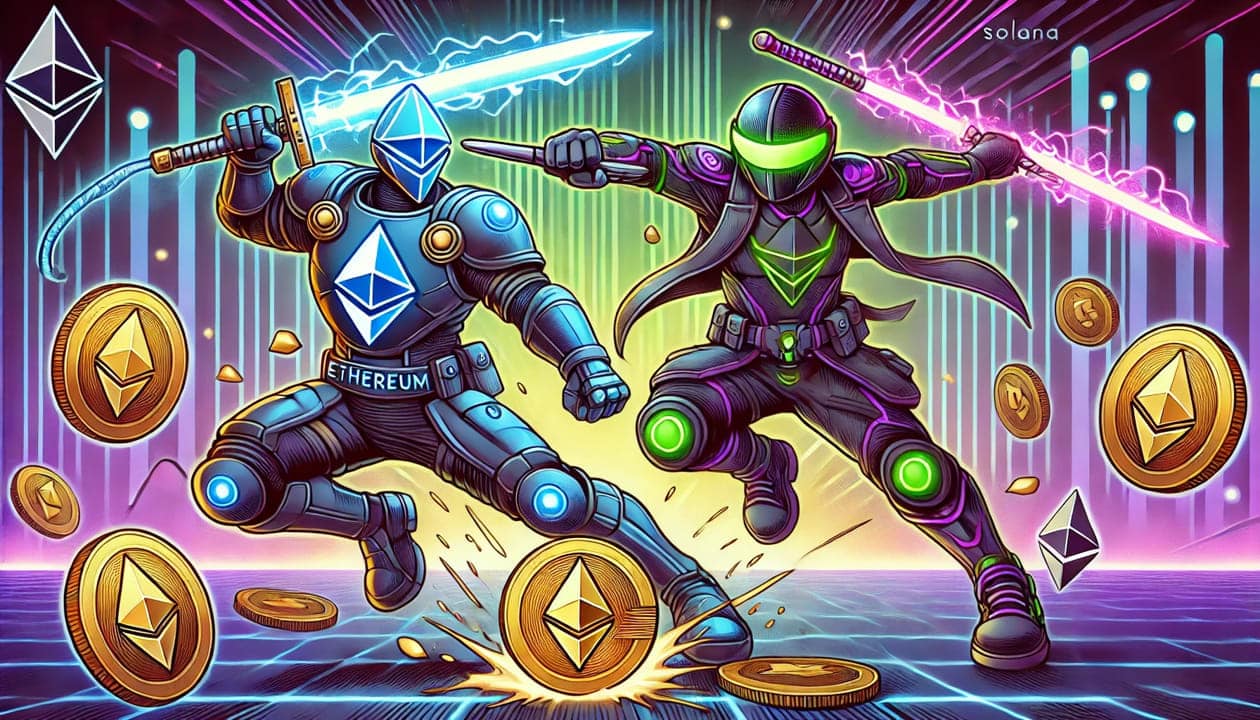
SolanaSolana is a blockchain platform designed to host decentralized, scalable applications. Here are some key aspects of Solana in the context of altcoins: Key Features: Scalability: … and EthereumEthereum is another major cryptocurrency platform known for its smart contract functionality, going beyond just being a digital currency. Here’s an overview of Ethereum: Key Featur… stand as two of the most influential blockchainA blockchain is a decentralized, distributed ledger technology (DLT) that records transactions in a secure, transparent, and tamper-proof manner. Each transaction is grouped into a… networks, each excelling in distinct areas. The choice between them largely depends on specific use cases and investment perspectives. While SolanaSolana is a blockchain platform designed to host decentralized, scalable applications. Here are some key aspects of Solana in the context of altcoins: Key Features: Scalability: … offers superior speed and cost efficiency, EthereumEthereum is another major cryptocurrency platform known for its smart contract functionality, going beyond just being a digital currency. Here’s an overview of Ethereum: Key Featur… remains dominant in security, decentralization, and institutional adoption. A detailed comparison of their performance, scalability, security, ecosystem strength, and market position provides insights into why each cryptocurrencyA cryptocurrency is a digital or virtual form of currency that uses cryptography for security. Unlike traditional currencies issued by central banks, cryptocurrencies operate on de… remains relevant for investors.
EthereumEthereum is another major cryptocurrency platform known for its smart contract functionality, going beyond just being a digital currency. Here’s an overview of Ethereum: Key Featur…, as the second-largest cryptocurrencyA cryptocurrency is a digital or virtual form of currency that uses cryptography for security. Unlike traditional currencies issued by central banks, cryptocurrencies operate on de… by market capitalization, maintains a firm grip on the blockchainA blockchain is a decentralized, distributed ledger technology (DLT) that records transactions in a secure, transparent, and tamper-proof manner. Each transaction is grouped into a… industry with its mature ecosystem and unmatched security. With a market cap of approximately $344 billion, EthereumEthereum is another major cryptocurrency platform known for its smart contract functionality, going beyond just being a digital currency. Here’s an overview of Ethereum: Key Featur… continues to lead in decentralized finance (DeFiDeFi, short for Decentralized Finance, refers to financial services and applications built on blockchain technology that aim to recreate traditional financial systems (like banks, …) and non-fungible tokens (NFTs). Its extensive developer community and institutional trust further reinforce its position as the primary choice for enterprises and financial applications. While Ethereum’s base layer remains relatively slow, processing 15–30 transactions per second (TPS), its Layer 2 solutions such as Arbitrum and Optimism enhance scalability. The recent transition to Proof of Stake (PoS) has also significantly reduced its energy consumption by 99.95%, aligning with the increasing demand for sustainable blockchainA blockchain is a decentralized, distributed ledger technology (DLT) that records transactions in a secure, transparent, and tamper-proof manner. Each transaction is grouped into a… technology.
SolanaSolana is a blockchain platform designed to host decentralized, scalable applications. Here are some key aspects of Solana in the context of altcoins: Key Features: Scalability: …, in contrast, has emerged as a high-performance blockchainA blockchain is a decentralized, distributed ledger technology (DLT) that records transactions in a secure, transparent, and tamper-proof manner. Each transaction is grouped into a… designed for speed and efficiency. Capable of processing between 2,600 and 4,000+ TPS, it vastly outperforms EthereumEthereum is another major cryptocurrency platform known for its smart contract functionality, going beyond just being a digital currency. Here’s an overview of Ethereum: Key Featur… in raw transaction throughput, offering 90 times the speed of its competitor. This efficiency is largely attributed to its innovative Proof of History (PoH) consensus mechanism, which streamlines transaction validation. Transaction costs on SolanaSolana is a blockchain platform designed to host decentralized, scalable applications. Here are some key aspects of Solana in the context of altcoins: Key Features: Scalability: … are also significantly lower, averaging $0.00025 per transaction, making it particularly attractive for microtransactions, gaming, and NFT applications. EthereumEthereum is another major cryptocurrency platform known for its smart contract functionality, going beyond just being a digital currency. Here’s an overview of Ethereum: Key Featur…, on the other hand, faces cost challenges, with transaction fees fluctuating between $10 and $50+ during periods of high congestion. Although Layer 2 solutions help reduce these expenses, they introduce additional complexity for users.
Scalability remains one of the key differentiating factors between these two blockchainsA blockchain is a decentralized, distributed ledger technology (DLT) that records transactions in a secure, transparent, and tamper-proof manner. Each transaction is grouped into a…. EthereumEthereum is another major cryptocurrency platform known for its smart contract functionality, going beyond just being a digital currency. Here’s an overview of Ethereum: Key Featur… adopts a modular approach, integrating Layer 2 rollups and, in the future, sharding to enhance its capacity. While this design maintains security and decentralization, it often results in fragmented user experiences. SolanaSolana is a blockchain platform designed to host decentralized, scalable applications. Here are some key aspects of Solana in the context of altcoins: Key Features: Scalability: …, in contrast, follows a monolithic architecture, enabling it to achieve high throughput without requiring additional scaling solutions. However, this approach comes with its own risks, including centralization concerns and past instances of networkIn the context of cryptocurrency, a network refers to the interconnected system of computers, nodes, and software that work together to support and maintain the functioning of a sp… outages. Efforts to improve networkIn the context of cryptocurrency, a network refers to the interconnected system of computers, nodes, and software that work together to support and maintain the functioning of a sp… reliability, such as the introduction of Firedancer, aim to strengthen Solana’s infrastructure.
From a decentralization and security standpoint, EthereumEthereum is another major cryptocurrency platform known for its smart contract functionality, going beyond just being a digital currency. Here’s an overview of Ethereum: Key Featur… holds a distinct advantage. With over 1 million validators securing its networkIn the context of cryptocurrency, a network refers to the interconnected system of computers, nodes, and software that work together to support and maintain the functioning of a sp… post-Ethereum 2.0, it is widely regarded as one of the most secure blockchainsA blockchain is a decentralized, distributed ledger technology (DLT) that records transactions in a secure, transparent, and tamper-proof manner. Each transaction is grouped into a…. In contrast, SolanaSolana is a blockchain platform designed to host decentralized, scalable applications. Here are some key aspects of Solana in the context of altcoins: Key Features: Scalability: … operates with a considerably smaller validator count—approximately 2,400—raising concerns over networkIn the context of cryptocurrency, a network refers to the interconnected system of computers, nodes, and software that work together to support and maintain the functioning of a sp… centralization. Previous outages, such as those observed in 2023, have exposed the blockchain’s vulnerability. However, Solana’s team continues to implement upgrades to mitigate these issues.
Ethereum’s ecosystem remains unmatched. With a Total Value LockedTotal Value Locked (TVL) refers to the total value of assets (cryptocurrencies or tokens) that are currently staked, lent, or locked in a decentralized finance (DeFi) protocol. It … (TVLTotal Value Locked (TVL) refers to the total value of assets (cryptocurrencies or tokens) that are currently staked, lent, or locked in a decentralized finance (DeFi) protocol. It …) of $56.8 billion, EthereumEthereum is another major cryptocurrency platform known for its smart contract functionality, going beyond just being a digital currency. Here’s an overview of Ethereum: Key Featur… dominates the DeFiDeFi, short for Decentralized Finance, refers to financial services and applications built on blockchain technology that aim to recreate traditional financial systems (like banks, … space, hosting major protocols such as UniswapUniswap is a decentralized exchange (DEX) protocol on the Ethereum blockchain that facilitates trustless and permissionless trading of ERC-20 tokens. Instead of using a traditional… and AaveAave is an altcoin and a decentralized finance (DeFi) protocol built on the Ethereum blockchain. Here are some key points about Aave: • Purpose: Aave allows users to engage in le…. Its widespread adoption among developers and institutions further solidifies its leadership position. SolanaSolana is a blockchain platform designed to host decentralized, scalable applications. Here are some key aspects of Solana in the context of altcoins: Key Features: Scalability: …, while trailing with a TVLTotal Value Locked (TVL) refers to the total value of assets (cryptocurrencies or tokens) that are currently staked, lent, or locked in a decentralized finance (DeFi) protocol. It … of $9.5 billion, has seen rapid growth in NFTs, memecoins, and DeFiDeFi, short for Decentralized Finance, refers to financial services and applications built on blockchain technology that aim to recreate traditional financial systems (like banks, … applications. The networkIn the context of cryptocurrency, a network refers to the interconnected system of computers, nodes, and software that work together to support and maintain the functioning of a sp… boasts an estimated 5 million daily active users, surpassing Ethereum’s 3 million, driven by high-profile projects like Pump.fun and Raydium. Although Solana’s ecosystem is younger, its momentumMomentum in stock trading refers to the rate of acceleration of a stock’s price or trading volume. It indicates the strength of a trend and measures how quickly prices are rising o… indicates strong growth potential.
Market performance and financial metrics further illustrate the competition between these two blockchainsA blockchain is a decentralized, distributed ledger technology (DLT) that records transactions in a secure, transparent, and tamper-proof manner. Each transaction is grouped into a…. EthereumEthereum is another major cryptocurrency platform known for its smart contract functionality, going beyond just being a digital currency. Here’s an overview of Ethereum: Key Featur… remains the more established asset, benefiting from ETF approvals and institutional interest, which solidify its long-term investment appeal. However, SolanaSolana is a blockchain platform designed to host decentralized, scalable applications. Here are some key aspects of Solana in the context of altcoins: Key Features: Scalability: … has exhibited remarkable revenue growth, recently generating $8.4 million in daily revenue, compared to Ethereum’s $875,571. Additionally, Solana’s price surged 122% in 2024, reflecting strong retail investor enthusiasm. These figures suggest that while EthereumEthereum is another major cryptocurrency platform known for its smart contract functionality, going beyond just being a digital currency. Here’s an overview of Ethereum: Key Featur… provides stability and trust, SolanaSolana is a blockchain platform designed to host decentralized, scalable applications. Here are some key aspects of Solana in the context of altcoins: Key Features: Scalability: … is quickly gaining traction as an alternative high-growth blockchainA blockchain is a decentralized, distributed ledger technology (DLT) that records transactions in a secure, transparent, and tamper-proof manner. Each transaction is grouped into a….
Energy efficiency has also become a critical factor in blockchainA blockchain is a decentralized, distributed ledger technology (DLT) that records transactions in a secure, transparent, and tamper-proof manner. Each transaction is grouped into a… adoption. Ethereum’s transition to PoS significantly reduced its carbon footprint, while SolanaSolana is a blockchain platform designed to host decentralized, scalable applications. Here are some key aspects of Solana in the context of altcoins: Key Features: Scalability: … is recognized for its low energy consumption, requiring less energy per transaction than two Google searches. This positions both blockchainsA blockchain is a decentralized, distributed ledger technology (DLT) that records transactions in a secure, transparent, and tamper-proof manner. Each transaction is grouped into a… favorably in the ongoing push for greener technology.
For investors considering exposure to these assets, the choice depends on riskIn stock and crypto trading, risk refers to the possibility of losing some or all of the capital invested in a trade. It represents the uncertainty about the future performance of … tolerance and long-term objectives. SolanaSolana is a blockchain platform designed to host decentralized, scalable applications. Here are some key aspects of Solana in the context of altcoins: Key Features: Scalability: … presents an opportunity for those seeking high-speed, low-cost transactions, particularly in gaming, NFTs, and retail-driven sectors. Its scalability without reliance on Layer 2 solutions makes it a compelling option for developers looking for efficiency. However, EthereumEthereum is another major cryptocurrency platform known for its smart contract functionality, going beyond just being a digital currency. Here’s an overview of Ethereum: Key Featur… remains the preferred choice for those prioritizing security, decentralization, and institutional adoption. Its well-established presence in DeFiDeFi, short for Decentralized Finance, refers to financial services and applications built on blockchain technology that aim to recreate traditional financial systems (like banks, …, NFTs, and developer tooling ensures long-term stability and continued innovation.
While SolanaSolana is a blockchain platform designed to host decentralized, scalable applications. Here are some key aspects of Solana in the context of altcoins: Key Features: Scalability: … has demonstrated remarkable revenue growth and user adoption, Ethereum’s dominance in the broader crypto ecosystem remains unchallenged. Investors seeking a balance between growth potential and stability must carefully evaluate their strategy, as both blockchainsA blockchain is a decentralized, distributed ledger technology (DLT) that records transactions in a secure, transparent, and tamper-proof manner. Each transaction is grouped into a… offer unique advantages that cater to different segments of the market.

Lance Jepsen is the senior personal finance writer for Guerilla Stock Trading who has spent more than 25 years covering the stock market and economics. In addition, Lance has worked as a private stock analyst for a number of high worth individuals.
Performance of Top 10 Cryptos (24 hours)
🗨️ JOIN OUR COMMUNITY OF CRYPTO TRADERS AND INVESTORS ON SOCIAL MEDIA
At GuerillaStockTrading, we maintain full transparency and impartiality; we never blog about stocks or crypto in which we hold a personal position unless explicitly stated in the article. Additionally, we do not accept paid promotions presented as content. All information shared is for informational purposes only and should not be construed as financial, investment, tax, or legal advice, nor as a recommendation to buy any security or financial asset. The content is general in nature and does not account for individual circumstances. It may not be suitable for your particular situation. Before making financial decisions, you are encouraged to seek guidance from your own financial or investment advisor.