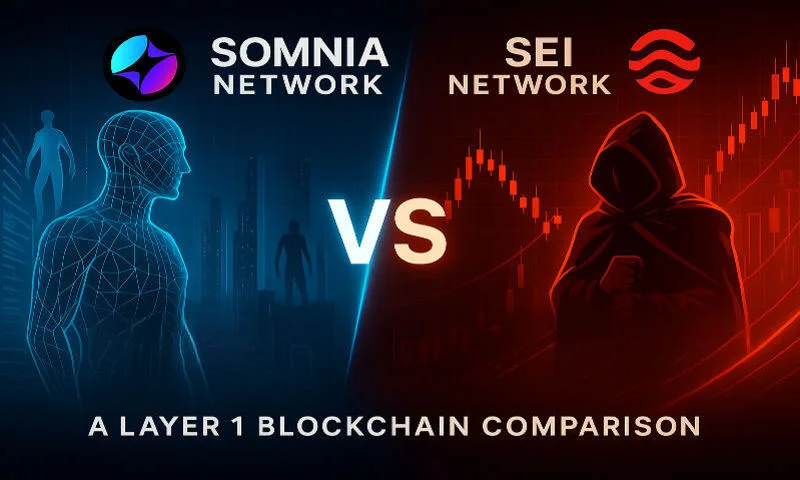
Somnia Network vs. Sei Network: A Layer 1 Blockchain Comparison | BitcoinChaser
The Somnia Network has emerged as one of the more notable Layer 1 blockchains.
Its native token SOMI has seen its price surge as of late.
This momentum has put Somnia in the spotlight, highlighting its potential in high-performance applications like metaverses and AI.
To understand Somnia’s rise, we will first describe what the network does and what is driving Somnia’s recent gains.
Then, we’ll compare it to Sei Network, another high-throughput Layer 1 blockchain with similar ambitions in scalability and developer tools.
Table of Contents
What is Somnia Network and What Does It Do?
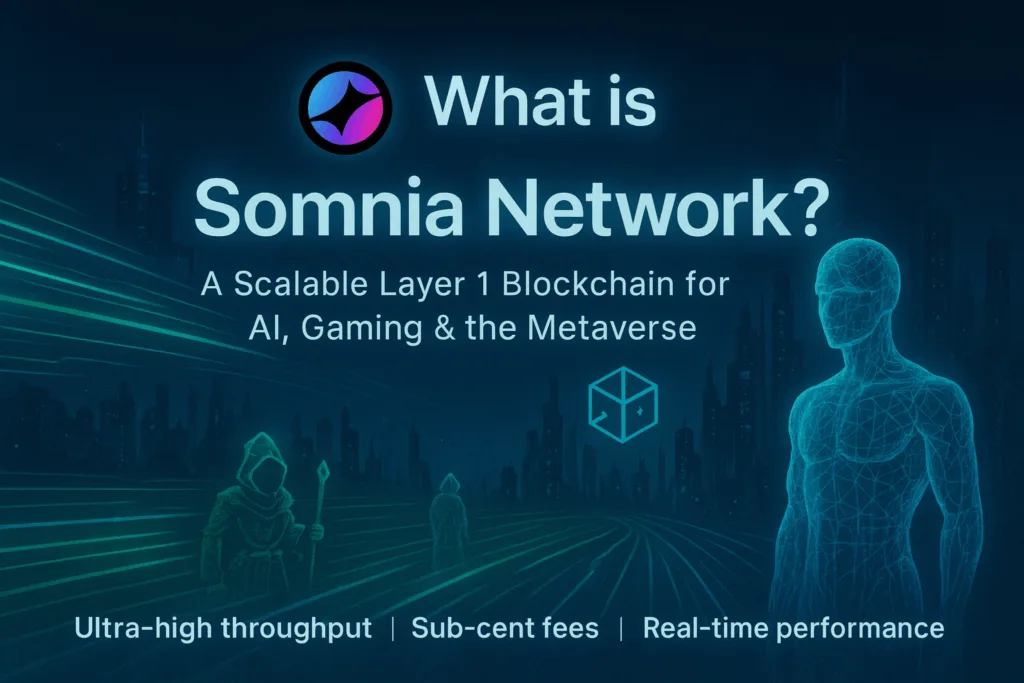
Somnia Network is a Layer 1 blockchain launched in 2024, designed to address the limitations of existing networks by providing ultra-high scalability for data-intensive applications.
Somnia enables seamless integration between decentralized apps, AI agents, and metaverse environments.
Unlike general-purpose blockchains like Ethereum, which struggle with congestion and high fees, Somnia prioritizes real-time performance, making it suitable for immersive experiences such as virtual worlds, gaming, and interactive AI tools.
Key Features and Capabilities
- High Throughput: Somnia boasts theoretical speeds of 400,000 to 1,000,000 transactions per second (TPS), with sub second finality for confirmations. This is achieved through its MultiStream Consensus protocol, a proof-of-stake (PoS) mechanism that processes multiple transaction streams in parallel, reducing bottlenecks.
- EVM (Ethereum Virtual Machine) Compatibility: Developers can easily port Ethereum-based applications to Somnia, leveraging familiar tools like Solidity for smart contracts. This lowers the barrier for building decentralized apps (dApps).
- Advanced Infrastructure: Somnia uses a custom IceDB database for ultra fast read/write operations (70–100 nanoseconds) and efficient data compression, supporting on chain storage for large files like 3D models or AI datasets.
- Low Fees and Scalability: Transaction costs are sub-cent, even under heavy load, thanks to optimistic rollups and zero knowledge proofs, ensuring accessibility for users in metaverses or gaming.
- Use Cases: Somnia excels in metaverses (infinite virtual worlds where users own and trade assets), gaming (real time multiplayer games), and AI integration (orchestrating AI agents for automated tasks). Partnerships with gaming studios and AI firms, along with tools like Somnia Studio for no code asset creation, position it as a hub for Web3 innovation.
The native SOMI token powers the ecosystem: it’s used for transaction fees, staking, governance voting, and incentivizing developers. With a total supply of 1 billion SOMI with approximately 200 million circulating, its tokenomics include deflationary burns to reduce supply over time, potentially supporting long term value.
Somnia’s mainnet launch in late August 2025 marked a pivotal moment, enabling full-scale testing and adoption. Community initiatives like the Odyssey program, offering weekly quests and airdrops, have engaged users, with early participants receiving rewards.
Why has the price of Somi Soared Recently?
There are several reasons to account for the SOMI token’s explosive growth in September 2025.
Binance Listing and Exchange Momentum
The primary catalyst was SOMI’s listing on Binance on September 2, 2025, which immediately boosted the price by over 30%. Binance’s “hot list” endorsement and a 1.5 million SOMI trading challenge (running until September 16) drew in retail investors, increasing liquidity and visibility.
Follow up listings on platforms like BingX, XT.com, and JuCoin further amplified the rally.
Mainnet Launch and Ecosystem Growth
Somnia’s mainnet activation in late August 2025 was a catalyst, allowing real-world testing of its high TPS and AI features.
This followed a testnet that processed 110 million transactions, building hype among developers.
Partnerships with gaming studios and AI firms, plus community-driven momentum from the Odyssey program’s airdrops and quests, have rewarded early users handsomely.
Bullish tokenomics, including deflationary burns and high staking yields, have encouraged holding amid the rally.
Broader Market Trends and Sentiment
The surge aligns with an altcoin season in September 2025, where smaller tokens like SOMI are outperforming the main coins, such as Bitcoin.
Increased demand from investors eyeing AI and metaverse narratives, fueled by VR advancements like Apple’s Vision Pro, has further increased interest.
Introducing Sei Network
Sei Network, launched in 2023, is another Layer 1 blockchain optimized for speed and scalability, particularly in decentralized finance (DeFi) and trading. It uses a Twin Turbo Consensus (a PoS variant) to achieve theoretical 20,000–500,000 TPS and sub-second finality, making it suitable for high-frequency applications.
Like Somnia, Sei is EVM compatible, allowing Ethereum developers to build on it seamlessly.
Its native SEI token handles fees, staking, and governance.
Sei’s focus is on DeFi trading, including order books for decentralized exchanges (DEXs), but it also supports gaming and social platforms.
Sei has evolved with monthly updates, emphasizing network security and decentralization.
Comparing Somnia and Sei: Similarities and Differences
Somnia and Sei are both high-performance Layer 1 blockchains, but their emphases and architectures differ. Here’s a balanced comparison:
Similarities
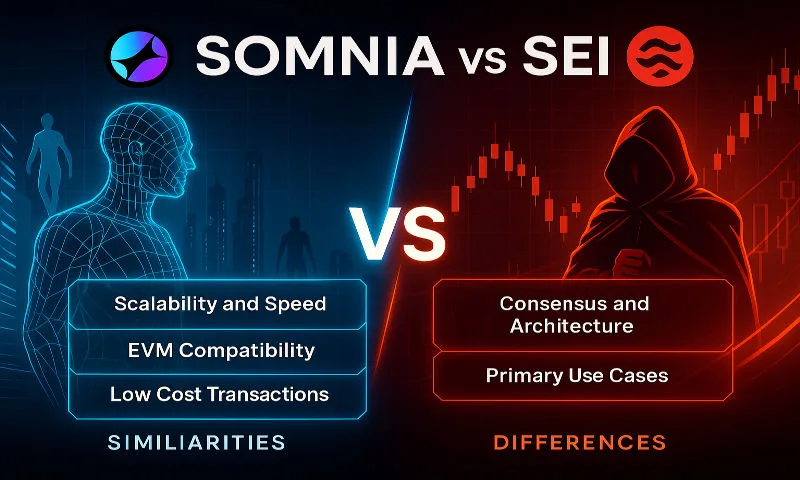
- Scalability and Speed: Both prioritize high TPS with Somnia at 400,000–1,000,000 vs. Sei’s 20,000–500,000. They outperform Ethereum and even Solana, using PoS based consensus to minimize latency.
- EVM Compatibility: Developers can use Ethereum tools on both, facilitating easy dApp migration and lowering entry barriers.
- Low Cost Transactions: Fees are sub-cent on both, making them viable for gaming, social, and DeFi.
- Focus on Web3 Applications: Both target gaming and social platforms, with Sei extending to DeFi trading and Somnia to metaverses/AI. They rank among the top Layer 1s for TVL (total value locked) and developer activity in 2025 rankings.
Differences
- Consensus and Architecture: Somnia’s MultiStream Consensus handles parallel transaction streams for metaverse-scale data, while Sei’s Twin Turbo optimizes for order book processing in DeFi. Somnia’s IceDB (database) excels in data compression for AI/metaverse files, whereas Sei focuses on trading-specific optimizations.
- Primary Use Cases: Somnia emphasizes AI orchestration and infinite metaverses, with tools for virtual worlds and agent integration. Sei focuses more DeFi, powering DEXs (decentralized exchanges)and high-speed trading, though it does also support gaming.
In benchmarks, Somnia edges Sei in theoretical TPS for metaverse loads, but Sei’s real-world DeFi usage gives it proven stability.
Conclusion and Outlook
Somnia Network stands out in 2025 for its focus on scalable metaverses and AI, with SOMI’s surge, fueled by Binance listings, mainnet success, and community rewards, signalling strong market validation.
Compared to Sei Network, Somnia shares high speed, EVM compatibility but differentiates through its AI/metaverse emphasis and innovative MultiStream tech, while Sei excels in DeFi trading with a more mature ecosystem.
Both represent the next generation of Layer 1s, outperforming slower rivals like Ethereum.
Source link