Supreme Court Requests Government Response in Case Challenging IRS Data Seizure from Coinbase – BlockTribune
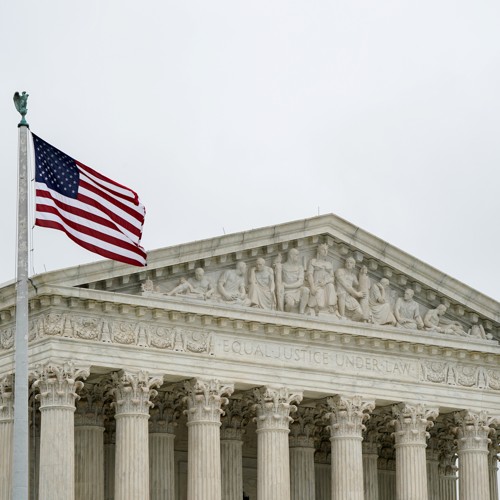
Supreme Court Requests Government Response in Case Challenging IRS Data Seizure from Coinbase
br>
On Monday, March 31, 2025, Law360 reported that the U.S. Supreme Court has requested the federal government to provide its stance on a case involving a cryptocurrency investor’s challenge against the Internal Revenue Service (IRS) regarding the seizure of his account records. This request follows significant support for the investor, James Harper, from various state attorneys general and the social media company X Corp, formerly known as Twitter.
The Court has granted the government a 30-day period to respond to Harper’s petition, which seeks to overturn a ruling by the First Circuit Court. This ruling permitted the IRS to obtain Harper’s records from Coinbase Inc., a digital currency exchange, without a warrant. The decision has raised concerns about privacy and the government’s authority to access personal data without judicial oversight.
Harper’s case has drawn attention due to support from multiple state attorneys general, including those from West Virginia, Kansas, Nebraska, North Dakota, and Ohio. These officials criticized the IRS for what they described as a broad and unwarranted search of personal data, arguing that the agency had “trawled through reams of identifying customer details” without securing a court order.
X Corp also joined the legal discourse, advocating for the restoration of privacy protections for individuals engaged in emerging digital economies. The company emphasized that many users are subjected to intrusive data seizures despite being innocent of any wrongdoing.
In his petition, Harper noted that when he opened his Coinbase account in 2013, the exchange assured him that his account information would remain confidential. However, the IRS issued a John Doe summons that led to the disclosure of details from approximately 14,000 Coinbase users, including Harper.
Central to this case is the legal concept known as the “third-party doctrine,” established in 1976, which indicates that individuals have diminished privacy rights regarding information shared with third parties, such as banks. Harper and his supporters argue that this doctrine is outdated and ill-suited for the current digital landscape, where vast amounts of personal information are routinely shared with various platforms.
Advocacy groups, including the DeFi Education Fund, have pointed out that the unique aspects of cryptocurrency, such as its public ledger, present heightened privacy concerns. They argue that the third-party doctrine fails to account for the complexities of modern technology.
The First Circuit upheld the third-party doctrine in its ruling against Harper, referencing the Supreme Court’s earlier decision in U.S. v. Miller. In that case, the court determined that the defendant had no reasonable expectation of privacy regarding bank records he voluntarily shared with his bank.
Harper has highlighted opinions from legal scholars and Supreme Court justices critical of the third-party doctrine’s relevance today. Justice Sonia Sotomayor, in a 2012 opinion, remarked that the doctrine is “ill-suited to the digital age.” Similarly, Justice Neil Gorsuch referred to academic critiques suggesting that the doctrine is fundamentally flawed.
Despite these criticisms, the First Circuit maintained that it was bound by established Supreme Court precedent. Judge Kermit V. Lipez stated that Harper’s arguments relied heavily on sentiments expressed by academics and justices rather than a change in legal standards.
Supporters of Harper’s case, including the Goldwater Institute, contend that the issue of digital privacy cannot be overlooked, especially as everyday transactions generate extensive tracking of personal data. They argue that the current legal framework inadequately addresses the privacy implications of digital interactions.
The DeFi Education Fund asserted that the IRS’s seizure of Harper’s financial information was not analogous to the limited records involved in the Miller case. They emphasized that in the context of cryptocurrency, revealing a single piece of data can expose a user’s entire transaction history.
Several amici curiae stressed that the Supreme Court’s 2018 ruling in Carpenter v. U.S.—which limited the government’s ability to access cell phone location data—should also inform the current case. The attorneys general argued that financial information, like location data, can create a comprehensive picture of an individual’s life and deserves similar protections.
In its amicus brief, X Corp expressed concerns about the potential for government overreach in accessing user data, stating that contractual obligations to users should be weighed in the context of Fourth Amendment protections.
Harper’s counsel, Sheng Li, of the New Civil Liberties Alliance, expressed optimism regarding the broad support for Harper’s arguments, which challenge the applicability of the third-party doctrine in today’s digital age.
Source: Law360