Investing: Bear Markets: Survive And Thrive With a Solid Strategy
Bear markets really push your patience and discipline. Prices drop, volatility spikes, and the news feels relentlessly negative. You survive and thrive in a bear market by staying invested, managing risk, and setting yourself up for the next recovery. The point isn’t to nail the bottom—it’s about protecting your money and making choices that keep you ready for the next upswing.
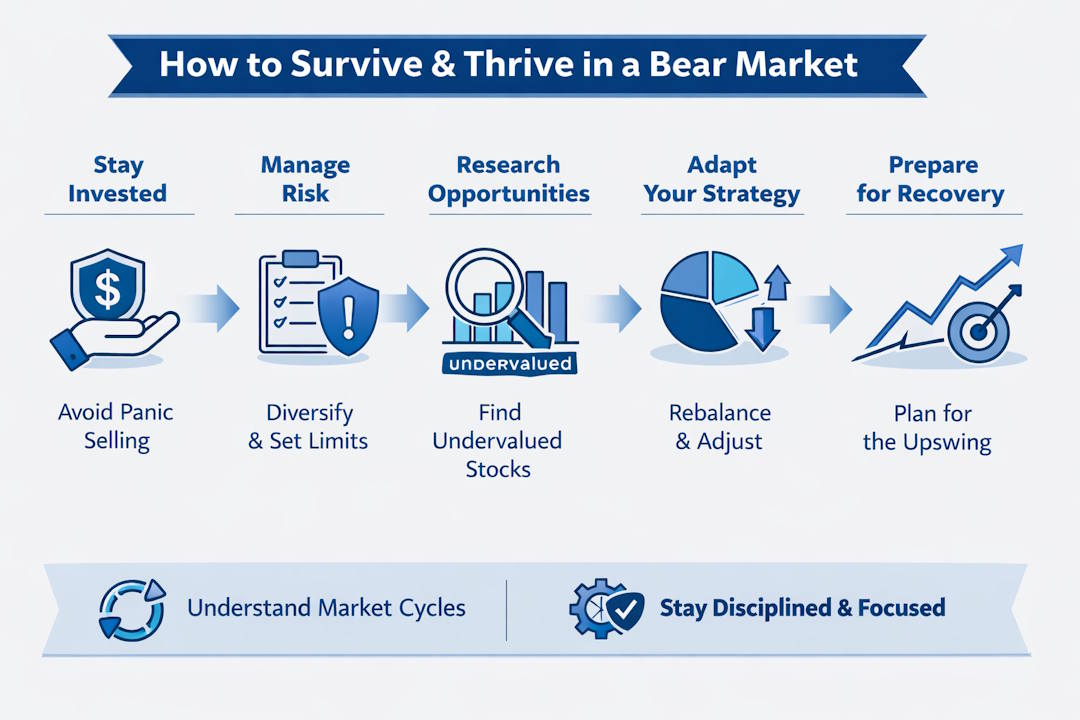
You get to decide what happens next. If you understand market cycles, you can sidestep those emotional knee-jerk reactions that often lock in losses. Tools like Stock Rover let you screen for strong fundamentals and spot undervalued companies while others panic.
With a plan and steady habits, you can turn a downturn into a long-term edge.
Key Takeaways
- Bear markets are just a natural part of the investing cycle.
- Staying disciplined and diversified protects your portfolio.
- Smart research and planning set you up for gains when markets bounce back.
Understanding Bear Markets and Market Cycles
You face bear markets when stock prices tumble, and investor confidence disappears. If you can spot the triggers, phases, and patterns of these downturns, you’ll manage risk better and stay grounded when markets flip direction.
What Triggers a Bear Market
A bear market usually kicks off after indexes like the Dow Jones Industrial Average or NASDAQ drop 20% or more from their highs. Causes often mix economic, financial, and psychological factors.
You’ll see triggers like economic recessions, rising rates, high inflation, or global instability. When earnings forecasts fal,l and consumers cut back, investors start selling riskier assets, which just feeds the decline.
Investor mood matters a lot. Fear and uncertainty can drag prices down to levels below what the fundamentals suggest they’re worth. Automated trading and margin calls sometimes make things worse.
If you want to spot warning signs, keep an eye on indicators like the yield curve, unemployment, and corporate earnings revisions. With a research platform like Stock Rover, you can compare fundamentals and see which sectors hold up when things get rough.
Bear Versus Bull Markets
A bull market means prices keep rising and people are optimistic. A bear market is the opposite—prices keep falling, and investors get cautious. Both are just parts of market cycles.
| Market Type | General Trend | Investor Mood | Typical Duration | Economic Context |
|---|---|---|---|---|
| Bull Market | Rising prices | Optimistic | Several years | Expansion |
| Bear Market | Falling prices | Pessimistic | Months to years | Recession or slowdown |
When markets are bullish, investors take on more risk, and valuations can become stretched. In a bear market, liquidity dries up, and defensive assets like bonds or cash look more appealing.
You’ll want to adjust your strategy as the cycle changes. In a bull phase, focus on growth and momentum. In a bear phase, lean on diversification, dollar-cost averaging, and quality fundamentals.
Market Cycle Phases
Markets tend to move through four phases: accumulation, uptrend, distribution, and downtrend. Each phase comes with its own mood and behavior.
- Accumulation – Prices settle after a drop; value investors quietly buy back in.
- Uptrend (Bull Phase) – Confidence returns; more people start buying, and prices rise.
- Distribution – Experienced investors start selling into strength; volatility picks up.
- Downtrend (Bear Phase) – Selling takes over; prices fall through support.
If you understand these phases, you can time your entries and exits better. Tools like TrendSpider automate chart analysis so you can spot reversals and support/resistance levels with less guesswork.
Historical Patterns and Benchmarks
Since World War II, the U.S. has gone through more than a dozen bear markets. The average decline hovers around 35%, and these downturns have lasted about 10 months on average. Recoveries, though, can take longer.
Take 2008–2009: the S&P 500 dropped over 50% before a long bull run. In 2020, the pandemic crash lasted just weeks, thanks to aggressive policy moves.
Every bear market eventually ends in a new bull market, but trying to time the bottom is a losing game. Instead, keep your portfolio diversified and review your allocations every quarter.
With TradingView, you can study old market cycles, overlay economic data, and backtest strategies before risking real money.
Investor Mindset and Decision-Making in Downturns
Market drops challenge your discipline more than your knowledge, honestly. If you stay rational, set measurable goals, and match risk with your comfort level, you’ll make better investment decisions when prices get ugly.
Managing Emotions and Avoiding Panic Selling
Fear pushes people to sell at the worst moments. Panic selling locks in your losses and shuts you out of any rebound. Notice your emotions and slow down before making trades.
Try a checklist before selling:
- Did your investment thesis actually change?
- Are fundamentals weaker, or is this just a market mood swing?
- Would you buy this asset at today’s price?
Having written rules keeps you honest. Many long-term investors use a set rebalancing plan to scoop up undervalued assets in downturns.
TrendSpider can automate technical alerts, so you’re less likely to make impulsive moves. If you’re unsure, talk to a financial advisor—sometimes just getting a second opinion helps you avoid costly mistakes driven by short-term fear.
Setting Clear Financial Goals
You’ll make smarter choices if you know exactly why you’re investing. Define financial goals with a timeline, target amount, and return you need. For instance, a 20-year retirement fund can handle more volatility than a 3-year home down payment fund.
Write your goals in clear, measurable terms:
| Goal | Time Frame | Target Amount | Strategy |
|---|---|---|---|
| Retirement | 20 years | $800,000 | 70% equities, 30% bonds |
| Home down payment | 3 years | $60,000 | 80% cash equivalents, 20% short-term bonds |
Stick with your plan, even when markets get ugly. Only change strategies if your own life circumstances change, not just because the headlines are scary.
Platforms like Stock Rover let you check whether your holdings still align with your long-term goals, analyzing fundamentals and diversification without letting emotions take over.
Assessing Risk Tolerance
Your risk tolerance is basically how much volatility you can take before you bail. It depends on your income, how much cash you need, and just how much loss you can stomach.
Ask yourself: what if your portfolio dropped 20%? Would that keep you up at night? If so, cut back on equities. If you could ride it out, maybe even add to quality positions.
Think about both your capacity (financially, how much risk you can take) and your attitude (emotionally, how much you can handle). A financial advisor can help you measure this with scenario analysis or a questionnaire.
If you want to self-assess, use TradingView to simulate past bear markets and see how your mix would have done. Real data helps set expectations and lets you tweak allocations before things get messy.
Portfolio Strategies to Survive Bear Markets
You can limit losses and prep for a rebound by tweaking your holdings, spreading risk, and focusing on sectors that hold up when growth slows. Every move should reflect your timeline, income needs, and comfort with volatility.
Asset Allocation Adjustments
Rebalancing your asset allocation actively controls risk as markets fall. If stocks drop and shrink as a share of your portfolio, you might sell some bonds or cash to bring your mix back to target. This way, you keep your risk steady instead of letting the market decide for you.
A typical balanced mix is 60% equities and 40% bonds. In a bear market, shifting to 50/50 or even 40/60 can cushion losses. Use actual return data and volatility measures to guide these shifts—not just scary news headlines.
Consider adding short-term Treasury bonds or investment-grade corporate bonds for more stability. These usually lose less when stocks tumble. With Stock Rover, you can compare yields, credit ratings, and duration risk before you make changes.
Diversification for Downturns
Diversification spreads your risk across asset classes, regions, and industries. You won’t get wiped out if one company or sector tanks. In bear markets, this becomes even more important.
Hold a mix of domestic and international equities, bonds, and alternative assets like REITs or commodities. Here’s a snapshot for tracking exposure:
| Asset Type | Role in Downturn | Example Allocation |
|---|---|---|
| U.S. Equities | Core growth | 35% |
| International Equities | Currency and market diversification | 15% |
| Bonds | Income and stability | 40% |
| Alternatives | Inflation hedge | 10% |
Diversification won’t erase losses, but it can soften the blow. Use correlation data from TradingView to spot assets that don’t move together.
Building a Defensive Portfolio
A defensive portfolio focuses on quality and stability, not breakneck growth. Look at defensive sectors like consumer staples, utilities, and health care; they usually keep earning even when people spend less elsewhere.
Within stocks, pick companies with low debt, strong cash flow, and steady dividends. Use Seeking Alpha to screen for these traits and find stocks that can weather storms.
Keep some cash reserves or money market funds on hand so you’re not forced to sell investments at a loss if you need cash. Defensive portfolios may lag in bull markets, but they protect your capital and give you dry powder to invest when prices are attractive.
Tactical Approaches to Thrive During Bear Markets
You can use disciplined buying, focus on income, and analyze stocks selectively to strengthen your position during downturns. Each tactic helps you avoid emotional mistakes and scoop up value while others retreat.
Dollar-Cost Averaging
Dollar-cost averaging (DCA) means you invest a set amount at regular intervals, no matter what the market’s doing. This spreads your purchases across different prices, so you’re not going all-in at a peak price. It really works best if you stick to a long-term plan and ignore short-term noise.
You can use DCA with ETFs or mutual funds tracking broad indexes. For example, if you put $500 monthly into an S&P 500 ETF during a bear market, your average cost per share drops as prices fall. The idea is: stay in the market, don’t try to time it.
With Stock Rover, you can track your portfolio’s performance and automate rebalancing. The real trick is consistency—keep investing, even when it feels uncomfortable. Over time, that steady input can set you up for bigger gains when markets bounce back.
Focusing on Dividend Stocks
Dividend-paying stocks can give you steady income, especially when capital gains aren’t showing up. Companies that manage to keep or even grow their dividends during tough times usually have strong balance sheets and predictable cash flows.
You get a return stream that helps cushion price drops and keeps compounding over time.
Stick to sectors where demand doesn’t really fall off—utilities, consumer staples, or healthcare come to mind. A 3–5% yield from companies that actually pay reliably can soften the blow of market losses.
Reinvesting dividends automatically will increase your share count and significantly boost compounding over the years.
Screen for payout ratios under 70% and check for a consistent dividend track record using Seeking Alpha or Stock Rover. It’s tempting to chase the highest yields, but that’s risky—super-high payouts often mean the company’s in trouble.
Prioritize sustainability and management that actually cares about keeping the dividend safe, so your income doesn’t dry up when things get rough.
Finding Competitive Advantage in Stocks
Bear markets really put weak business models under the microscope and reward companies with solid competitive advantages. Look for businesses with cost leadership, unique tech, or brands that let them hold their prices even when demand fades.
Check return on invested capital (ROIC), debt, and free cash flow trends. Companies that generate cash and keep debt low can fund operations without diluting their shareholding.
Compare margins over time to industry peers to spot who’s actually resilient when things get ugly.
With TradingView or TrendSpider, you can chart long-term support and spot entry points for these stronger stocks. Focus on businesses that keep growing or at least hold their ground while others cut back.
When the recovery starts, these leaders usually come back faster and keep outperforming longer.
Opportunities and Risks: Making Informed Choices
When markets fall, you’re looking at both new opportunities and real risks. Weigh fixed-income options, inflation pressures, and the timing of recovery with actual data that matches your risk tolerance and long-term plan.
Evaluating Bonds and Alternatives
Bonds can stabilize your portfolio when stocks drop, but they’re not all created equal. Government bonds usually hold up during recessions, while corporate bonds might struggle if credit risk jumps.
Shorter-duration bonds help you dodge big swings when rates change.
Before you buy, compare yields, duration, and credit ratings. Here’s a quick table to keep things clear:
| Bond Type | Typical Yield | Risk Level | Best Use Case |
|---|---|---|---|
| Treasury | Low | Low | Capital preservation |
| Investment-grade corporate | Moderate | Medium | Income plus moderate risk |
| High-yield | High | High | Opportunistic income |
You might want to check out bond ETFs or diversified fixed-income funds if you need liquidity. If alternatives sound better, consider dividend-paying stocks, REITs, or commodities to hedge a bit.
Use Stock Rover to compare bond fund fundamentals and credit quality before you invest.
Navigating Interest Rates and Inflation
Interest rates and inflation usually move in opposite directions from bond prices. When central banks hike rates to fight inflation, bond values fall, but new buyers get better yields.
Decide whether to lock in yields now or wait for a better entry.
Inflation eats into real returns, so look at inflation-protected securities like TIPS or short-term stuff that adjusts quickly.
Keep an eye on central bank guidance—they can shift the rate outlook in a hurry.
On TradingView, you can track yield curve moves and inflation data as it happens. Watch the gap between short- and long-term rates; it’s a good recession warning.
If the curve inverts, that’s your cue to get more defensive.
Timing Recovery and Rebalancing
Bear markets almost never end in one big move. Recovery depends on earnings stabilizing, rate decisions, and how investors feel about risk.
Don’t try to nail the exact bottom; instead, rebalance in steps as things start to look better.
Rebalancing means trimming what’s done well and adding to undervalued spots. Use target allocation ranges—like 60% equities and 40% bonds—and reset when you drift more than 5–10%.
Markets often recover months before the economy looks good on paper. Use TrendSpider to follow price momentum and volume for early signs of a turnaround.
Add exposure gradually, so you don’t get burned by bad timing, and keep some cash handy for new chances.
FAQ
Bear markets will test your discipline and planning. You need solid strategies, a defensive setup, and a close watch on economic signals to protect your capital and spot opportunities.
Let data drive your decisions—not panic—when you’re figuring out where to put money or how to manage risk in a downturn.
What strategies can you employ to navigate a bear market effectively?
Lean on diversification, dollar-cost averaging, and long-term positioning. Don’t panic sell, and keep making regular contributions to average your cost down.
Check your asset mix every quarter. Tools like Stock Rover let you analyze fundamentals and rebalance toward quality companies with strong cash flow and manageable debt.
How can you safeguard your investment portfolio during a bear market?
Hold a mix of assets that don’t all move together—stocks, bonds, and cash equivalents. Defensive sectors like utilities and consumer staples usually hold up better during downturns.
Set stop-loss or trailing stop orders to limit losses. TrendSpider can automate alerts and help you spot chart patterns that tell you when to adjust.
Where should you consider investing your money when anticipating a market downturn?
Shift toward defensive assets and high-quality bonds. Keep some cash ready to buy when valuations fall.
Dividend-paying stocks with steady earnings are also worth a look. Use Seeking Alpha to compare dividend coverage and payout history before putting money in.
What are considered safe investment options when facing a bear market?
U.S. Treasury securities, money market funds, and high-grade corporate bonds usually carry less risk. Short-term CDs keep your capital safe and returns predictable.
Holding some gold or defensive ETFs helps hedge against wild swings. Keep your liquidity high so you can move fast if needed.