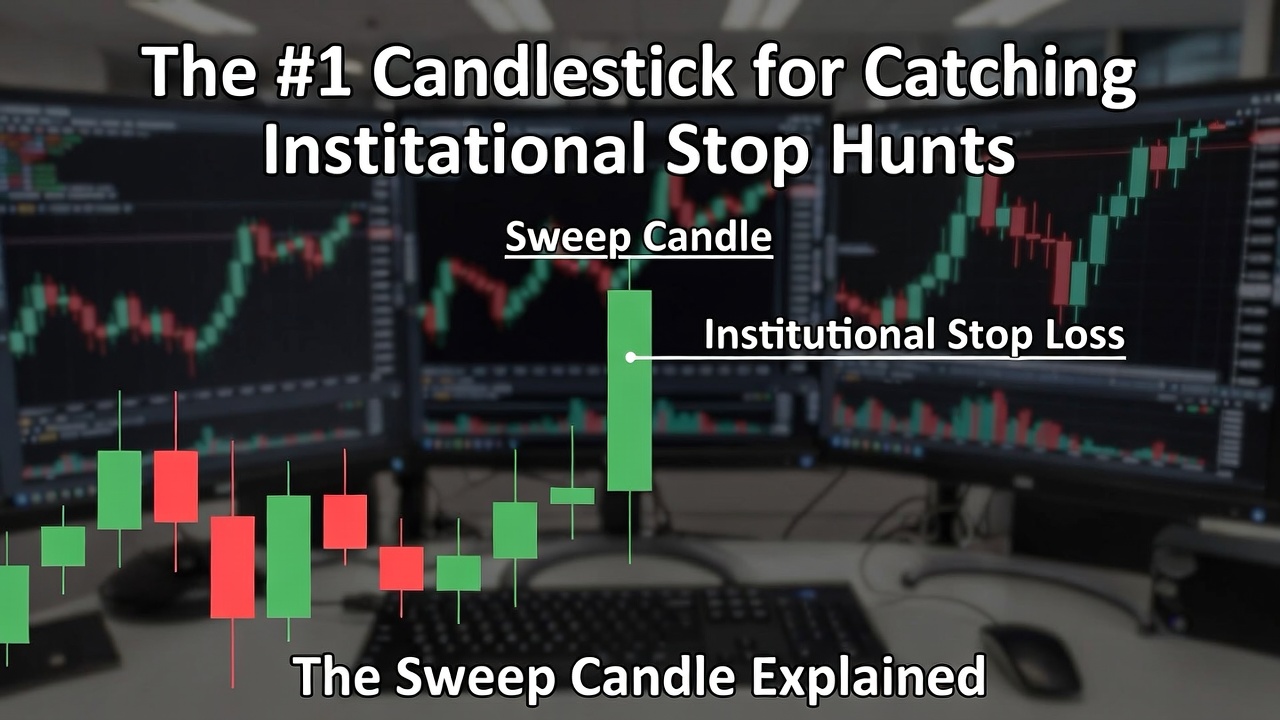
The #1 Candlestick For Catching Institutional Stop Hunts: The Sweep Candle Explained | Trading Strategy Guides
If you have ever bought a perfectly good support level, only to watch the price violently drop, hit your stop-loss, and then immediately reverse into profit without you… you have been the victim of an institutional stop hunt.
This is the most frustrating experience for a retail trader. But for a Smart Money Concepts (SMC) trader, it is the most profitable setup on the board.
Institutions need massive amounts of liquidity to fill their orders. To get it, they push the price past obvious support and resistance levels to trigger retail stop-losses. This action leaves a very specific footprint on your chart.
We call it the Sweep Candle. It is the single most important candlestick pattern you can learn for identifying market manipulation and trading alongside the banks.
What is a Sweep Candle? (The Anatomy of a Trap)
In classic technical analysis, you might know this candle as a Pin Bar, a Hammer, or a Shooting Star. (If you need a refresher on the basics, grab our quick guide here!
However, in SMC, we don’t care about the name of the candle; we care about the narrative of the wick.
The Anatomy:
- The Long Wick: This is the most critical feature. The wick represents the “hunt.” It is the price action that violently stabbed below a previous low (or above a previous high) to trigger stop-losses.
- The Small Body: The body of the candle must close back inside the previous trading range. If the body closes outside the range, it’s a breakout, not a sweep.
- The Location: A Sweep Candle is completely useless in the middle of a chart. It must occur at a specific point of liquidity (more on this below).
The Psychology Behind the Wick
Imagine a pool of retail buyers who all have their stop-losses sitting just below the “Daily Low.” To a bank that wants to buy massive amounts of currency, those sell-stops are an all-you-can-eat buffet of liquidity.
The bank aggressively sells to push the price below the Daily Low. Retail stop-losses trigger (creating massive sell orders). The bank then steps in and buys all those sell orders at a discount. Because the bank is buying so aggressively, the price snaps back up before the candle closes.
The result? A massive wick on your chart. The trap is sprung.
(To understand the deeper mechanics of how retail traders are tricked, read our guide here: [LINK TO YOUR #8 PAGE: Lecture 9 – Inducement and Trapping Retail Traders]).
How to Trade the Sweep Candle (The 3-Step Setup)
You cannot trade every long-wicked candle you see. You must wait for the perfect context. Here is the mechanical, 3-step strategy for trading the Sweep Candle.
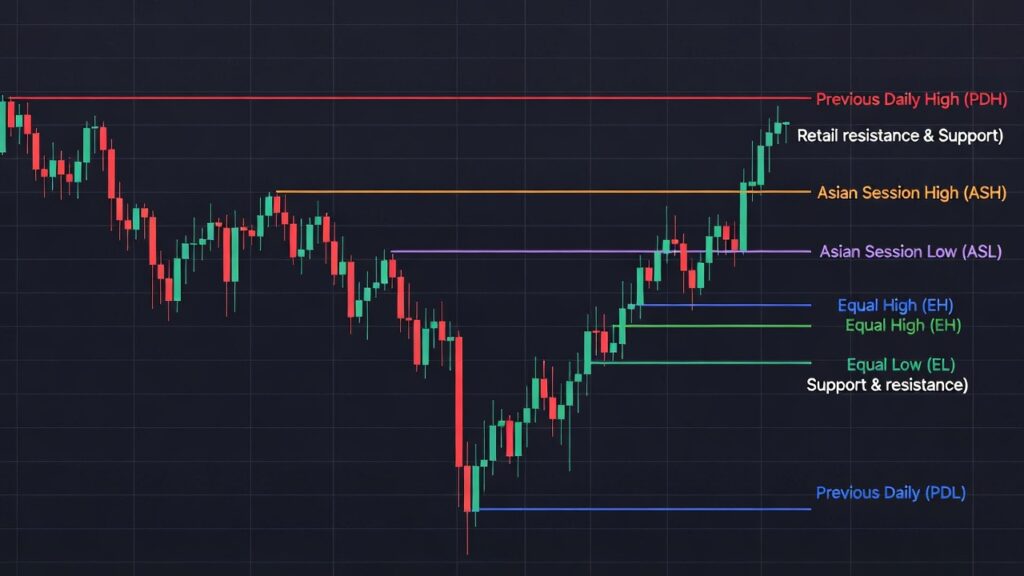
Step 1: Identify the Liquidity Pool (The Target)
Before the market opens, you need to mark out where the retail money is resting. Look for:
- Previous Daily Highs / Lows (PDH / PDL)
- Asian Session Highs / Lows
- Equal Highs / Equal Lows (Retail Resistance/Support)
Draw a line at these levels. You are now waiting for the price to attack them.
Step 2: The Sweep (The Trigger)
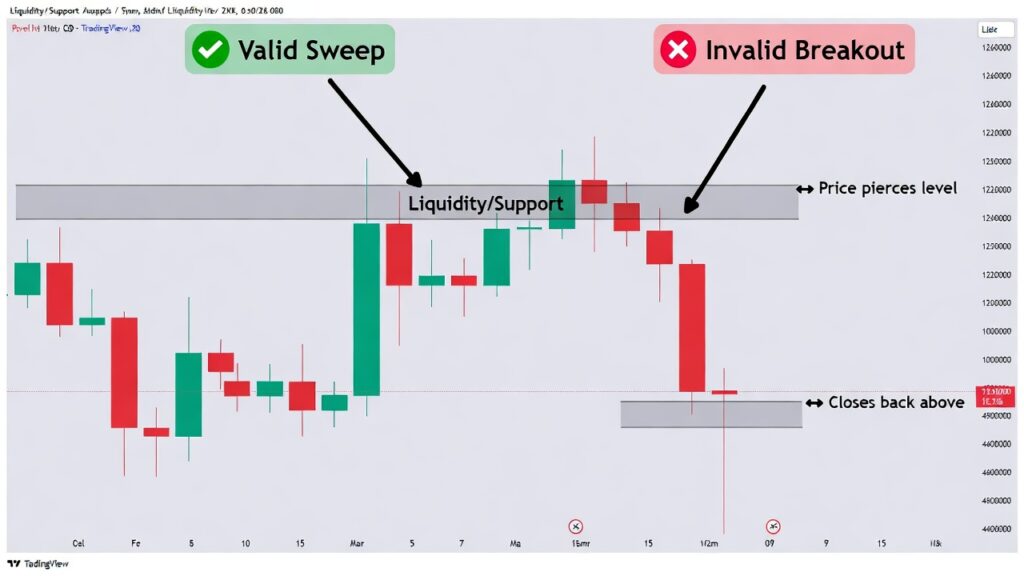
Watch as price approaches your marked liquidity level. You want to see the price pierce through the level, but you do NOT want it to stay there.
On your execution timeframe (e.g., the 5-minute or 15-minute chart), wait for the candle to close.
- Did it close below the support level? -> Invalid. It’s a breakout.
- Did it pierce the level with a wick and close back above the support level? -> Valid. The sweep is confirmed.
Step 3: The Entry and Risk Management
Once the Sweep Candle closes, the trap is confirmed.
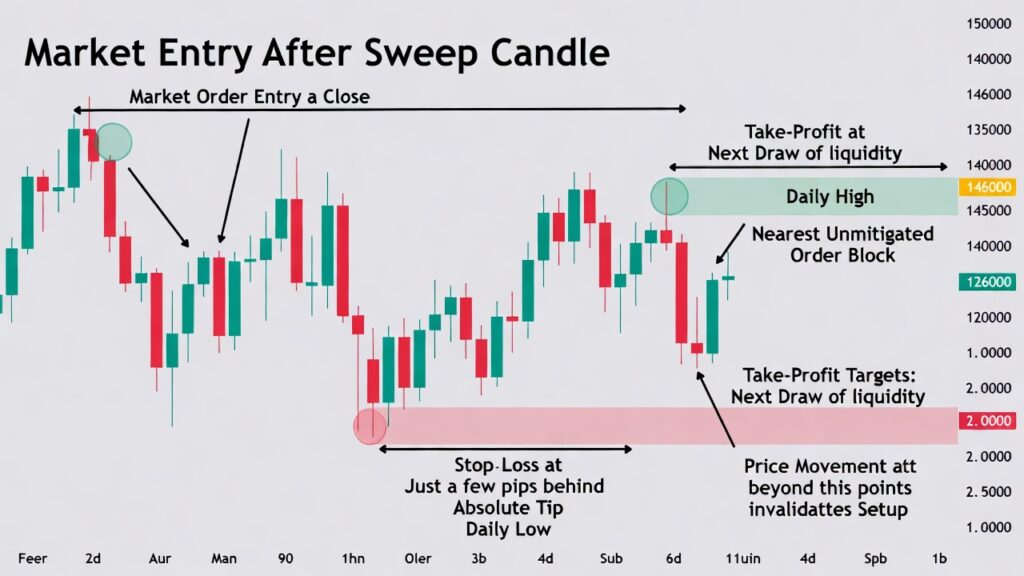
- The Entry: You can enter a market order immediately on the close of the Sweep Candle.
- The Stop-Loss: Place your stop-loss just a few pips behind the absolute tip of the wick. If the price goes beyond that wick, the setup is invalidated.
- The Take Profit: Target the next draw on liquidity. If you bought a sweep at the Daily Low, your target should be the Daily High, or the nearest unmitigated Order Block. (Need help finding targets? Review Lecture 7 – How to Mark Order Blocks Correctly]).
Advanced Tip: Combining the Sweep with a CHoCH
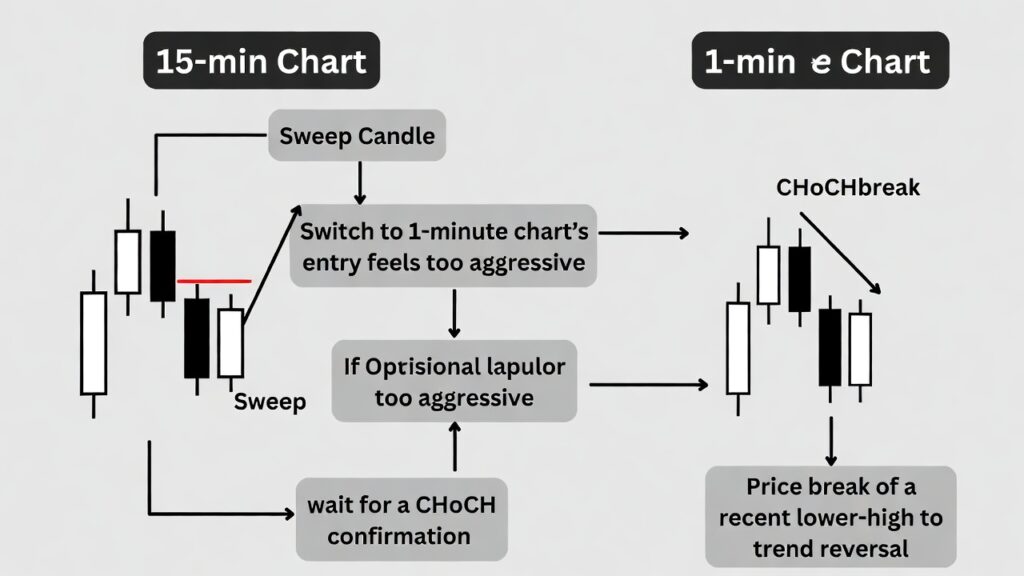
If buying directly after the Sweep Candle feels too aggressive, you can wait for secondary confirmation.
After the Sweep Candle forms on a 15-minute chart, drop down to the 1-minute chart. Wait for the price to create a Change of Character (CHoCH)—meaning it breaks a recent lower-high, confirming that the trend has actually reversed.
Once the CHoCH occurs, you can enter on the pullback into the newly formed 1-minute Order Block. This gives you an incredibly tight stop-loss and a massive risk-to-reward ratio.
Conclusion: Stop Fearing the Wicks
Retail traders fear long wicks because that is where they lose their money. Smart Money traders hunt for long wicks because that is where the institutional footprints are left behind.
By identifying Liquidity Pools and waiting patiently for the Sweep Candle to form, you stop being the liquidity and start trading alongside the banks.
Your Next Step: Open your charts right now. Look at the last 5 times you were stopped out of a trade. Did a Sweep Candle form exactly where your stop-loss was placed? Once you see it, you will never un-see it.
Source link