The 3X Wheel Options Strategy (Simple Rules) | Trading Strategy Guides


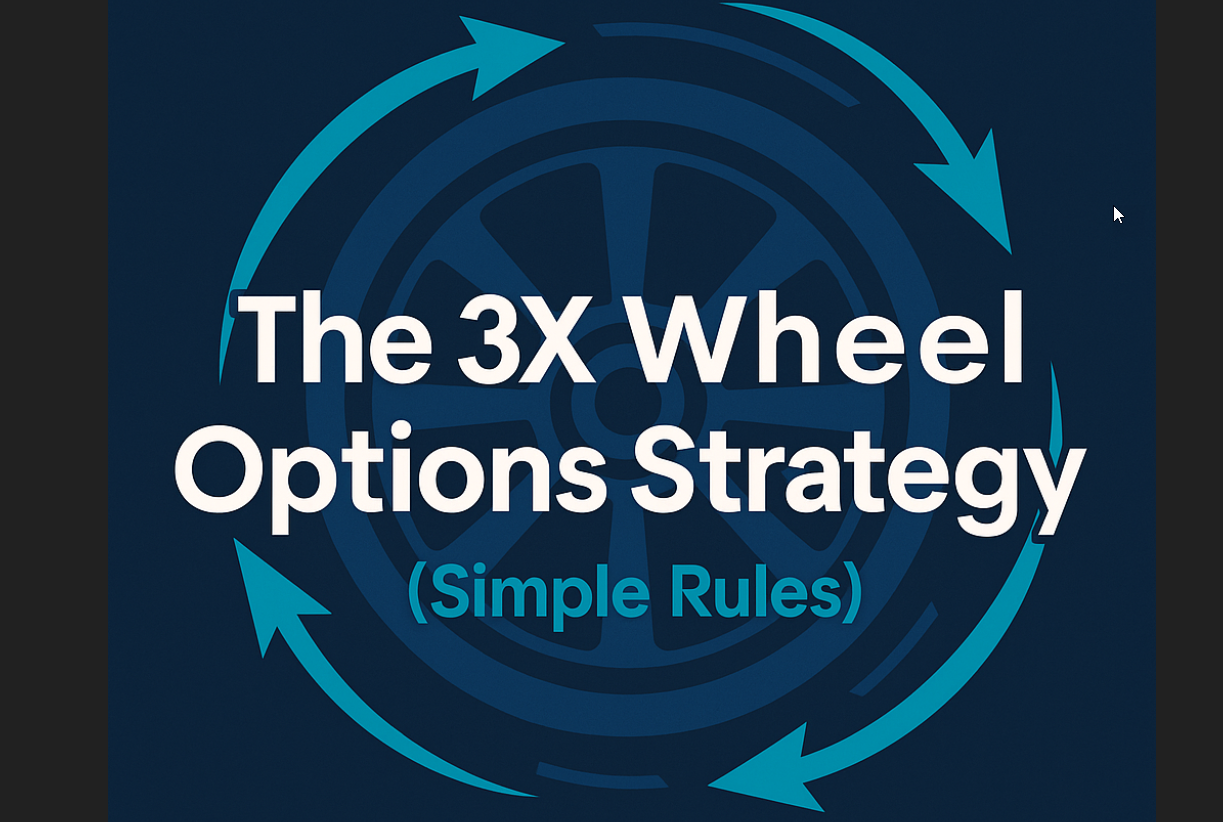
At its heart, The Wheel is a disciplined way to harvest option premiums without chasing tops or fearing drops.
You start by selling a cash-secured put on a stock you wouldn’t mind owning.
If it expires worthless, you pocket the premium and sell another put.
When assignment finally happens—which should be rare—you own 100 shares.
Then you sell a covered call against those shares to collect yet another premium. Between the puts, the calls and any dividends, you’re stacking three income streams, all while your risk stays defined and your capital remains largely in cash.
Choosing Your Candidates
The only screen you need before each trade is: “If I woke up owning 100 shares of this tomorrow, would I be content?” That simple filter steers you toward stocks priced roughly between $10 and $50, with steady cash flow, predictable charts and, ideally, a modest dividend.
Anything that spikes wildly on a tweet or earnings surprise doesn’t belong on your Wheel roster. By narrowing your universe to a handful of dependable names, you avoid the noise and focus on what really matters: time decay working in your favor.
Selling Puts for Income
Once you’ve built your watchlist, every Monday or Tuesday you scan for an opportunity: a put option 30–45 days from expiration, trading roughly 30% out of the money, that pays at least 1% of the share price in premium. You sell the put and record the credit in your tracking sheet. If, at any point more than two weeks before expiration, that option shrinks by half, you close it for a tidy profit. If ten days out it’s still flirting with assignment, you roll it down or out for a net credit. If rolling won’t bring in extra premium, you let the shares be assigned on Friday.
Turning Shares into More Premium
When assignment occurs, you own 100 shares at a net cost basis lower than market thanks to all that premium you collected.
Within one session of assignment, you sell a call 30–45 days out at or just above that cost basis, aiming for at least 0.8% of your basis in premium.
You log that credit too.
If the call reaches a 50% profit more than two weeks before expiration, you close it. If it moves into the money with under a week left, you roll it up or out for credit; if rolling won’t pay, you allow exercise. Regardless, you either keep the shares to sell another call or watch them head out the door with all your gains locked in.
A Simple Rule System for 3X Wheel Options Strategy
By codifying five clear, if-then directives, you strip emotion from each decision:
- Every Monday or Tuesday, scan your watchlist for a put 30–45 days out, ~30% OTM, paying ≥1% premium. Sell it if found.
- If a put falls by 50% more than two weeks before expiration, close it. If it’s within 5% of the strike with under ten days left and rolling won’t add credit, let assignment happen.
- When assigned, sell a covered call within one session—30–45 days out, strike at or above your basis, premium ≥0.8% of cost.
- If a call gains 50% profit with over two weeks to go, close it; if it winds into the money with under one week left and rolling won’t pay extra, allow exercise.
- Always keep put obligations on any single ticker to ≤5% of account value, and maintain ≥50% buying power free for rolls, new trades or unexpected moves.
This rule engine keeps you from over-trading, chasing losses or pinching pennies at the wrong time.
Patience Is Key with this Wheel Strategy
The Wheel isn’t a get-rich-quick scheme.
It’s a reliable income engine that pays modest sums—often $50–$100 per contract—but does so repeatedly.
You won’t double your account in a week. Instead, you’ll bank small wins, let time decay shoulder most of the work and watch your tracking sheet grow line by line. Over dozens of trades, those handfuls of dollars turn into consistent returns, all while your risk remains capped and your strategy stays as boring as it is effective.
By following these simple steps—choose your stocks, sell puts, manage risk, sell calls and repeat—you build a foundation that turns option time decay into a dependable paycheck.
That’s The Wheel at its best: unglamorous, unemotional and undeniably profitable.
Source link