The Start of Christmas Week Finds Dollar Atypically Well-Bid – Currency Thoughts
The Start of Christmas Week Finds Dollar Atypically Well-Bid
December 23, 2024
More years than not since the onset of flexible dollar rates, the U.S. currency has exhibited a soft tendency in late December. This seasonal bias was especially pronounced early on, as the dollar fell against the Deutsche mark between mid-December and yearend 13 of 14 times from 1974 through 1987. But compared to closing levels before this past weekend, the dollar has advanced 0.5% against the Swiss franc, 0.4% relative to sterling, 0.3% versus the euro, Mexican peso and Japanese yen and 0.2% vis-a-vis the Chinese yuan and bot Australian and Canadian dollars. The weighted DXY dollar index climbed 0.5% to its most elevated level since October 2022.
Share prices recovered in the Pacific Rim by 2.6% in Taiwan, 2.5% in China, 1.7% in Australia, 1.6% in South Korea and Indonesia, 1.2% in Japan, and 0.8% in Hong Kong. Net movement in major European stock exchanges and U.S. stock futures have been inconsequential, however.
Ten-year sovereign debt yields are up three basis points in France and Spain, two bps in Germany and Great Britain, and a basis point in the U.S. 10-year Treasury yield, which was in a rare eclipse with its 4.53% British gilt yield counterpart.
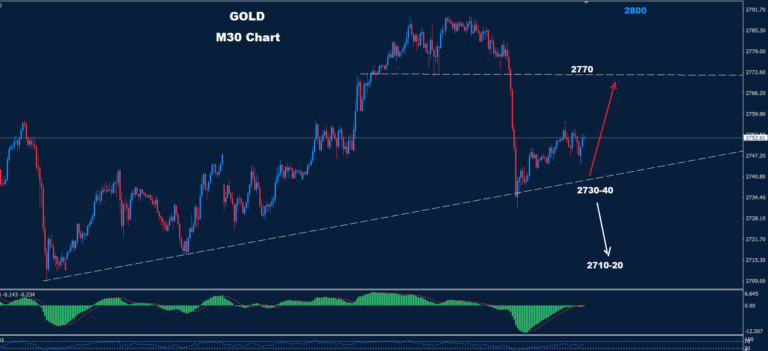
The profit-taking setback in Bitcoin, whose price rose 0.7% overnight, seems to have run out of steam, but at $95,841 such is 11.5% south of the all-time peak touched earlier this month. Prices for gold and oil fell 0.6% and 0.3% overnight.
Today’s volume of data releases has been light versus but will be considerably more so over the next three days.
The latest central bank to announce the result of its last monetary policy review of 2024 is the Bank of Jamaica. Officials there reduced the interest rate by 25 basis points to 6.0%. This was the fourth such cut since August. The rate previously had been held at 7.0% since December 2022. Jamaican consumer price inflation has fallen from as high as 11.8% in April 2022 down to its targeted corridor of 4-6%. At a 41-month low of 4.3% as of last month, inflation is in fact nearing the range floor. “The scope for further policy easing will depend on the trajectory of inflation relative to the lower bound of the inflation target range,” according to the released statement from officials.
British GDP growth last quarter was revised down 0.1 percentage point to zero percent quarter-on-quarter and a year-on-year advance of 0.9%, which nonetheless was the biggest four-quarter rise in six quarters. The U.K. current account deficit totaled GBP 18.1 billion in the third quarter, equal to 2.5% of GDP. That deficit percentage was down from 2.7% in the first half of the year and 3.0% infull-2023.
Spanish GDP expanded 0.8% in 3Q 2024 and posted the largest year-on-year advance (3.3%) in six quarters. Spain’s economy has been the best performer by far this year among Euroland’s four largest members and also ranks high among all economies in Europe.
German import prices recorded their largest monthly increase (0.9%) in a year last month, lifting the 12-month rate of change from -1.3% in September and -0.8% in October to +0.6%. Non-energy import costs were 1.7% greater than in November 2023.
Belgian consumer price inflation slipped to 3-month low in December of 3.16%. Such dived previously from 12.3% in October 2022 to 0.4% one year later. After cresting at 36% in April 2022, producer prices in Belgium had dived even more sharply. The three months this year of August through October had seen deflationary PPI readings of -1.5%, -2.4% and -1.8%, but November PPI printed at a 20-month high of +0.5%.
Irish wholesale price inflation rose to a 4-month high in November of 2.1% from -1.7% in October.
Consumer prices in Singapore were unchanged on month and recorded a smaller-than-anticipated year-on-year increase of 1.6%.
Canadian producer price inflation had swung from a peak of 18.1% in early 2022 to a low of -5.7% in May 2023. More recently, from -1.0% in September, PPI inflation swung to +1.1% in October and doubled to 2.2% last month.
A measure of investor sentiment toward the Swiss economy touched a one-year low in December.
Trade balances in Brazil and Mexico were weaker in November than a year earlier. Mexico’s balance swung from a $561 million surplus to a $133 million deficit. A 21% narrowing of Brazil’s trade surplus, lifted its current account deficit from around $1.25 billion in November 2023 to $3.06 billion last month.
In the Czech Republic this month, consumer sentiment and business confidence improved to their best levels in 6 and 3 months, respectively.
Following four straight monthly declines, Canadian industrial production jumped 1.1% in November and was also 0.9% above its year-earlier level. Monthly GDP rose 0.9% on month and 1.0% on year, snapping a similar four-month-long streak of monthly declines.
The Chicago Fed National Activity Index improved to a 3-month high reading of -0.12 in November from -0.50 in October.
Copyright 2024, Larry Greenberg. All rights reserved. No secondary distribution without express permission.
Tags: British GDP and current account, Canadian PPI, German import prices


 ShareThis
You can leave a response, or trackback from your own site.