Why Bitcoin Could Hit $150K Sooner Than You Think…
Since assuming office in January 2025, President Donald Trump has spearheaded a series of cryptocurrency-friendly initiatives, signaling a dramatic shift from his earlier skepticism toward digital assets. This change reflects his administration’s broader strategy to establish the United States as a dominant force in cryptocurrencyA cryptocurrency is a digital or virtual form of currency that uses cryptography for security. Unlike traditional currencies issued by central banks, cryptocurrencies operate on de… innovation. This shift aligns with his campaign promises to make the United States a leader in cryptocurrencyA cryptocurrency is a digital or virtual form of currency that uses cryptography for security. Unlike traditional currencies issued by central banks, cryptocurrencies operate on de… innovation.
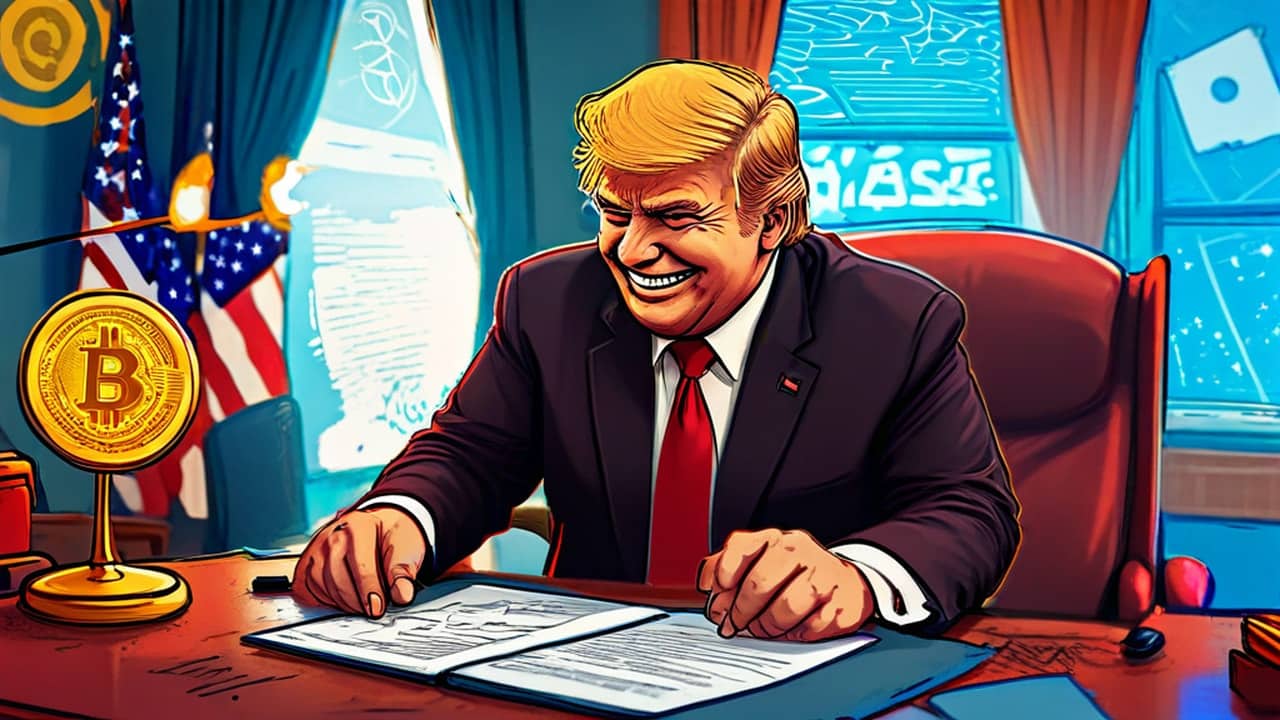
One of the first major actions taken by the Trump administration was the signing of an executive order on January 23, 2025, directing federal agencies to advance cryptocurrencyA cryptocurrency is a digital or virtual form of currency that uses cryptography for security. Unlike traditional currencies issued by central banks, cryptocurrencies operate on de… innovation. The order also mandated an exploration into creating a national digital asset stockpile, potentially including seized cryptocurrenciesA cryptocurrency is a digital or virtual form of currency that uses cryptography for security. Unlike traditional currencies issued by central banks, cryptocurrencies operate on de… like bitcoinBitcoin is a decentralized digital currency that operates on a peer-to-peer network without a central authority or intermediaries like banks. Here are some key features and aspects…. This move reversed his prior critical stance and emphasized his commitment to positioning the U.S. as the “crypto capital of the planet.”
Regulatory Overhaul
The administration has also undertaken significant regulatory changes to foster a more crypto-friendly environment:
- Rescinding SAB 121: This directive previously required financial custodians to list crypto holdings as liabilities, a regulation that many in the industry saw as restrictive.
- Formation of the Presidential Working Group on Digital Asset Markets: This body is tasked with reviewing existing regulations while simultaneously banning federal support for central bank digital currencies (CBDCs).
- Easing Banking Restrictions: Federal agencies were ordered to facilitate banking access for crypto firms, addressing longstanding industry concerns about “debanking.”
Structural and Leadership Changes
SEC Policy Shifts
The Trump administration has enacted significant structural shifts within the Securities and Exchange CommissionThe U.S. Securities and Exchange Commission (SEC) plays a pivotal role in the financial ecosystem, acting as an independent federal regulatory agency dedicated to protecting invest… (SECThe U.S. Securities and Exchange Commission (SEC) plays a pivotal role in the financial ecosystem, acting as an independent federal regulatory agency dedicated to protecting invest…) to create a more favorable regulatory environment:
- Downsized the SEC’s Crypto Enforcement Unit and reassigned staff to other divisions.
- Appointed pro-crypto figures such as Mark Uyeda and Paul Atkins to key positions.
- Established a Crypto Task Force to clarify regulatory frameworks and ensure consistency in enforcement.
Revival of PCAST
The President’s Council on Science and Technology (PCAST) has been reestablished, with crypto advisor David Sacks as a co-chair. This council is tasked with prioritizing technological advancements in AI, quantum computing, and blockchainA blockchain is a decentralized, distributed ledger technology (DLT) that records transactions in a secure, transparent, and tamper-proof manner. Each transaction is grouped into a… innovation.
Legislative and Collaborative Efforts
Formation of a Bicameral Crypto Committee
A new joint House-Senate committee has been established to draft federal regulatory frameworks for stablecoinsA stablecoin is a type of cryptocurrency designed to maintain a stable value relative to a specific asset or basket of assets. Unlike traditional cryptocurrencies such as Bitcoin o… and broader cryptocurrencyA cryptocurrency is a digital or virtual form of currency that uses cryptography for security. Unlike traditional currencies issued by central banks, cryptocurrencies operate on de… legislation. The committee aims to pass legislation within Trump’s first 100 days in office, reflecting the administration’s urgency in addressing crypto regulation.
Strategic Bitcoin Reserve
The administration has also announced plans to retain seized bitcoinBitcoin is a decentralized digital currency that operates on a peer-to-peer network without a central authority or intermediaries like banks. Here are some key features and aspects…, rather than auction it off as in previous years. Historically, these auctions have sometimes led to significant market fluctuations, as large quantities of bitcoinBitcoin is a decentralized digital currency that operates on a peer-to-peer network without a central authority or intermediaries like banks. Here are some key features and aspects… were introduced into circulation at once. By holding onto these assets, the government aims to mitigate potential price disruptions and explore bitcoin’s role as a long-term strategic asset. This decision has fueled speculation that the U.S. government is exploring the creation of a BitcoinBitcoin is a decentralized digital currency that operates on a peer-to-peer network without a central authority or intermediaries like banks. Here are some key features and aspects… Strategic Reserve, with some analysts predicting that this could drive bitcoin’s price toward the $150,000 mark.
Banking Sector Integration
To support the integration of crypto into traditional finance, regulators have been directed to facilitate crypto companies’ access to banking services. This marks a significant shift from prior administrations, which imposed stringent regulations and discouraged traditional banks from engaging with the crypto sector. The new directive is designed to remove barriers that previously restricted financial institutions from offering crypto-related services, fostering a more inclusive and competitive market. This move counters the perceived hostility of prior administrations toward the industry and aims to normalize the use of digital assets within the financial sector.
Public-Private Partnerships
The Trump administration has also endorsed projects like Rezolve AI, which is integrating cryptocurrencyA cryptocurrency is a digital or virtual form of currency that uses cryptography for security. Unlike traditional currencies issued by central banks, cryptocurrencies operate on de… wallets into mainstream retail platforms. These initiatives seek to enhance public adoption and usability of digital assets.
Market Impact
These policy shifts have had a profound impact on the cryptocurrencyA cryptocurrency is a digital or virtual form of currency that uses cryptography for security. Unlike traditional currencies issued by central banks, cryptocurrencies operate on de… market. According to a report from Bloomberg, institutional investment in digital assets increased by 35% following the administration’s pro-crypto stance. Additionally, prominent analyst Michael Novogratz has suggested that regulatory clarity could push Bitcoin’s price past $150,000 in the coming months. BitcoinBitcoin is a decentralized digital currency that operates on a peer-to-peer network without a central authority or intermediaries like banks. Here are some key features and aspects… surged to $108,000 in early February 2025, though prices later dipped due to global trade war concerns. Analysts anticipate further growth as regulatory clarity improves and institutional interest continues to expand.
Trump’s policy shift represents a landmark moment for cryptocurrencyA cryptocurrency is a digital or virtual form of currency that uses cryptography for security. Unlike traditional currencies issued by central banks, cryptocurrencies operate on de… regulation, positioning the U.S. as a potential leader in digital asset innovation.
Frequently Asked Questions (FAQs)
1. Why has Trump’s stance on cryptocurrency changed?
Trump’s shift toward a pro-crypto stance aligns with his broader strategy to position the U.S. as a global leader in financial innovation. His administration now views cryptocurrencyA cryptocurrency is a digital or virtual form of currency that uses cryptography for security. Unlike traditional currencies issued by central banks, cryptocurrencies operate on de… as a strategic asset for economic and technological growth.
2. What is the significance of the executive order on cryptocurrency?
The executive order directs federal agencies to promote crypto innovation and evaluate the potential establishment of a national digital asset stockpile, marking a federal endorsement of digital assets.
3. How does the rescinding of SAB 121 affect crypto companies?
By removing the requirement for custodians to list crypto holdings as liabilities, the change makes it easier for financial institutions to support digital asset custody, fostering industry growth.
4. What impact will the ban on CBDCs have?
The ban on central bank digital currencies (CBDCs) aligns with Trump’s belief in financial privacy and decentralized digital assets. It also prevents federal agencies from developing a government-controlled digital currency.
5. How will the Crypto Task Force affect regulation?
The task force aims to create a clear and consistent regulatory framework, reducing uncertainty for crypto businesses and investors.
6. What is the purpose of the BitcoinBitcoin is a decentralized digital currency that operates on a peer-to-peer network without a central authority or intermediaries like banks. Here are some key features and aspects… Strategic Reserve?
The reserve would allow the U.S. government to retain seized bitcoinBitcoin is a decentralized digital currency that operates on a peer-to-peer network without a central authority or intermediaries like banks. Here are some key features and aspects… rather than auction it, potentially treating it as a strategic asset.
7. How will these policies affect the crypto market?
The combination of regulatory clarity, pro-industry leadership, and institutional support has contributed to rising crypto prices and increased mainstream adoption.
8. How does this affect traditional banks?
By encouraging financial institutions to support crypto firms, banks may see increased revenue opportunities from digital asset services and custody solutions.
9. What are the benefits of Trump’s crypto policies?
Trump’s policies enhance regulatory clarity, promote industry growth, and position the U.S. as a leader in digital asset innovation.

Lance Jepsen is the senior personal finance writer for Guerilla Stock Trading who has spent more than 25 years covering the stock market and economics. In addition, Lance has worked as a private stock analyst for a number of high worth individuals.
Performance of Top 10 Cryptos (24 hours)
Do you have a news tip for GuerillaStockTrading? Please email us at
[email protected]
🗨️ JOIN OUR COMMUNITY OF CRYPTO TRADERS AND INVESTORS ON SOCIAL MEDIA
💥 GET OUR LATEST CONTENT IN YOUR RSS FEED READER
We are entirely supported by readers like you. Thank you.🧡
At GuerillaStockTrading, we maintain full transparency and impartiality; we never blog about stocks or crypto in which we hold a personal position unless explicitly stated in the article. Additionally, we do not accept paid promotions presented as content. All information shared is for informational purposes only and should not be construed as financial, investment, tax, or legal advice, nor as a recommendation to buy any security or financial asset. The content is general in nature and does not account for individual circumstances. It may not be suitable for your particular situation. Before making financial decisions, you are encouraged to seek guidance from your own financial or investment advisor.