Trump Speech Sends Shock Waves Through World Financial Markets – Currency Thoughts
Trump Speech Sends Shock Waves Through World Financial Markets
April 2, 2026
The highly anticipated update from President Trump in prime time last evening failed to clarify the big questions of when the Middle East war might end, when or exactly how shipping traffic through the Strait of Hormuz might resume, what Iranian government would be in place after military fighting ends, and what kind of U.S. presence in the region would likely be required to maintain order in that period. The broad demands of the U.S. and Iranian governments remain far apart, and no timetable for returning energy prices and overall inflation to pre-war levels was enunciated. The mixed message of the war ending in 2-3 weeks but not before a possible major escalation of its intensity continues to confuse the public, including financial market investors. In response….
Equity markets on this Maundy Thursday tanked 4.5% in South Korea, 4.2% in Indonesia, 2.4% in Japan, 1.8% in Taiwan and 1.1% in Australia. In Euroland so far, equities are down 2.4% in Germany, 1.7% in Italy, 1.6% in Spain and 1.3% in Italy. U.S. stock futures shortly after 08:30 EDT were down by 1.4% in the case of the Dow, 1.5% in the S&P 500, 2.0% in the Nasdaq and 2.1% in the Russell 2000.
Ten-year sovereign debt yields catapulted 13 basis points higher in Australia and Italy and by nine bps in the U.K. and Spain, while also rising nsing 8 bps in Japan and France, 6 basis points in Germany, 5 bps in Switzerland and 3 bps in the United States.
The price of West Texas Intermediate oil boomeranged 9.6% to closed ot $110 per barrel, whereas those of gold and silver have slumped 3.6% and 7.1%.
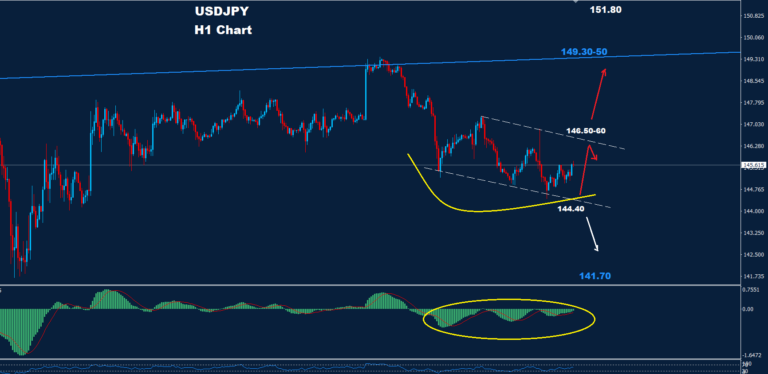
As in other recent hot money waves into perceived safe assets, the dollar benefited from the speech, climbing 0.8% overnight against the Australian currency, 09.7% versus the kiwi and sterling, 0.6% relative to the Swiss franc, and 0.5% against the yen and euro. On the other hand, Bitcoin’s price tumbled 2.8%.
The U.S. tariff policy has achieved a significant reduction in the U.S. trade deficit. The goods and services deficit of $119.0 billion in January-February was down from $248.1 billion a year earlier. Among goods only, the deficit of $166.7 billion versus $302.4 billion resulted from year-on-year export growth of 10.9% juxtaposed against a 13.3% drop in imports.
A Canadian trade deficit last month of C$ 5.74 billion was the largest shortfall in a half-year and the 21st monthly deficit in the past two years. Canada’s surplus in bilateral trade with the United States fell to its smallest size in 70 months.
Fewer-than-forecast new U.S. jobless insurance claims last week totaled 202k, just a thousand more than the 2-year low touched 11 weeks earlier. This development supports the Fed’s prioritization of inflation risks of growth risks from the Middle East war.
Officials at the Central Bank of Azerbaijani left their policy rate unchanged at 6.5%. From a peak of 9.0% from May through October of 2023, the rate has been reduced by a total 250 basis points, most recently via a 25-bp cut in February of this year. Azerbaijani CPI inflation of 5.7% currently (and 5.6% on a core basis) is only slightly under the policy interest rate level, and the risks of the Middle Eastern war inject a fresh reason for caution among banks that have been lessening monetary restraint. According the Azerbaijani statement released today, “Under the baseline scenario, the projection that annual inflation will remain within the target band at end-2026 and in 2027 is unchanged. At the same time, recent dynamics suggest that the inflation outlook for 2026 is subject to upward revision.”
With many countries observing Good Friday tomorrow, today’s data release menu has been a thin one.
India’s manufacturing purchasing managers index was revised 0.1 point higher to 53.9, which nevertheless conveys the softest positive rate of expansion in 45 months.
Swiss consumer price inflation accelerated to a one-year high in March but at 0.3% was actually lower than expected. Moreover, core inflation of 0.4% matched a 56-month low first touched in November.
Cypriot consumer prices jumped 1.2% in March, lifting their year-on-year pace to a one-year high of 1.2%. On-year growth in Cypriot retail sales fell more than by half to 4.1% in February from 9.5% in January and an average of 8.6% in the final two months of 2025.
Japan’s monetary base over which monetary policy in that economy exerts its most direct influence recorded year-on-year declines of 11.6% in March and 10.6% in the first quarter. That compares to drops of 8.7% in the final quarter of 2025 and 4.9% on average for that whole year.
Romanian producer price inflation slowed to a 7-month low of 3.0% in February from 7.7% in January.
Australia recorded its largest trade surplus in seven months during February (A$ 5.686 billion), but the January-February surplus of A$ 7.94 billion was less than 5% wider than a year earlier.
Turkey’s $11.3 billion trade deficit in March was its largest shortfall in 11 months.
Copyright 2026, Larry Greenberg. All rights reserved.
Tags: Central Bank of Azerbaijani, market reactions to Trump speech, Swiss CPI, U.S. and Canadian trade balances


 ShareThis
You can leave a response, or trackback from your own site.