UK politics: Reeves ‘not even sure what the popular path is’ on the budget – as it happened



Reeves ‘not even sure what the popular path is’ on the budget
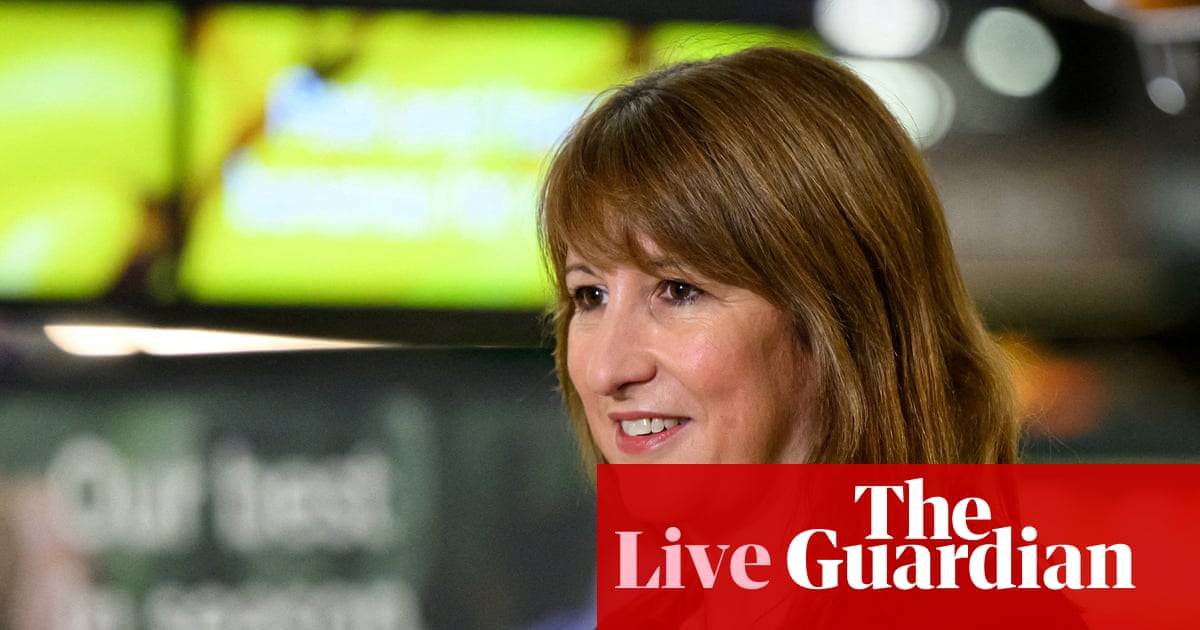
The UK cannot continue to “muddle through” and must take “a different path” on the economy, the chancellor has said.
Ahead of her second budget on 26 November, Rachel Reeves told the Times that the country could not continue on its current trajectory. But she admitted she was “not even sure any more what the popular path is” amid calls for a wealth tax from some politicians and heavy tax and spending cuts from others.
In the interview published on Friday, Reeves said:
I’m not even sure any more what the popular path is.
There are lots of people who say cut taxes and the economy will grow, but what spending would they cut? Borrowing is too high, but you can’t cut it overnight. Public services are a mess, but we haven’t got loads of money to throw at them and we have to use what we’ve got well.
We can’t just carry on like this and muddle through. We have to make some decisions to get on a different path.
Overnight, Keir Starmer said the budget would reflect “Labour values” and be “based on fairness”. The prime minister said it would prioritise protecting public services, particularly the NHS, cutting the national debt and tackling the cost of living.
But Reeves faces a difficult challenge to achieve those aims thanks to weak economic growth, persistent inflation and an expected downgrade to official productivity forecasts. Those challenges mean she is widely expected to raise taxes in an effort to bridge a multibillion-pound gap in her spending plans.
In the interview, Reeves added that she was “sick of people mansplaining how to be chancellor to me”. Suggesting at least some of the criticism was motivated by sexism from “boys who now write newspaper columns”, she said:
I recognise that I’ve got a target on me. You can see that in the media; they’re going for me all the time. It’s exhausting.
But I’m not going to let them bring me down by undermining my character or my confidence. I’ve seen off a lot of those boys before and I’ll continue to do so.
Key events
Closing summary
-
The UK cannot continue to “muddle through” and must take “a different path” on the economy, the chancellor has said. Ahead of her second budget on 26 November, Rachel Reeves told the Times that the country could not continue on its current trajectory. But she admitted she was “not even sure any more what the popular path is” amid calls for a wealth tax from some politicians and heavy tax and spending cuts from others.
-
Reeves also said she is sick of people “mansplaining” how to be chancellor to her as she prepares to deliver her budget next week. Reeves spoke of the pressure of being the UK’s first female chancellor and the subject of constant political attacks.
-
The UK government borrowed more than expected in October, official figures show, in the final snapshot of the public finances before Rachel Reeves’s crunch budget. The Office for National Statistics said borrowing – the difference between public spending and income – was £17.4bn last month.
-
Reform UK’s former leader in Wales, Nathan Gill, has been jailed at the Old Bailey for 10 and a half years for taking bribes to make statements in favour of Russia when he was an MEP. Gill, a member of the Ukip and Brexit party blocs led by Nigel Farage in the European parliament, had pleaded guilty to eight counts of bribery between 6 December 2018 and 18 July 2019.
-
Keir Starmer has attempted to dampen the latest round of speculation about his leadership, insisting that one of his potential rivals, Andy Burnham, is doing a “really good job as mayor of Manchester” and warning colleagues not to waste their time briefing against each other. The prime minister gave his backing to Burnham on Thursday night as he travelled to the G20 summit in Johannesburg, after the Manchester mayor repeatedly failed to rule out challenging Starmer for his party’s leadership during interviews on Thursday.
-
Covid-bereaved families have called for Boris Johnson to lose access to public funds and said they will pursue all legal options for personal accountability after a damning report into his handling of the pandemic. The families said they want all privileges Johnson receives as a former prime minister, including his ministerial pension, his place on the privy council and access to the public duty costs allowance, to be withdrawn.
-
Rachel Reeves has been urged by 40 Labour MPs to drop plans to fund NHS buildings with private finance initiatives (PFI) that would saddle the health service with debt. The Labour MPs, including Cat Eccles, Clive Lewis and Rebecca Long-Bailey, pressed the chancellor to commit to investment in the NHS without the use of private capital and warned that a return to the New Labour era of private funding for public projects would be damaging for trust in the government.
-
A cryptocurrency backed by one of Nigel Farage’s biggest donors has been used to help Russia fight its war against Ukraine, British investigators say. The National Crime Agency has spent four years trying to crack a multibillion-dollar scheme that exchanges cash from drug and gun sales in the UK for crypto, digital tokens that are designed to hide their users’ identities.
-
Downing Street has defended Keir Starmer’s travel to South Africa for the G20 summit – coming days before the budget is expected to raise taxes and despite the US president’s absence – saying he would use it to shore up support for Ukraine as Washington has been drafting a peace plan with Moscow that would reportedly require Kyiv to give up territory and weapons.
-
The BBC is now losing more than £1bn a year from households either evading the licence fee or deciding they do not need one, according to a cross-party group of MPs who warned the corporation is under “severe pressure”. Attempts to enforce payment of the licence fee are also stalling. The number of visits to unlicensed homes increased by 50% last year, but it did not translate into either higher sales or successful prosecutions.
The BBC is now losing more than £1bn a year from households either evading the licence fee or deciding they do not need one, according to a cross-party group of MPs who warned the corporation is under “severe pressure”.
Attempts to enforce payment of the licence fee are also stalling. The number of visits to unlicensed homes increased by 50% last year, but it did not translate into either higher sales or successful prosecutions. BBC executives have said they face the increasing problem of householders simply refusing to answer the door.
The Commons public accounts committee said the BBC was not doing enough to enforce the collection of the licence fee, which it said was “unfair to the vast majority of households who do pay for a licence”.
Its analysis of BBC accounts found that the licence fee evasion rate is now at 12.5%, costing it up to £550m. The number of households to state they have no need for a licence, because they do not consume BBC content, has risen from 2.4m in 2021 to 3.6m this year. That equates to a loss of up to £617m from potential fees.
Despite making nearly 2m visits to unlicensed homes last year, prosecutions fell by 17% in 2024.
Tom Burgis
A cryptocurrency backed by one of Nigel Farage’s biggest donors has been used to help Russia fight its war against Ukraine, British investigators say.
The National Crime Agency has spent four years trying to crack a multibillion-dollar scheme that exchanges cash from drug and gun sales in the UK for crypto, digital tokens that are designed to hide their users’ identities.
The scheme has enabled “sanctions evasions and the highest levels of organised crime, including providing money-laundering services to the Russian state”, the agency says.
Of the $24m (£18.3m) in crypto that the NCA and its counterparts abroad have so far been able to seize, the “vast majority” was issued by Tether.
A private company headquartered in El Salvador, Tether has grown so popular that it declared profits of $13bn for 2024, one-and-a-half times those of McDonald’s. Tether’s shares are reportedly owned by a small group, among them Christopher Harborne, one of the UK’s biggest political donors. Harborne took a 12% stake around 2016, court papers say, although it is unclear what share of Tether’s profits he has received.
In 2019-20, as the UK was leaving the EU, Harborne gave £10m to Nigel Farage’s Brexit party, since renamed Reform UK. In January, Farage accepted another £28,000 from Harborne to attend Donald Trump’s inauguration as president – the month after the US placed sanctions on the Russian bosses of the laundering networks and publicly warned they were using Tether.
MI5 has warned of relentless espionage attempts in Britain, writes the Guardian’s defence and security editor, Dan Sabbagh. You can read his analysis here:
Ed Davey calls for an investigation into Russian interference in UK politics
Liberal Democrats leader Ed Davey has demanded an investigation into Russian interference in UK politics, reports the PA news agency.
Davey’s comments come as Reform UK’s former leader in Wales, Nathan Gill, was jailed at the Old Bailey on Friday for 10 and a half years for taking bribes to make statements in favour of Russia when he was an MEP (see 1.31pm).
Davey said:
A traitor was at the very top of Reform UK, aiding and abetting a foreign adversary. Nigel Farage and his party are a danger to national security.
Nigel Farage himself was previously paid to be on Putin’s TV channel, Russia Today, and said he was the world leader he admires the most.
We must all ask – where do his loyalties really lie? We need a full investigation into Russian interference in our politics.
Starmer rebuffs renewed talk of Andy Burnham leadership challenge
Kiran Stacey
Keir Starmer has attempted to dampen the latest round of speculation about his leadership, insisting that one of his potential rivals, Andy Burnham, is doing a “really good job as mayor of Manchester” and warning colleagues not to waste their time briefing against each other.
The prime minister gave his backing to Burnham on Thursday night as he travelled to the G20 summit in Johannesburg, after the Manchester mayor repeatedly failed to rule out challenging Starmer for his party’s leadership during interviews on Thursday.
Burnham’s comments reignited speculation over the prime minister’s future, with his party languishing in the polls and days away from a tax-raising budget that could define the rest of his term in office.
Starmer said:
Andy’s doing a really good job as mayor in Manchester and we work very closely together.
He added:
Only two days after Labour party conference we were in Manchester together in the aftermath of the terrible attack on the synagogue there. I spoke to Andy as soon as I heard about that attack when I was in Denmark. It was one of the first calls I made to get an assessment on the ground. I spoke to him the next day then I went up and met him and went through the briefings.
He’s doing a really good job as the mayor of Manchester.
Starmer urged his colleagues not to brief against him or others in the party after his own allies fuelled the leadership speculation by telling reporters they believed the health secretary, Wes Streeting, to be planning a coup attempt.
“We need to focus on what matters to the country, and what matters to the country above all else is the cost of living and that’s where my focus is,” he said. “Every minute we’re not focused on that is a minute that is wasted in the government.”
Covid bereaved call for Boris Johnson to lose ex-PM benefits over inquiry report
Covid-bereaved families have called for Boris Johnson to lose access to public funds and said they will pursue all legal options for personal accountability after a damning report into his handling of the pandemic.
The families said they want all privileges Johnson receives as a former prime minister, including his ministerial pension, his place on the privy council and access to the public duty costs allowance, to be withdrawn.
“His actions during the pandemic amount to one of the gravest betrayals of the British public in modern history. His decisions, delays and refusal to listen to warnings cost tens of thousands of lives that could and should have been saved,” Covid-19 Bereaved Families for Justice UK said in a statement.
“He must be held accountable. We are not asking for an apology. We are asking for consequences. Boris Johnson should have no role in public life and no further entitlement to public funds.”
The second report from the public inquiry into the pandemic published on Thursday found Johnson’s government had acted “too little, too late”, and that locking the country down a week earlier in March 2020 could have saved about 23,000 lives.
The inquiry, led by the retired judge and crossbench peer Heather Hallett, found he had “repeatedly changed his mind on whether to introduce tougher restrictions and failed to make timely decisions”.
It also said he had presided over a “toxic and chaotic culture” in Downing Street that hampered decision making, and that he had “intentionally fostered conflict and a chaotic working environment”.
Criticism was also levelled at the leaders of the devolved nations, but Johnson was the most severely rebuked for his actions.
Keir Starmer reiterated his position that “Ukraine must determine its future” after a call with European leaders.
The prime minister, who is in South Africa for the G20 summit, told broadcasters:
I just had a call with President Zelensky, alongside President Macron and chancellor Merz. And that was an opportunity for us to express, again, our support for Ukraine and the principle that’s very important, which is all matters to do with Ukraine must be determined ultimately by Ukraine.
Now we all want a just and lasting peace. That’s what the president of America wants. That’s what we all want. And so we need to work from where we are to that end.
But the principle that Ukraine must determine its future under its sovereignty is a fundamental principle.
He added:
I know that’s what President Trump wants, and he’s been working to that end, but we must reiterate the principle that the matters about Ukraine must be determined by Ukraine.
Plaid Cymru’s Westminster leader Liz Saville Roberts has said that the public “deserve to know if Nathan Gill was part of broader effort to advance Moscow’s interests”, following his sentencing this afternoon.
In a statement, Saville Roberts said:
Nathan Gill, former leader of Reform UK in Wales, has now been sentenced to ten and a half years prison for his acts of betrayal in taking bribes from Russia.
It is right that representatives who break the law and undermine Welsh interests in this way face the consequences of their actions.
The court heard that Oleg Voloshyn asked Gill to find others working in the European Parliament who could also take bribes to make pro-Russian statements.
If the former Reform UK leader in Wales was part of a broader, coordinated effort to advance Moscow’s agenda within our democratic institutions, then the public deserves to know the full truth, and how far Russian money and influence reached into Nigel Farage’s inner circle.
Reform UK’s former Wales leader jailed for taking bribes for pro-Russia speeches
Reform UK’s former leader in Wales, Nathan Gill, has been jailed at the Old Bailey for 10 and a half years for taking bribes to make statements in favour of Russia when he was an MEP.
Gill, a member of the Ukip and Brexit party blocs led by Nigel Farage in the European parliament, had pleaded guilty to eight counts of bribery between 6 December 2018 and 18 July 2019.
Police say Gill received the equivalent of at least £40,000 and could have got even more from Oleg Voloshyn, an alleged Russian asset who is also under investigation but is now believed to be in Moscow.
Investigators who were taken by surprise by Gill’s guilty plea in September say he has given no explanation about his motivation, but they believe he was largely driven by financial need.
The statements he made were designed to benefit the Kremlin’s narrative on Ukraine in the period before Russia’s full-scale invasion of its neighbour in 2022. Gill made the statements in the European parliament and also on a pro-Russian Ukrainian television channel linked to an ally of Vladimir Putin.
Keir Starmer has visited a train depot in Johannesburg with UK-built carriages.
The prime minister toured the Gautrain site, chatted to workers and looked at the underbelly of a Bombardier Electrostar train that was manufactured in Alstom’s factory in Derby, East Midlands.
In a train cabin, he spoke to a driver, telling her that on a test track in Derby “they let me do the driving” and that he was surprised because “I thought it would be really hard”.
He was shown around by Gauteng premier Panyaza Lesufi, the province’s transport minister Kedibone Diale-Tlabela, Gautrain chief executive Tshepo Kgobe, and the chief of Bombela Operating Company Nthabiseng Kubheka.
Gautrain is a commuter rail system in the South African province of Gauteng. Operators of the same Bombardier Electrostar model in the UK include Southeastern, London Overground and Great Western Railway.
Source link