Is AI Stock Trading Worth It? A Systematic Trader’s Honest Take

AI stock trading can be a valuable tool for traders who already have a systematic framework – but for most people buying AI trading bots and tools, it’s not worth it. The technology is real, but the way it’s being sold to retail traders is mostly hype.
Every week I get emails from traders asking me: Should I use ChatGPT to pick stocks? Is this AI trading bot legit? Can I just let AI handle everything?
I get it. The promises are everywhere. But most of what’s being sold as “AI trading” deserves a much harder look.
And I say this as someone who uses AI in my own trading every single day.
What Does AI Stock Trading Actually Mean?
AI stock trading refers to using artificial intelligence tools to analyse markets, generate trade signals, or execute trades automatically. But traders throw around “AI trading” as if it’s one thing – and it’s not. There’s a massive spectrum:
- Chatbots giving you stock tips (basically a search engine with confidence)
- Algorithmic execution tools (legitimate, used by institutions for decades)
- Machine learning for strategy development (powerful but easy to misuse)
- Fully autonomous trading bots (the stuff most retail traders are buying)
These are wildly different in reliability and risk. And the products being marketed hardest to retail traders? They’re largely finance bros riding a wave, trying to capture whatever money they can from unsuspecting traders while this AI hype accelerates. There is very little actual trading wisdom in any of it.
Where Does AI Stock Trading Break Down?
AI stock trading breaks down in five critical areas: overfitting to historical data, lack of a verifiable edge, failure to address risk management and position sizing, the black box problem, and increased security risks compared to traditional trading tools. Let me be direct with you on each of these.
Most AI trading tools are curve-fitting disguised as intelligence. An AI can find patterns in any dataset. That doesn’t mean those patterns will repeat. Unless you know how to make optimisation decisions properly, AI will inevitably overfit your systems to past data. Whenever you blindly choose the best-performing parameters – which is exactly what an AI bot would do – you’re overfitting to history. And overfitting is the number one killer of trading strategies, AI or otherwise.
No AI can trade without a defined edge. Typing a single prompt into a free AI tool and expecting a one-shot solution that will build your wealth? That will never work. If it were that easy, there would be many, many trading billionaires. Sadly, that’s just not the case. Most AI trading bots don’t have a verifiable edge. They have a backtest that looks good – which is a very different thing.
AI doesn’t solve the real problems. Position sizing, risk management, portfolio construction, the discipline to keep trading through a drawdown – these are what separate profitable traders from everyone else. No chatbot handles this for you.
This is actually more dangerous than previous fads. Remember those black box high-frequency forex trading systems from five or ten years ago? We all know those didn’t work. Abdicating responsibility for your trading to a large language model won’t work either. But here’s the difference – at least those old systems couldn’t autonomously access your accounts, make unintended decisions, or expose you to prompt injection risks from nefarious actors. Plugging an AI into a live account with real money and letting it act without oversight is a whole new level of risk.
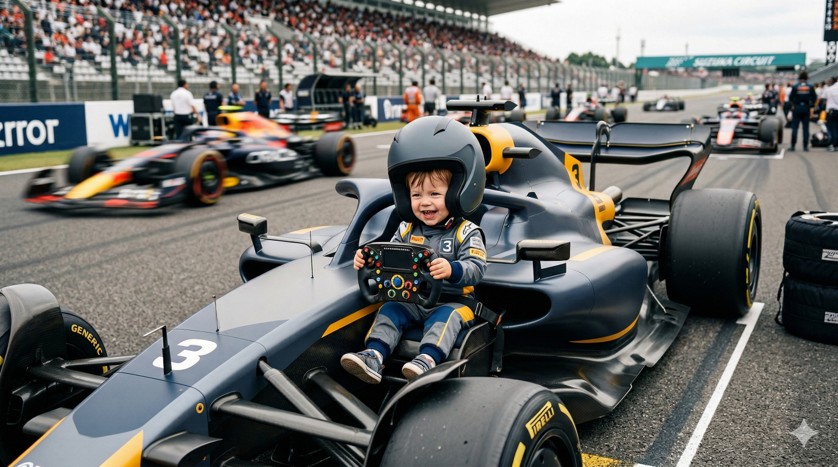
Going straight to an AI trading bot is like putting a toddler in a Formula One car and expecting it to win a race. It’s just not going to happen.
Why AI Can’t Give You a Profitable System Out of the Box
Here’s a fundamental problem most people overlook. AI models were trained on data from the internet – public data. That includes blogs, Reddit posts, Quora threads, social media, forums, and anything else that can be scraped. All of it goes into the training set.
If you’ve been trading for even a little while, you already know that most of the information out there is confusing at best and downright deceptive at worst. Many of the ideas published online simply don’t work. They’re often extremely overfit – designed to create great-looking backtests that quickly break down and lose money in real-time trading.
So think about what that means for AI. The entire training dataset on a complex topic like trading includes a huge amount of misinformation, overfit systems, recycled myths, and strategies that have never been validated in live markets. If that’s what the model learned from, it’s unrealistic to expect it to produce a system that’s actually profitable.
This doesn’t mean AI is useless for trading – far from it. As I’ll explain below, it can be an extremely powerful tool to accelerate your trading system development. But asking AI for a complete, ready-to-trade system is not going to make you the money you’re hoping for.
How I Actually Use AI in My Trading
I use AI extensively as an accelerator within my trading system development process – not as a replacement for it. The distinction matters enormously, and it surprises most people.
Trading system development is a multi-step process. AI doesn’t know these steps natively. But if you know the process, AI can dramatically speed up each step along the way. In my own workflow, I use AI to:
- Research and brainstorm signal ideas – generating hypotheses I might not have considered
- Code systems and adjustments faster – turning ideas into testable code in minutes rather than hours
- Analyse good and bad trades from existing systems to brainstorm new filters and rules
- Generate optimisation variations and help interpret results
I’ve even shared examples of winning and losing trades from my existing strategies with AI and used it to brainstorm additional rules that capture more of the good trades and reject more of the bad ones. That kind of acceleration is genuinely valuable.
But notice what I’m not doing. I’m not typing a single prompt and expecting a finished system. I’m running each step of a structured, proven development process and using AI to move through those steps faster. AI doesn’t replace the process. It doesn’t make the judgement calls about what belongs in my portfolio. And it certainly doesn’t decide my objectives, my risk tolerance, or my return targets.
What Would I Need to See From an AI Trading System?
The same thing I’d need to see from any trading system. No exceptions.
- Rigorous backtesting with fully disclosed rules – not a black box
- Stable performance across different market regimes – bull, sideways, bear, volatile, and quiet
- Robust parameter selection – performance shouldn’t fall apart when you change the inputs slightly
- Every rule must earn its keep – no stacking extra filters just to make the equity curve look pretty
- Simple, elegant construction – complexity is a red flag, not a feature
Most AI trading vendors can’t show you any of this. If they can’t, what they’re selling is hope – not an edge.
What Should You Learn Before Going Near AI Trading?
Before using any AI trading tool, you should first learn systematic trading – including strategy selection, system construction, backtesting, and portfolio management. If you’re attracted to AI stock trading, the first step isn’t to find the best bot. The first step is to learn systematic trading.
You need to understand what types of strategies actually work, how to construct a complete trading system, how to backtest it properly to build genuine confidence and how to allocate capital and manage an overall portfolio. These are foundational skills that AI cannot give you – and without them, you have no way to evaluate whether an AI tool is any good.
The traders who succeed long-term are the ones who understand their system – not the ones who outsource their thinking. Master the process first, then use AI to accelerate and amplify.
AI is not a trader. It’s a tool for traders. That’s the distinction I want everyone to understand.
Over to You
I’m curious – are you experimenting with AI in your trading? Have you tried any AI stock trading tools or bots? What’s been your experience?
Comment below and tell me what you’ve tried and what you’re thinking. I read every response, and I’m working on some exciting new AI Trading tools based on your answers.
Remember – You are only one trading system away!
Adrian
Founder – Enlightened Stock Trading
Source link